
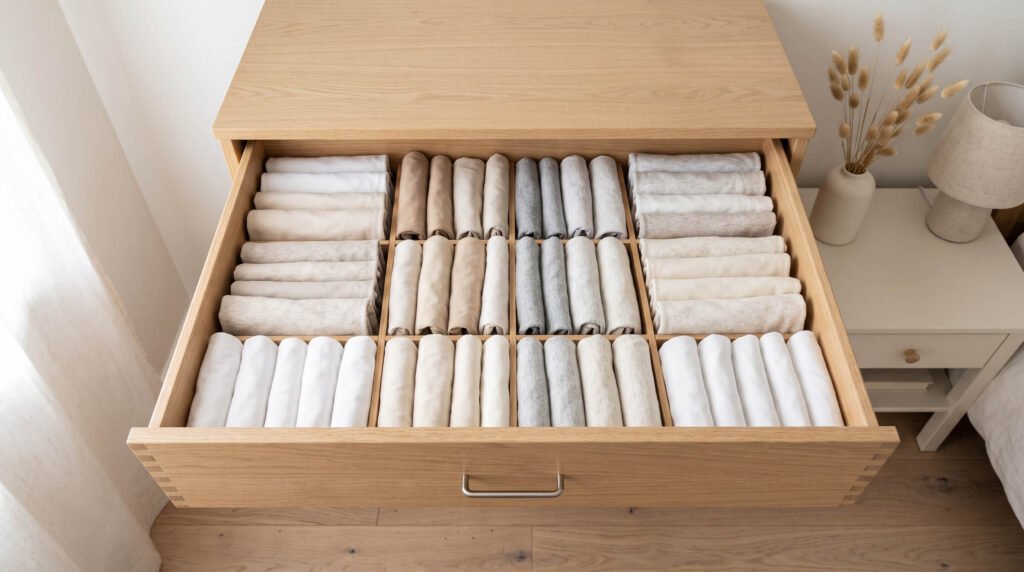
Struggling with overstuffed dresser drawers where shirts disappear into messy, wrinkled piles? The file folding method completely transforms how you store clothing by trading horizontal stacks for structured, vertical rows.
Instead of stacking garments on top of one another—forcing you to dig blindly and disrupt the entire pile—the file folding method treats each item like an upright folder in an office filing cabinet. By applying this simple spatial technique, you instantly double your available dresser drawer space, keep every piece visible at a glance, and eliminate laundry-day frustration for good.
Why Traditional Stacking Fails (And How the File Folding Method Wins)
For decades, standard household advice suggested stacking folded shirts, sweaters, and jeans horizontally in flat piles. While this looks neat for the first ten minutes on laundry day, it quickly creates three major problems in daily use:
• The Hidden Layer Effect: Any piece of clothing placed beneath the top three layers becomes invisible, leading to forgotten garments and unworn clothes.
• The Jenga Collapse: Pulling a single shirt from the middle or bottom of a stack inevitably loosens and wrinkles the items above it, turning your drawer into chaos within days.
• Squandered Vertical Height: Horizontal piles rarely maximize drawer depth efficiently, leaving dead space around the edges while crushing the fabric at the bottom.
By shifting your technique to the file folding method, every item stands upright independently. You gain instant visibility across the entire drawer, pull out individual garments without disturbing neighboring clothes, and preserve fabric crispness with zero compression wrinkles.
Step-by-Step: How to Use the File Folding Method for T-Shirts
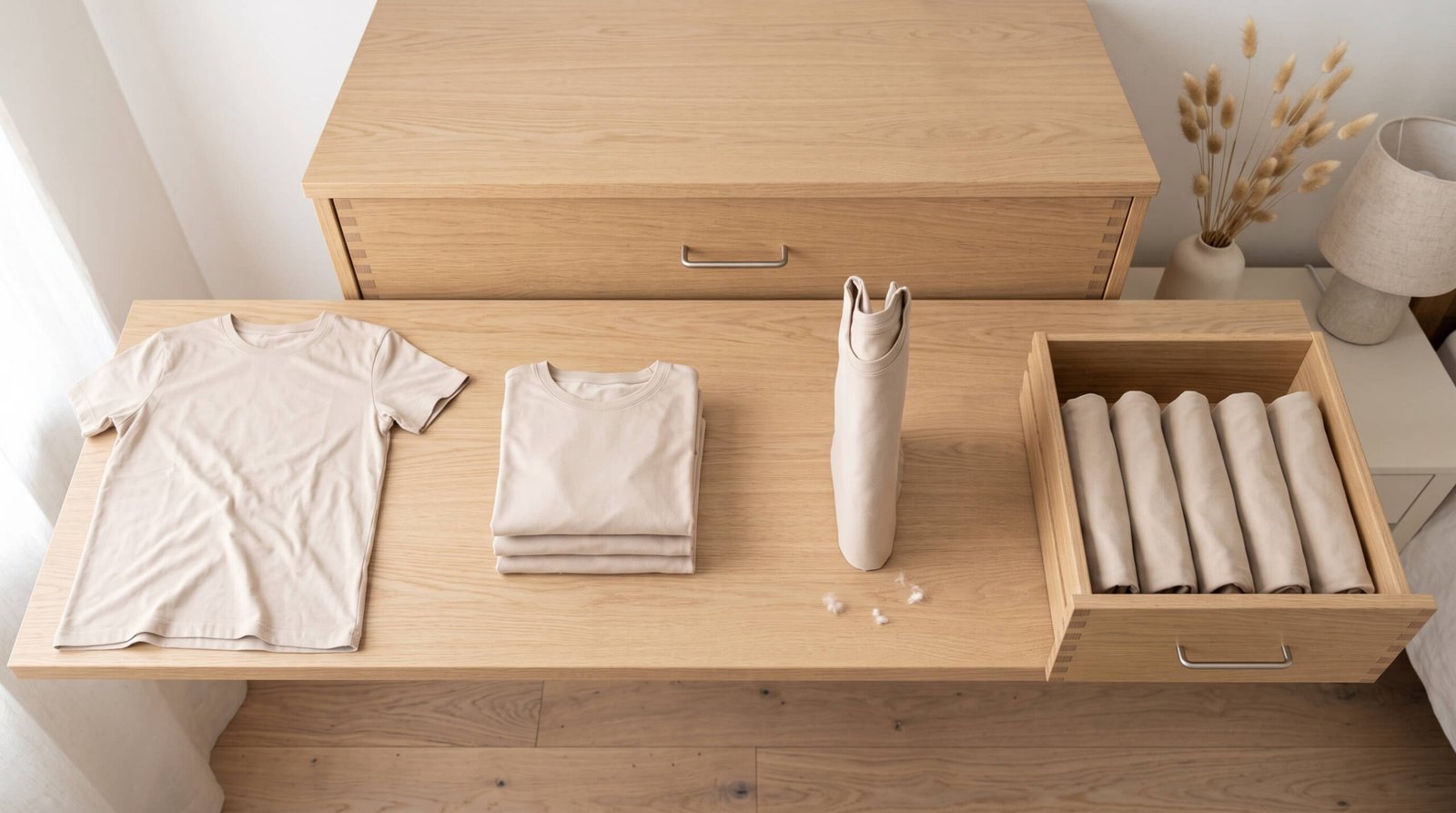
Mastering the file folding method takes less than thirty seconds per garment once you learn the basic rectangular base fold:
1. Lay Flat and Smooth: Place the t-shirt face down on a clean, flat surface. Smooth out wrinkles with your hands from the collar to the bottom hem.
2. Fold Across the Centerline: Fold one side inward toward the middle, then fold the sleeve back over itself to create a straight edge along that side.
3. Mirror the Other Side: Repeat the fold with the opposite side, creating a clean, uniform long rectangle about the width of your hand.
4. The Base Fold: Fold the entire shirt in half lengthwise from the bottom hem toward the collar, leaving a small gap (about one inch) at the top collar edge.
5. Create the Vertical Pocket: Fold the doubled section in thirds or half (depending on drawer depth).
The Test: Place the folded shirt standing upright on your table. If it stands on its own without falling over or unrolling, your file folding method fold is balanced and ready to file into your dresser.
Adapting the Method for Bulkier Clothes and Deep Drawers
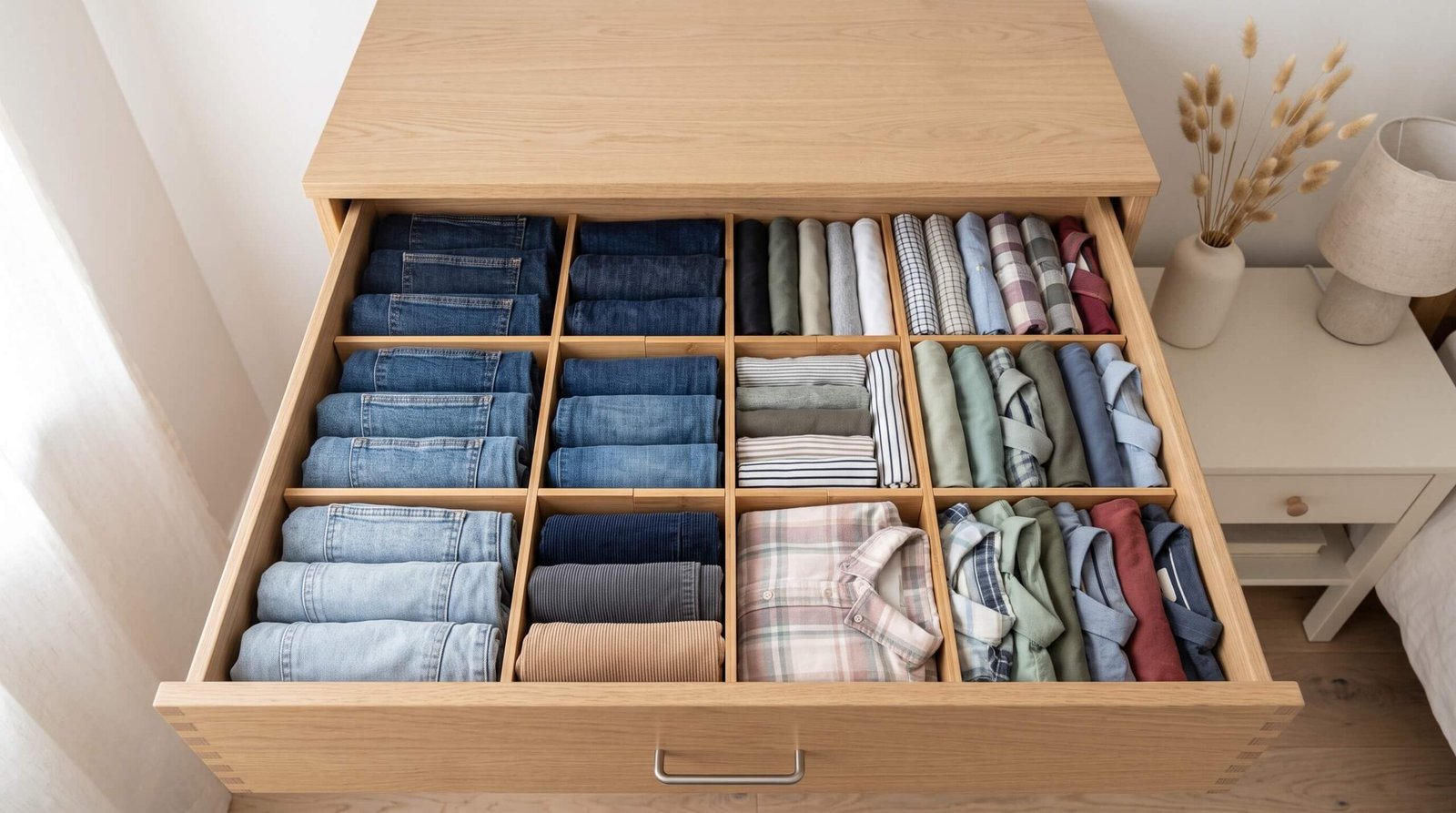
The file folding method works just as effectively for bottoms and knitwear once you adjust the final folding ratios:
• Denim and Trousers: Lay jeans flat, fold one leg directly over the other, tuck the back crotch seam inward to form a straight line, fold in half from cuff to waistband, then fold into thirds. File them with the sturdy waistband facing upward for effortless grabbing.
• Sweaters and Knitwear: Keep folds loose and wider to preserve delicate fibers. Avoid overly tight creasing, and file chunkier cardigans side-by-side in deeper dresser drawers.
• Drawer Dividers: To prevent neatly filed rows from tipping over as laundry levels fluctuate throughout the week, add simple tension dividers or fabric bins. These keep your rows structured whether a drawer is fully stocked or half-empty.
Transforming Your Daily Routine with the File Folding Method
Switching from messy horizontal piles to the file folding method takes an initial afternoon of organization, but it permanently streamlines your morning routine. When every garment stands upright and visible, choosing outfits becomes effortless, laundry put-away turns intuitive, and drawer clutter becomes a thing of the past.
If you want to take your bedroom and closet setup to the next level beyond drawer folding, pairing this spatial approach with structured storage containers creates a seamless system. Explore our complete guide on the 10 Best Closet Organization Essentials to optimize your hanging rods, upper shelves, and shoe storage alongside your newly organized drawers.
Frequently Asked Questions
Does the file folding method cause more wrinkles in clothing?
No, file folding actually reduces wrinkles compared to horizontal stacking. Because individual garments are stored side-by-side rather than bearing the heavy downward pressure of overlying piles, the fabric fibers experience less compression over time.
Can I use the file folding method for socks and underwear?
Yes, small garments benefit significantly from vertical storage. Folding socks in neat squares rather than tight balls preserves their elasticity, while organizing underwear upright inside divided drawer bins makes daily selection fast and tidy.
What should I do when a drawer is only half full?
When drawers are not completely full, filed clothes can slump forward. Using simple spring-loaded tension dividers, bookends, or fabric drawer insert boxes creates stable partitions that keep your vertical rows upright until laundry day.