Creating a warm industrial living room is all about balancing raw character with everyday comfort. Exposed brick, black metal, and darker finishes create the industrial look, while natural wood, soft textiles, and warm lighting keep the space cozy and inviting. Here are six simple ways to get the balance right.
1. Start With Warm Brick or Brick-Inspired Texture
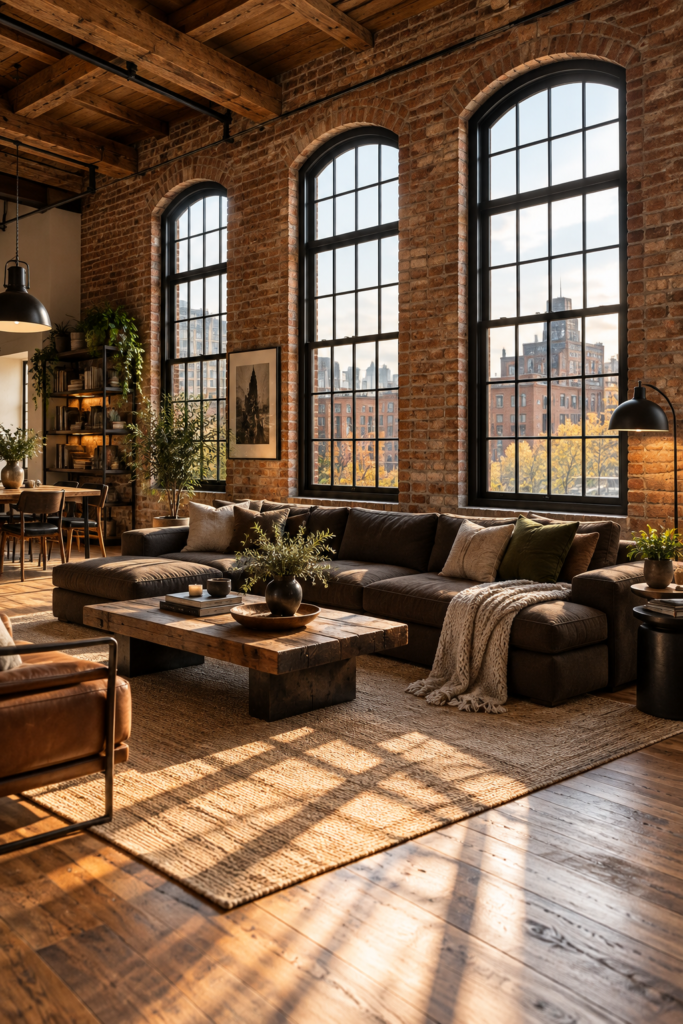
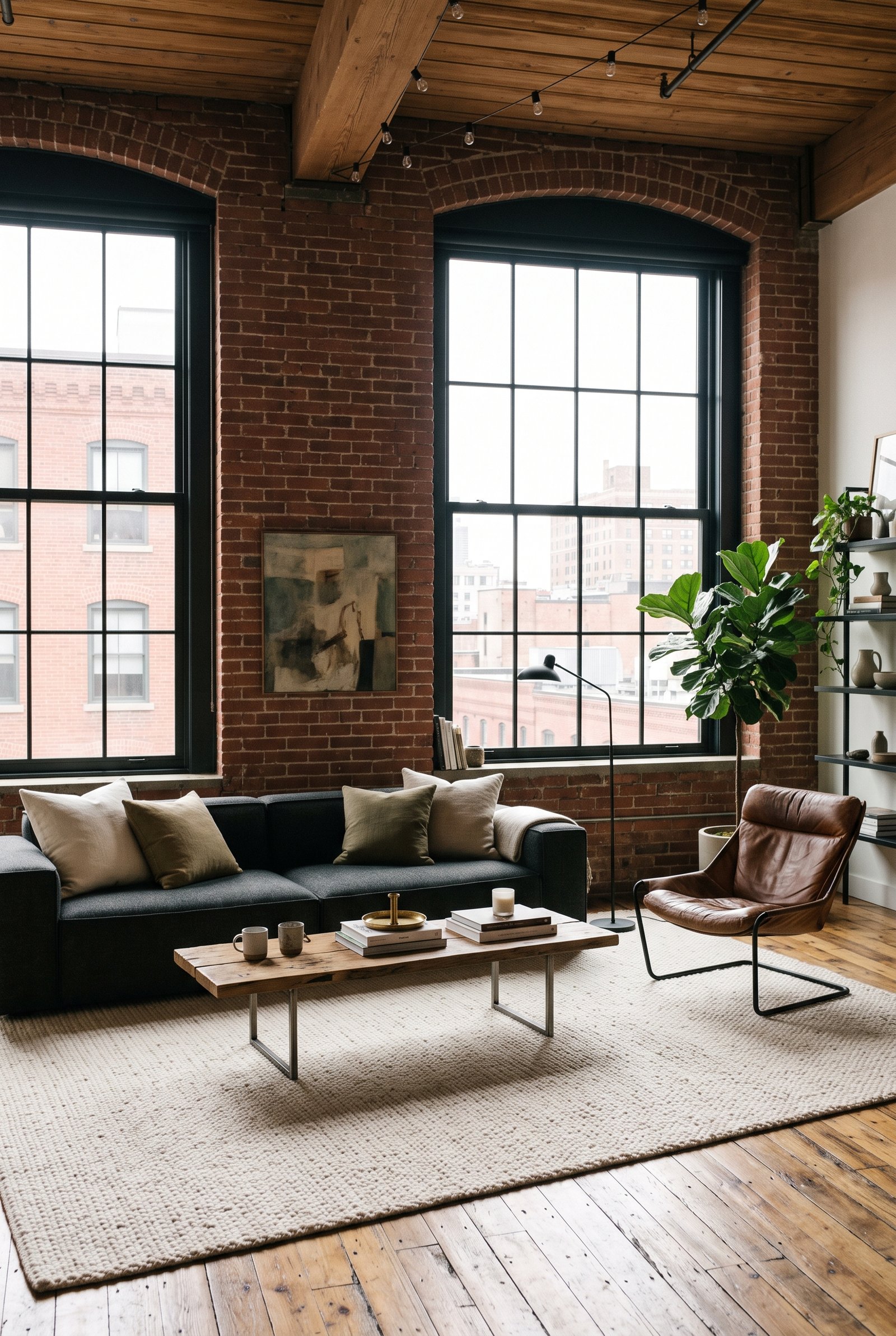
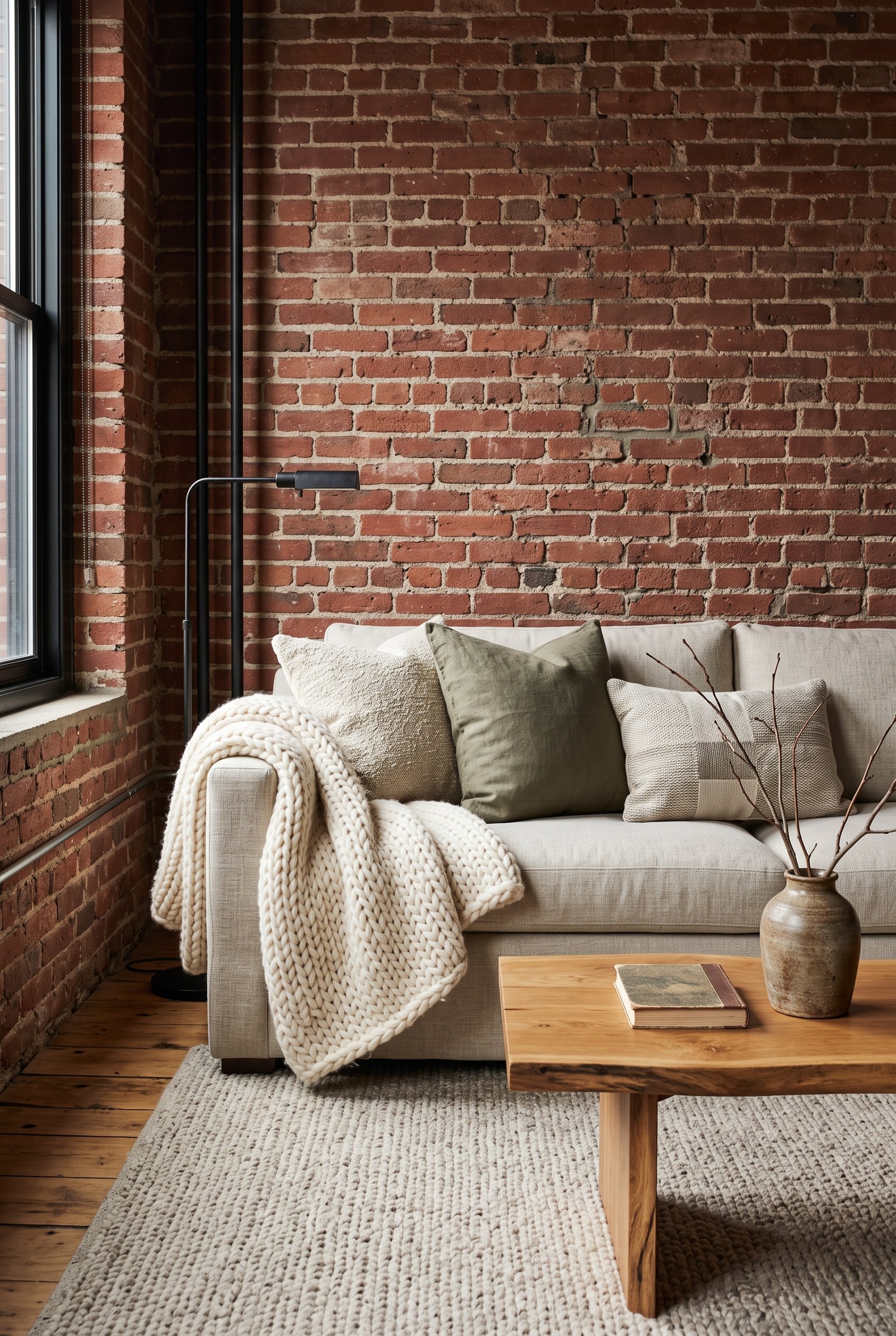
Exposed brick instantly adds character to an industrial living room, but warmer red and terracotta tones tend to feel more inviting than cool gray finishes. If you don’t have original brick, a single brick-inspired feature wall can create a similar effect without overwhelming the room.
2. Use Black-Framed Windows and Natural Light
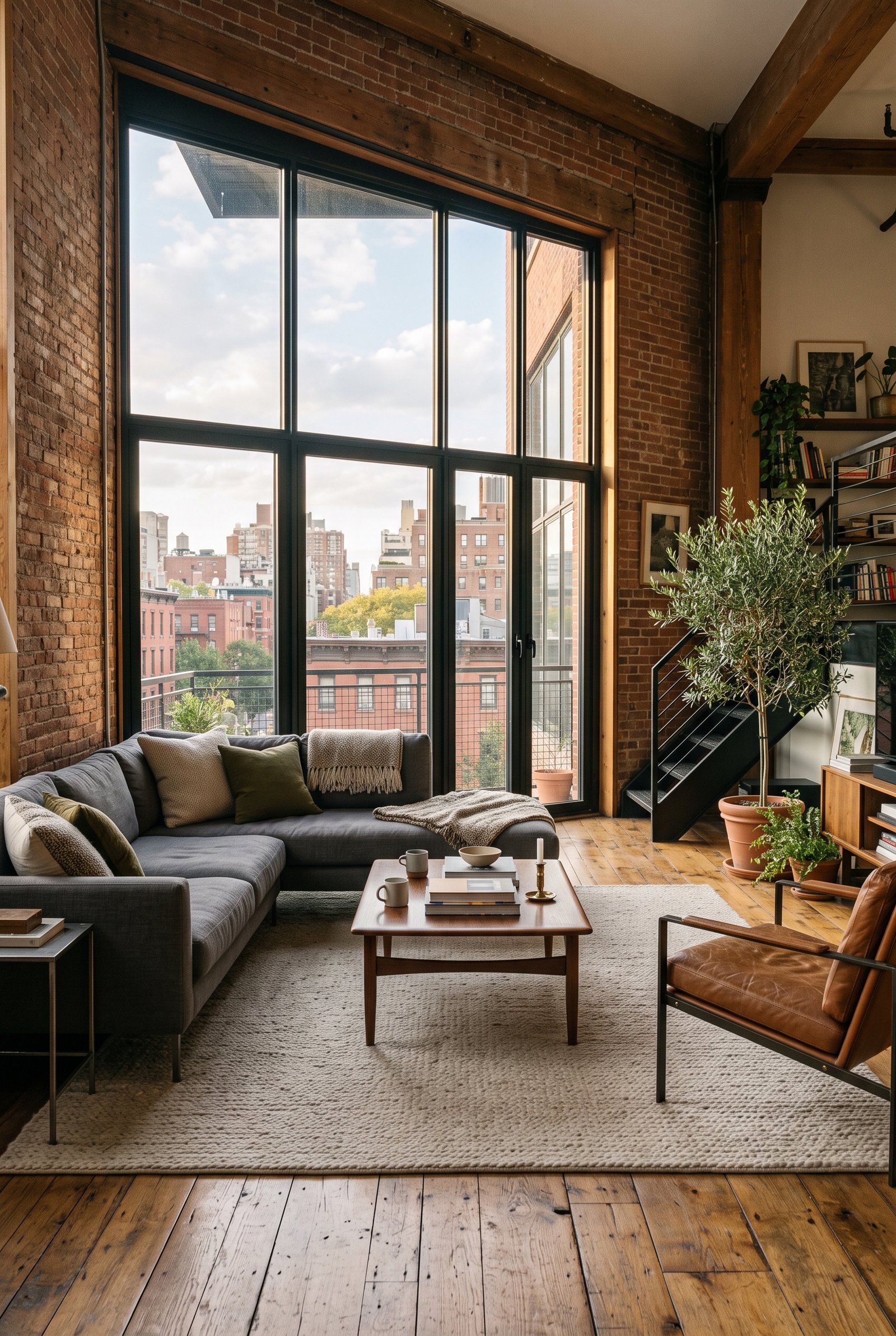
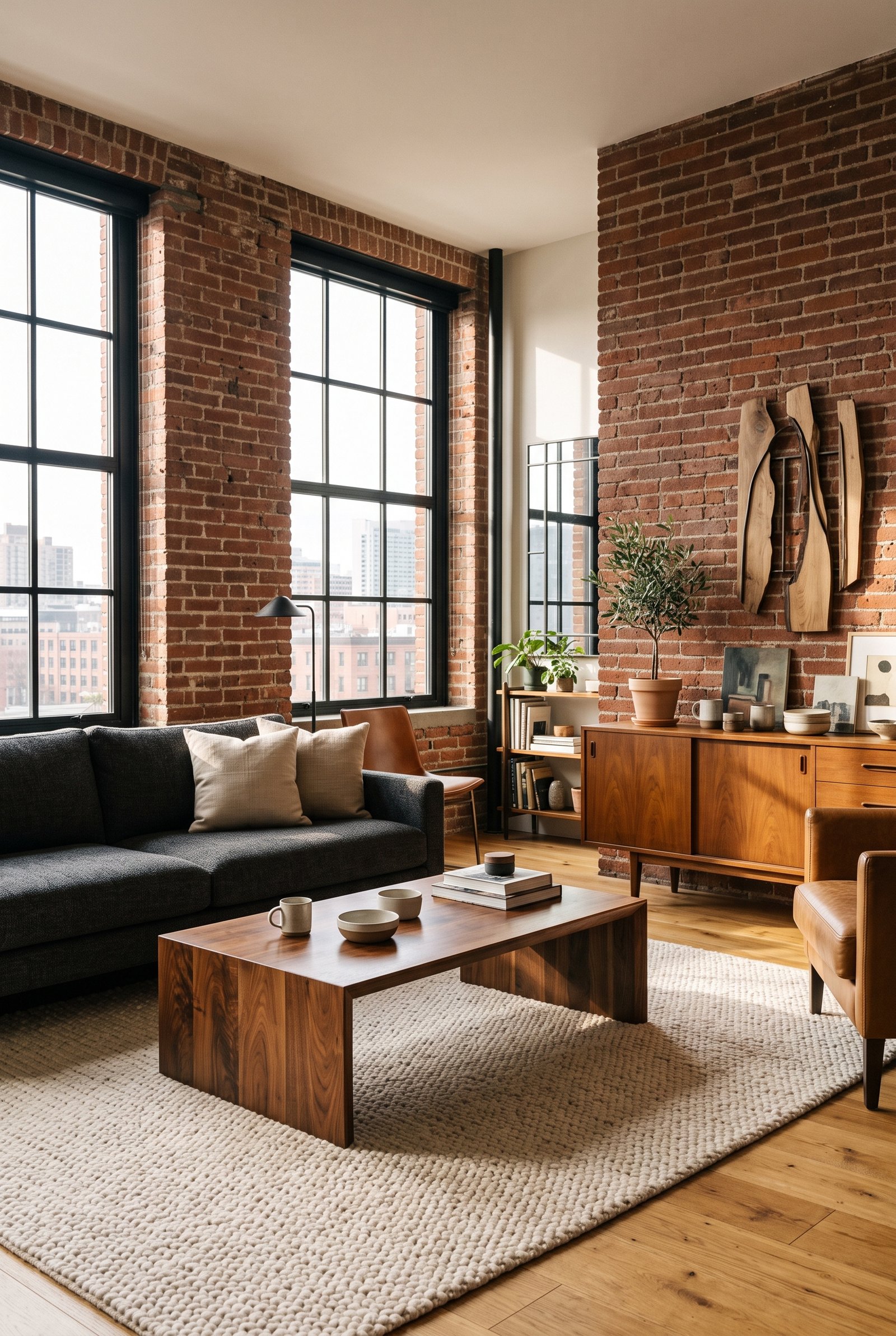
Black-framed windows create the strong contrast industrial interiors are known for, while natural light keeps darker materials from feeling heavy. Keep window treatments light and simple so daylight can highlight the warmth of brick, wood, and natural textures.
3. Choose Low-Profile Furniture to Keep the Room Open
Low-profile furniture helps an industrial living room feel open and relaxed, especially when the space has high ceilings or large windows. Choose comfortable, deep seating in charcoal, warm gray, brown, or other muted tones rather than filling the room with solid black furniture.
4. Balance Hard Materials With Soft Textures
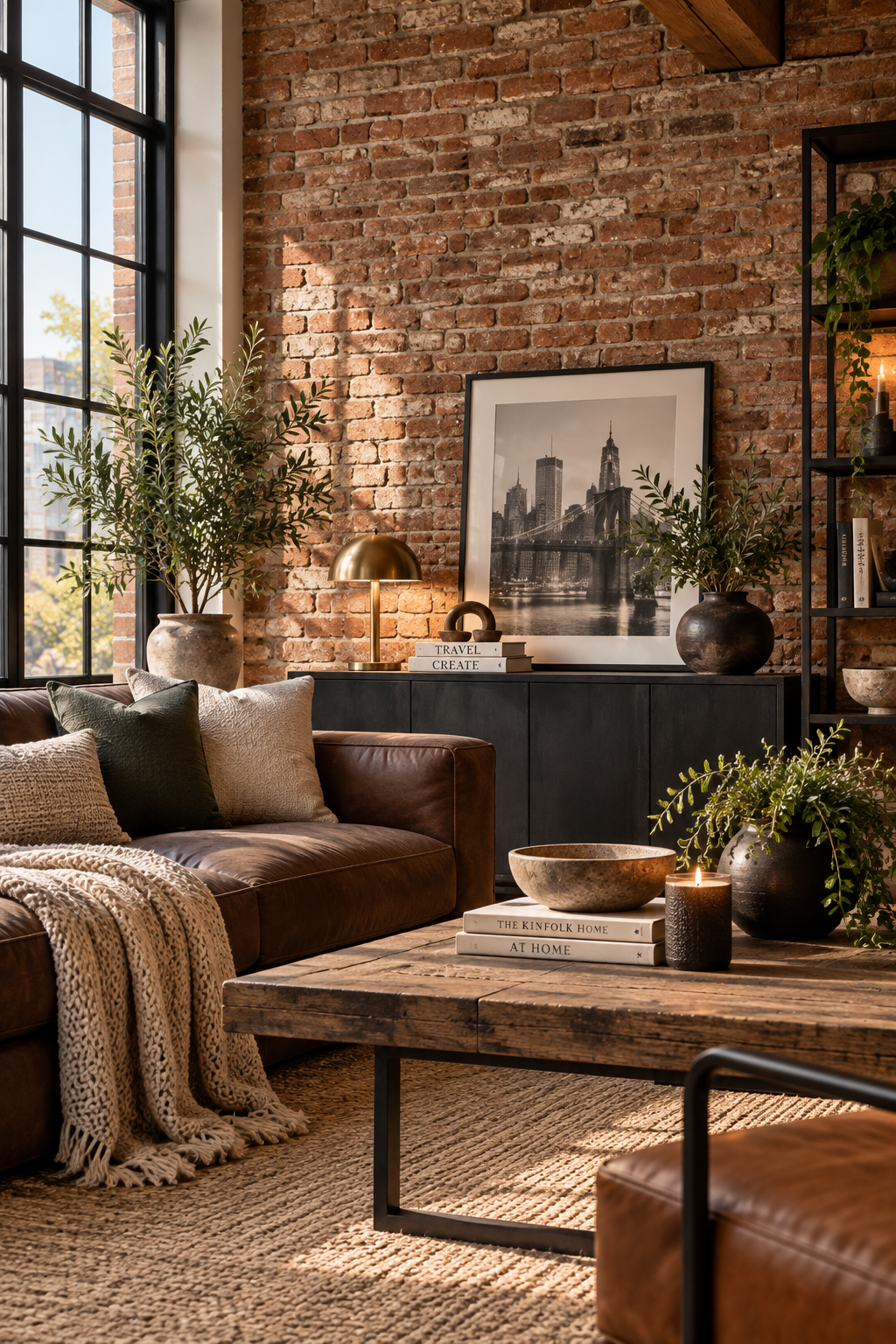
Brick, metal, and wood can feel harsh when used alone. Soften them with a textured rug, linen pillows, a chunky throw, or bouclé accents in warm neutral shades to make the room feel more comfortable and lived-in.
5. Mix Dark Furniture With Warm Wood
Balance charcoal or dark brown furniture with warm oak, walnut, or reclaimed wood. A wooden coffee table, sideboard, or flooring can introduce enough warmth to soften darker industrial elements without changing the overall style.
6. Layer Warm Lighting for a Cozy Evening Atmosphere
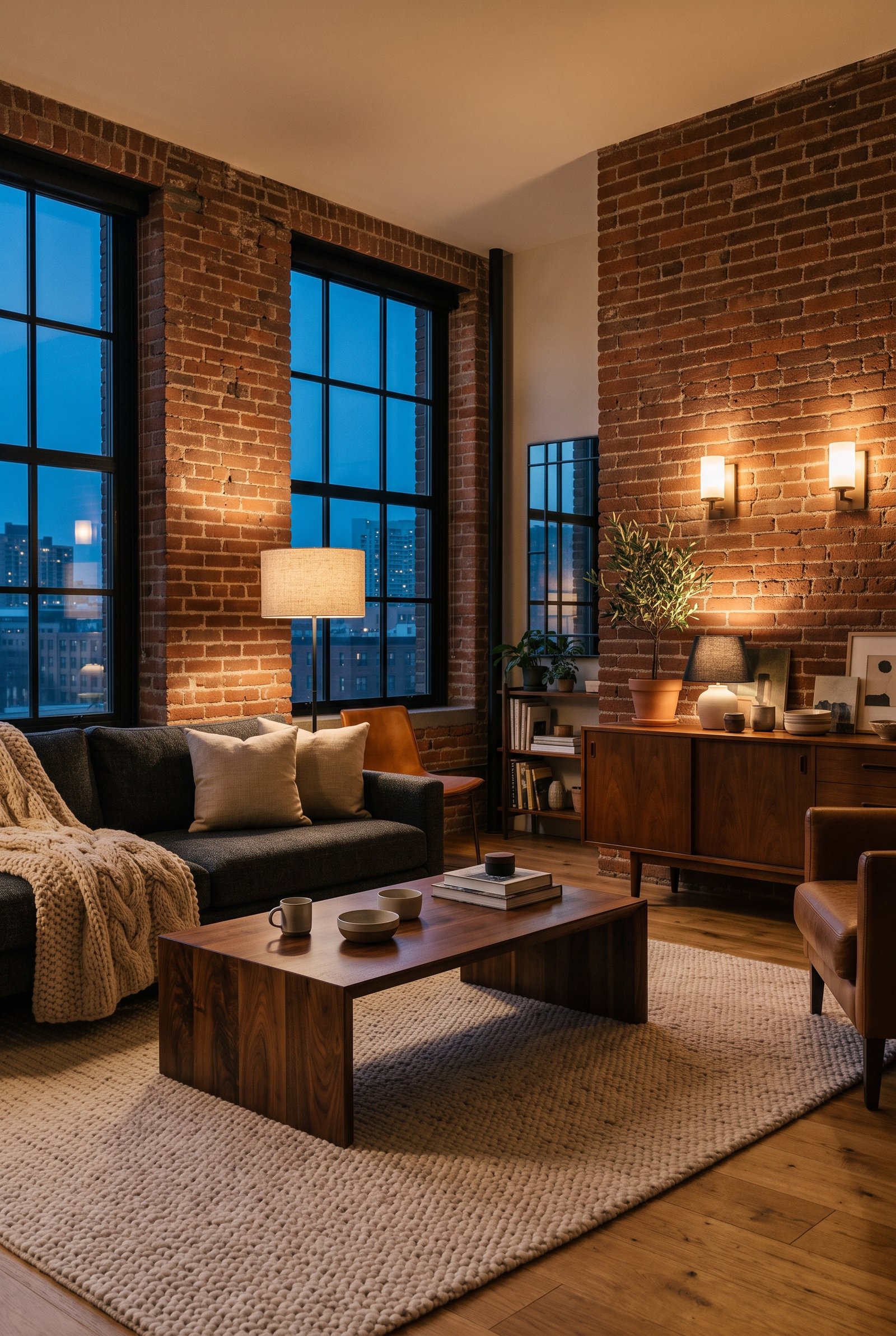
Instead of relying on one bright ceiling light, use a combination of floor lamps, table lamps, and wall sconces. Warm white lighting around 2700K works especially well with brick, wood, leather, and neutral fabrics, creating a cozier atmosphere after sunset.
7. Keep It Minimal, But Not Empty
Industrial style works best when the architecture and materials have room to breathe, but minimal doesn’t have to mean bare. An empty room with only a sofa, coffee table, and exposed brick can easily feel unfinished rather than intentional.
Instead of filling every surface, choose a smaller number of objects that add warmth or function. A few books on the coffee table, a ceramic vase, a plant, a woven basket, or one meaningful piece of artwork can make the room feel lived-in without creating visual clutter.
Pay attention to scale as well. In a large industrial living room, several tiny accessories can look scattered and insignificant. One substantial plant, an oversized piece of art, or a larger ceramic vessel often works better than a collection of small decorative objects.
Leave some surfaces intentionally empty. Negative space gives brick walls, natural wood, furniture, and architectural details more visual impact while keeping the room calm and comfortable.
Final Thoughts
A warm industrial living room is all about balance. Brick, black metal, and darker furniture bring character, while natural wood, soft textiles, daylight, and warm lighting make the space feel comfortable and welcoming. You don’t need every industrial element at once—choose the details that work for your home and let warmth, texture, and simplicity guide the final look.