

A clean home feels wonderful, but keeping it that way can quickly become overwhelming when every chore seems to pile up at once. The problem usually isn’t a lack of effort—it’s trying to clean everything whenever you notice it instead of having a simple routine to fall back on.
A realistic home cleaning schedule takes that pressure away. Rather than spending an entire Saturday catching up on chores, you can spread small, manageable tasks throughout the week and save less frequent jobs for when they actually need attention.
The key is creating a schedule around your real life—not an unrealistic routine that looks perfect on paper. Whether you’re managing a busy family home, a small apartment, or a house with pets, the best cleaning routine is one you can consistently follow.
1. Home Cleaning Schedule: Start With Your Real Weekly Routine

Before you decide what to clean and when, take an honest look at what your week actually looks like. A home cleaning schedule should fit around your life—not force your life to revolve around housework.
Think about the days that are naturally busier in your household. Maybe Monday evenings are packed with work, school activities, or errands, while Sunday mornings are usually slower. Instead of assigning a big cleaning job to an already hectic day, save it for a time when you realistically have the energy to get it done.
This is especially important for busy American households where work schedules, school runs, sports practices, grocery trips, and weekend plans can make every day look a little different. Even a quick 10- or 15-minute reset can be enough on busy days. Wiping the kitchen counters, loading the dishwasher, or putting the living room back in order still counts.
The goal isn’t to create a perfect schedule where every box gets checked. It’s to build a cleaning rhythm that feels natural enough to repeat week after week. When your routine reflects how you actually live, keeping your home comfortable and tidy becomes much easier.
2. Separate Daily, Weekly, and Monthly Cleaning Tasks
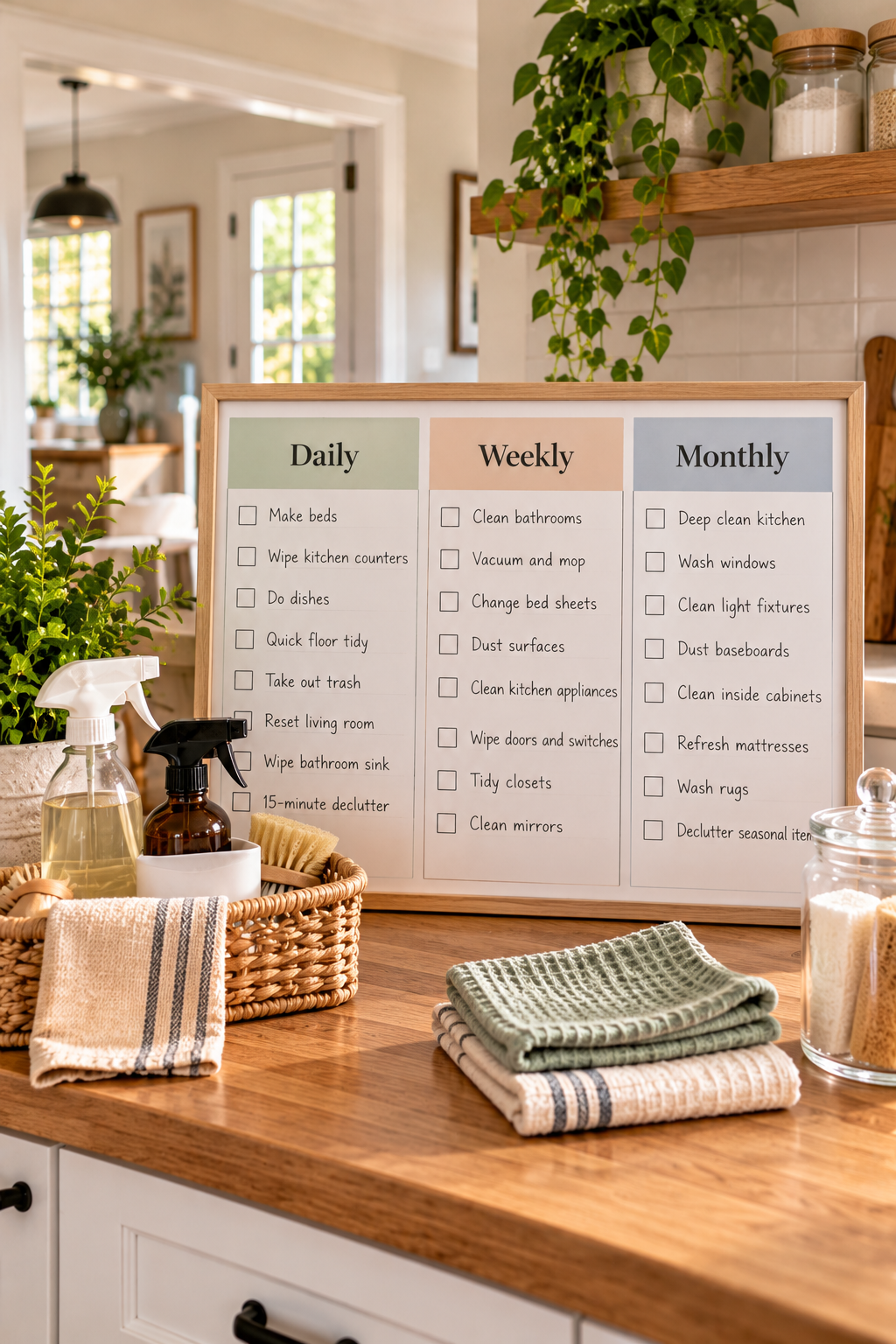
Not every cleaning task needs your attention every day. One of the easiest ways to make your routine feel manageable is to separate household chores into daily, weekly, and monthly tasks.
Keep your daily list short and focused on the little things that quickly affect how your home feels. Making the bed, loading the dishwasher, wiping kitchen counters, putting away clutter, and doing a quick evening reset can prevent small messes from turning into a much bigger weekend project.
Weekly tasks can handle the jobs that need a little more time, such as cleaning bathrooms, vacuuming and mopping floors, changing bed linens, dusting surfaces, and giving the kitchen a more thorough clean. Then save jobs like washing windows, wiping baseboards, cleaning inside cabinets, and other deeper cleaning projects for a monthly rotation.
This approach works especially well because your entire home doesn’t need to be deep-cleaned every Saturday. When each task has its own rhythm, you always know what actually needs attention—and what can comfortably wait. That makes keeping a clean home feel much more realistic instead of like a never-ending to-do list.
3. Keep Daily Cleaning Tasks Small

Daily cleaning shouldn’t feel like a second job. If your home cleaning schedule asks you to scrub bathrooms, mop floors, do several loads of laundry, and deep-clean the kitchen after an already busy day, it probably won’t be sustainable for very long.
Instead, think of daily cleaning as a series of small resets. Make the bed in the morning, wipe the kitchen counters after dinner, load or unload the dishwasher, put stray items back where they belong, and spend a few minutes straightening the main living areas. Most of these jobs can be finished in just a few minutes.
This approach works particularly well in busy households because it prevents everyday mess from building up without requiring a major cleaning session. You don’t need your home to look professionally cleaned every evening—you simply want to make tomorrow a little easier.
Choose a handful of small tasks that make the biggest difference in how your home looks and feels, and stop there. Save the heavier cleaning for its scheduled day. A short routine you can repeat consistently will do far more for your home than an ambitious daily checklist you eventually stop following.
4. Assign Weekly Cleaning Tasks to Specific Days

A weekly cleaning routine becomes much easier to follow when each bigger task has its own day. Instead of waking up on Saturday with an entire house to clean, spread those jobs across the week in a way that fits your normal routine.
For example, Monday might be for bathrooms, Tuesday for bedrooms and fresh bed linens, Wednesday for dusting, Thursday for vacuuming and mopping, and Friday for giving the kitchen a more thorough clean. Your schedule doesn’t need to follow this exact order—the best arrangement is the one that works with your household and your busiest days.
Try to keep each day’s assignment realistic. If you already have a packed Wednesday evening, don’t make that your biggest cleaning day. In a busy American household, leaving weekends lighter can also free up more time for family activities, errands, entertaining, or simply relaxing at home.
Giving each task a regular place in the week also removes a lot of the mental work from cleaning. You don’t have to keep wondering what needs to be done next. When Thursday comes around, you already know the plan—and once that day’s task is finished, you can move on without feeling like you should be cleaning the entire house.
5. Clean by Zone Instead of the Whole House

Trying to clean every room from top to bottom at the same time can make even a well-planned routine feel overwhelming. A simpler approach is to divide your home into zones and focus your attention on one area at a time.
Think of your kitchen, living room, bedrooms, bathrooms, laundry room, and entryway as separate cleaning zones. When it’s time to work on one zone, finish the important tasks there before moving on. This keeps you from bouncing between rooms with a spray bottle in one hand and a pile of laundry in the other.
Zone cleaning can be especially useful in larger American homes, where trying to tackle the entire house in a single cleaning session can easily take up most of a weekend. You might focus on the kitchen and dining area one day, bedrooms another day, and bathrooms later in the week.
Don’t worry about making every zone spotless each time. Focus on what actually needs attention and let your home cleaning schedule handle the rest over time. Breaking the house into smaller, manageable areas makes cleaning feel less intimidating and gives you a clear stopping point when you’re done.
6. Leave Room for Catch-Up Days
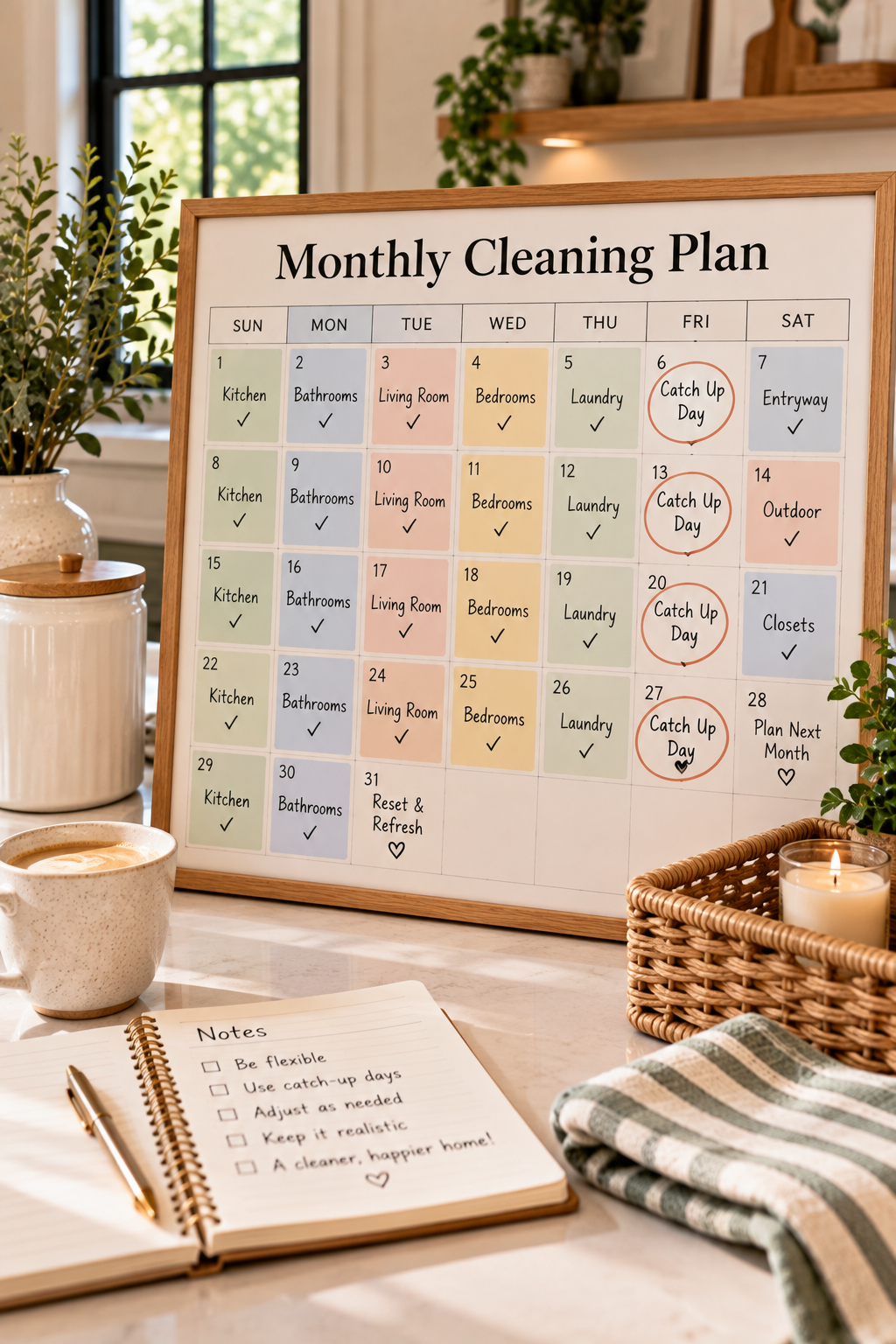
A home cleaning schedule should make life easier, not make you feel behind every time an unexpected day gets in the way. Work runs late, kids have activities, guests come over, or sometimes you simply don’t feel like cleaning—and your routine should be flexible enough to handle that.
Instead of filling every day of the week with chores, leave one lighter day as a catch-up day. If you miss Tuesday’s bathroom cleaning, for example, you can move it there rather than trying to squeeze two full cleaning sessions into Wednesday.
This little bit of flexibility is especially helpful for busy households because missing one task doesn’t cause the entire schedule to fall apart. And if you’re completely caught up, your catch-up day becomes a day off. There’s no need to invent another cleaning job just because you have an empty space on the calendar.
Think of your schedule as a helpful guide rather than a strict set of rules. A routine you can adjust when real life happens is far more useful than a perfect-looking plan that’s impossible to maintain.
7. Create a Simple Cleaning Schedule You Can See
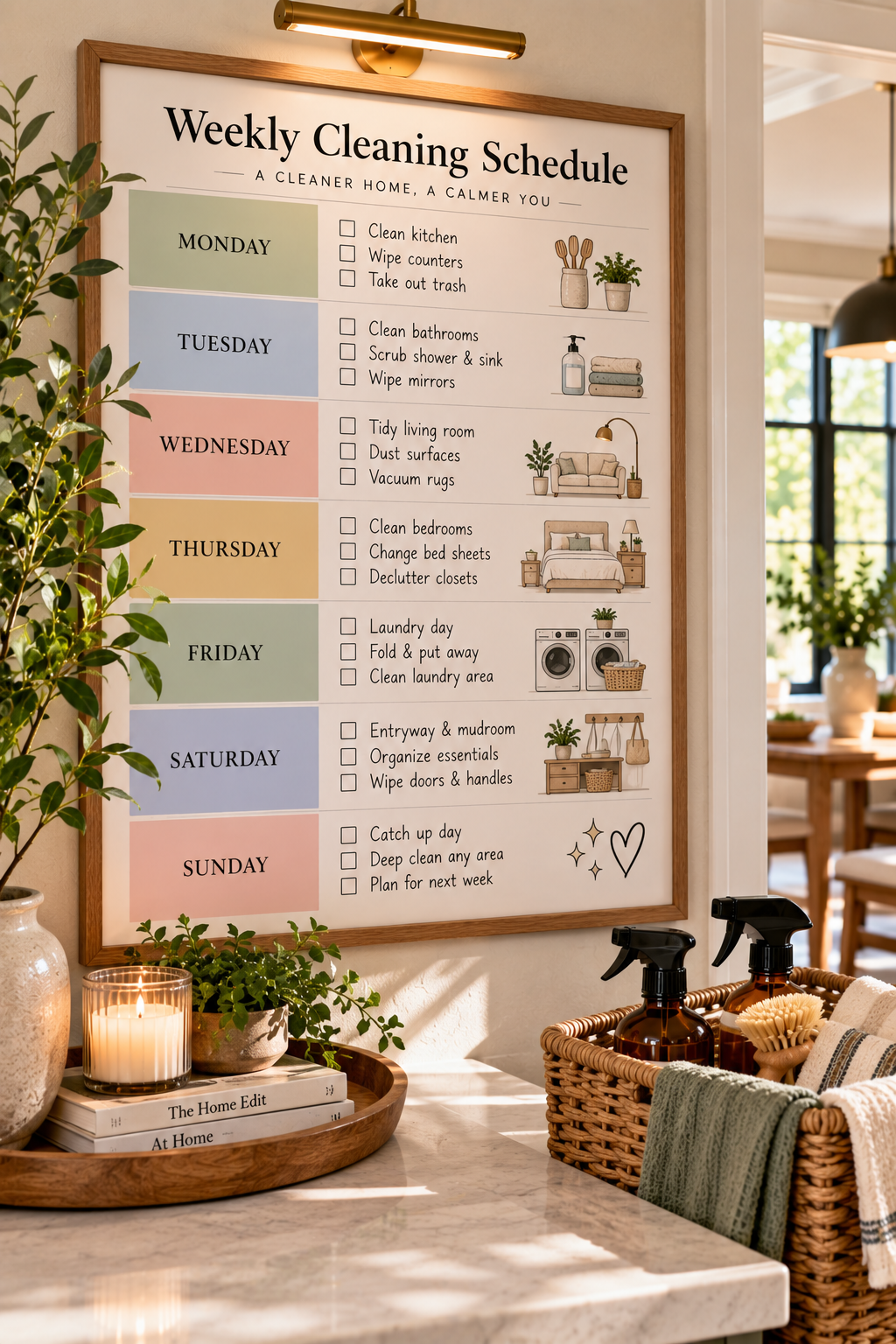
Even the best cleaning routine won’t help much if you forget what you’re supposed to do. Once you’ve created a schedule that works for your household, put it somewhere you’ll naturally see it throughout the week.
A simple weekly schedule on the refrigerator, inside a kitchen command center, or near the family calendar can work perfectly. You don’t need an elaborate color-coded system. A clear Monday-through-Sunday plan with a few realistic tasks for each day is often much easier to follow.
Keeping the schedule visible can also make household cleaning feel more shared. In a busy family home, everyone can quickly see what needs attention instead of relying on one person to remember every chore.
Most importantly, keep the plan simple enough that you can understand it at a glance. Your home cleaning schedule should reduce mental clutter, not create more of it. When you can quickly see what’s planned for today—and know that everything else has its own day—keeping up with the house starts to feel much more manageable.
Make Your Cleaning Schedule Work for Your Life
A good home cleaning schedule isn’t about keeping every room spotless every minute of the day. It’s about creating a simple rhythm that prevents chores from piling up and helps your home feel comfortable without taking over your free time.
Start small, spread bigger jobs throughout the week, and give yourself permission to move a task when life gets busy. Some weeks you’ll follow the schedule perfectly, and other weeks you won’t—and that’s completely normal.
After a few weeks, you’ll probably notice which tasks need to happen more often and which ones can wait a little longer. Adjust the routine until it fits the way your household actually lives.
The best cleaning schedule isn’t the most detailed one. It’s the one that quietly becomes part of your routine and leaves you with more time to actually enjoy your home.
Frequently Asked Questions About Home Cleaning Schedules
How many days a week should you clean your house?
You don’t need to thoroughly clean your entire house every day. A few small daily resets combined with larger cleaning tasks spread throughout the week are usually much easier to maintain. The right frequency depends on your household size, pets, lifestyle, and how quickly different areas get messy.
What cleaning tasks should be done every day?
Focus on the tasks that make the biggest difference to everyday comfort. Making the bed, handling dishes, wiping kitchen counters, putting away clutter, and doing a quick evening reset are good places to start. Keep the list short enough that it doesn’t become another overwhelming routine.
Is it better to clean one room a day?
Cleaning one room or zone at a time can work very well, especially in a larger home. It gives you a clear starting and stopping point and prevents you from trying to deep-clean the entire house at once. You can also group related spaces, such as the kitchen and dining area, when that fits your routine better.
How do you stick to a home cleaning schedule?
Make the schedule realistic, keep daily tasks small, and leave some flexibility for busy days. Put your schedule somewhere visible and adjust it when something consistently isn’t working. A simple routine that fits your real life is much easier to maintain than an ambitious plan that expects every week to go perfectly.