
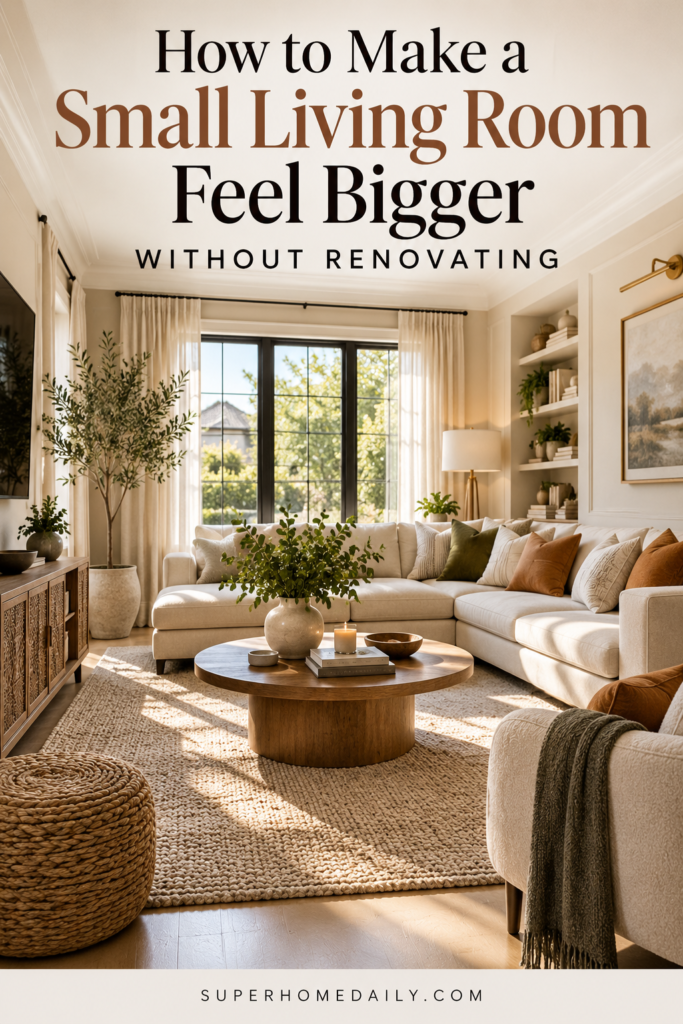
You can make a small living room feel bigger without renovating or changing the footprint of the space. Simple decisions about furniture placement, visual clutter, lighting, and scale can make a compact room feel noticeably more open.
The goal is not to remove everything from the room, but to create clearer sightlines, better flow, and a more intentional layout using what you already have.
1. Create Clear Walking Paths to Make a Small Living Room Feel Bigger
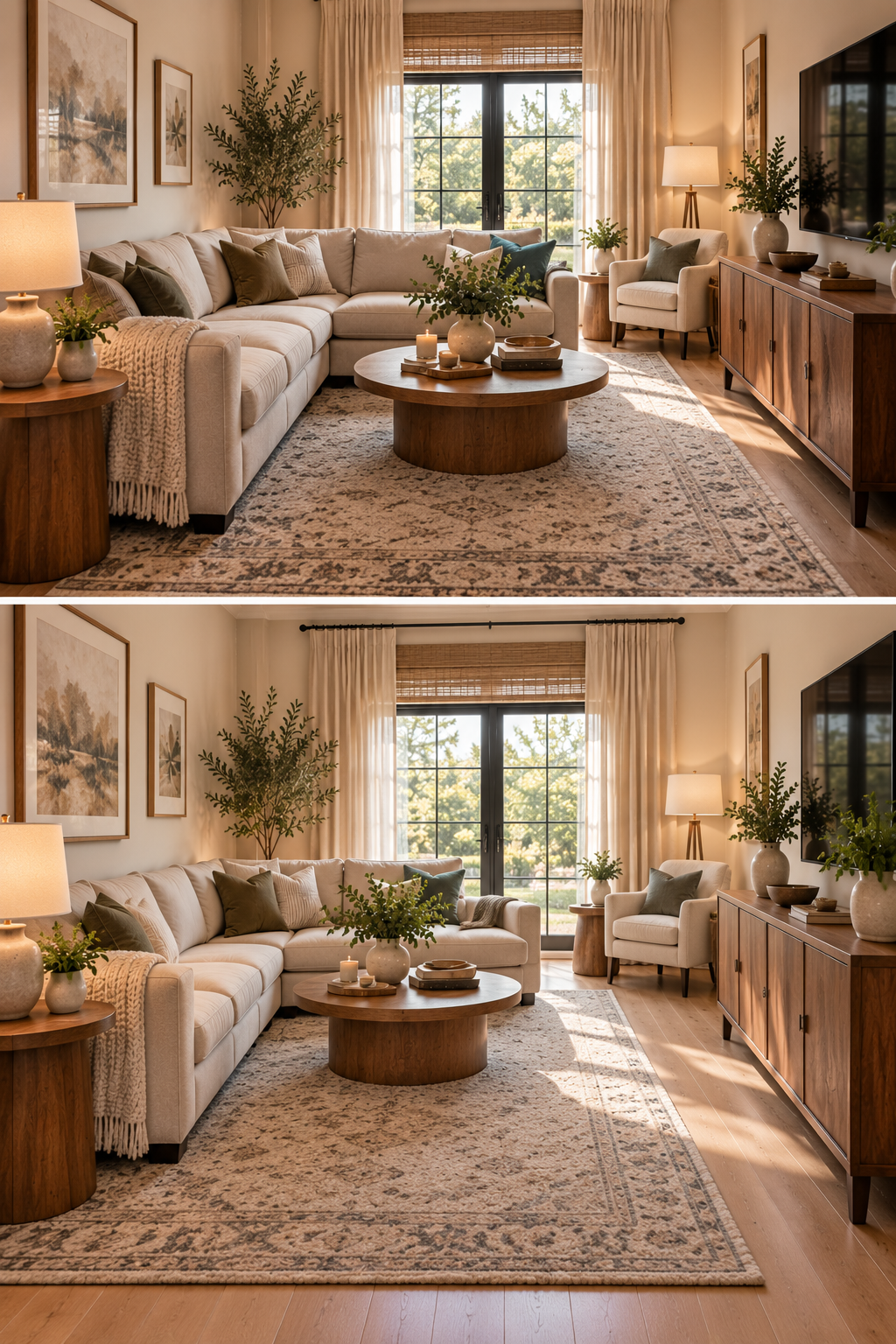
Start with the walking paths.
In a small living room, furniture that interrupts the natural route through the space can make the entire room feel tighter than it really is. Look at how you move from the doorway to the sofa, windows, or adjoining rooms, then reposition pieces that force you to squeeze around corners or weave between furniture.
You do not need huge empty areas. Even a clear, consistent path through the room helps your eye travel farther without interruption, making the space feel more open and comfortable.
Designer Tip: If you regularly have to turn sideways or walk around the coffee table to cross the room, that is usually the first layout problem worth fixing.
2. Pull Furniture Away From the Walls
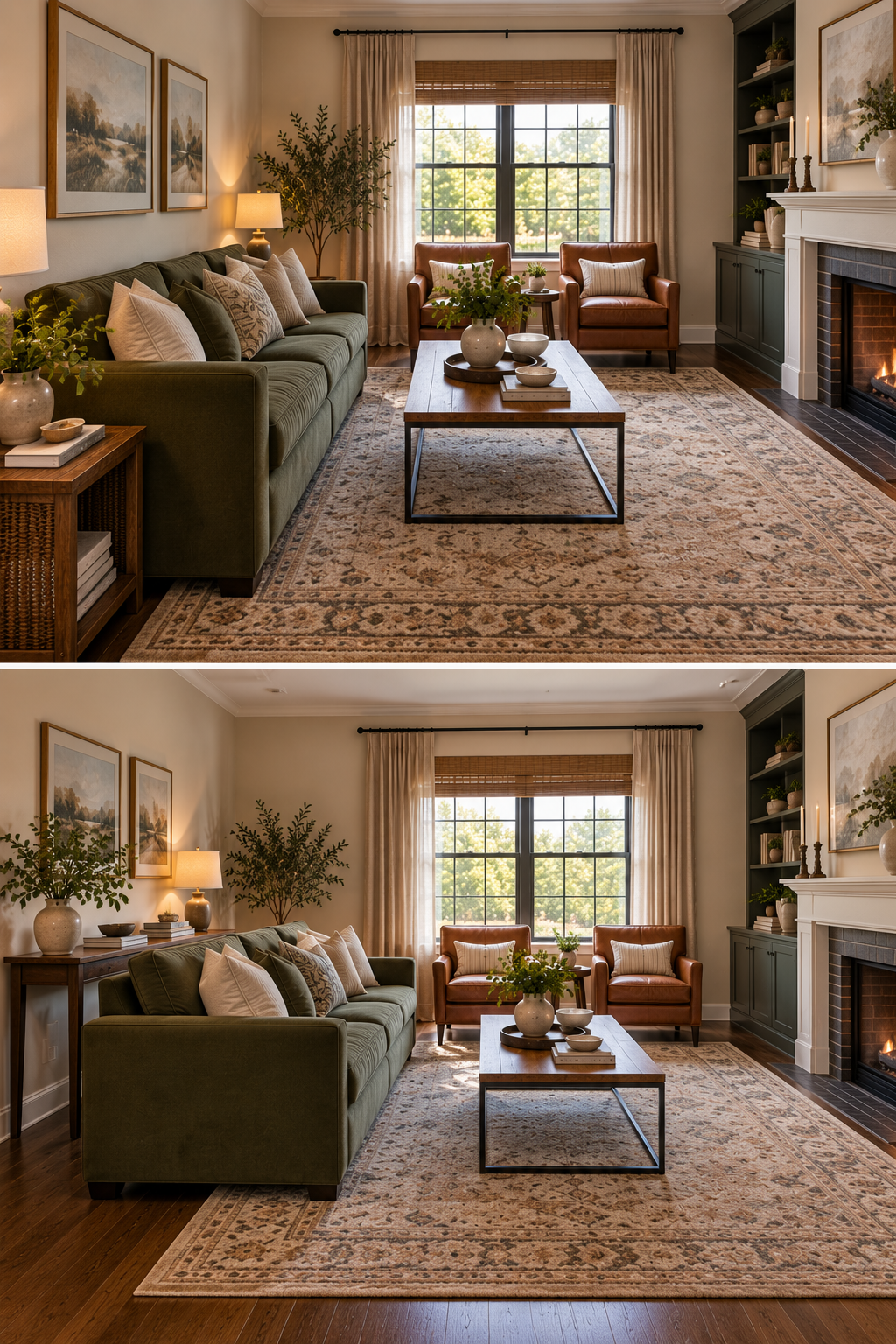
Give your furniture breathing room.
Pushing every piece tightly against the walls can actually emphasize the boundaries of a small living room. When the layout allows, pull the sofa or accent chairs a few inches forward to create a little space behind them and make the seating arrangement feel more intentional.
You do not need to float everything in the center of the room. Even a small amount of breathing room can soften the boxed-in feeling while creating a more comfortable conversation area.
Designer Tip: Start with just one major piece, such as the sofa. A subtle shift forward is often enough—you still need to protect the clear walking paths you created in the first step.
3. Use One Large Rug Instead of Several Small Ones
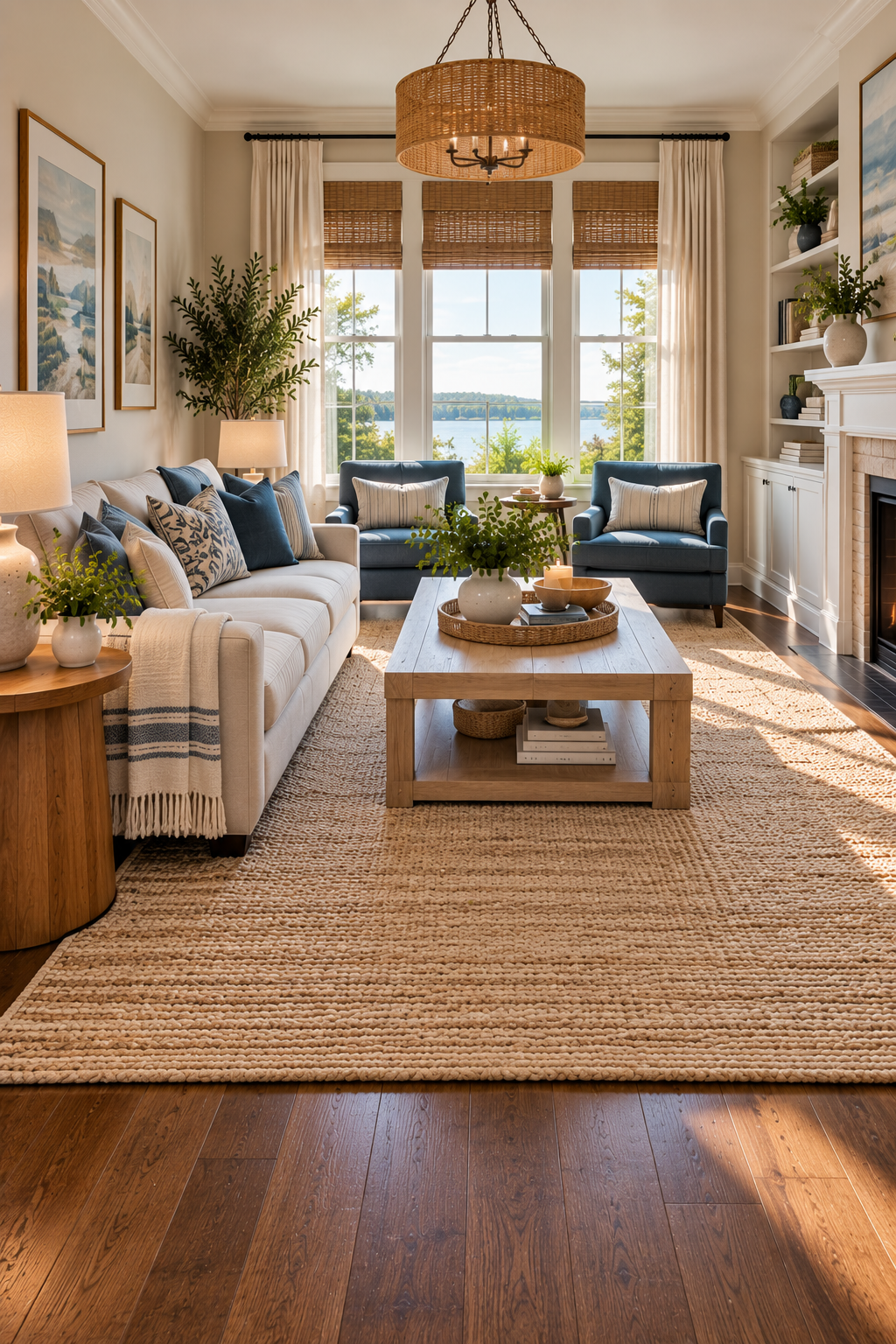
Let one rug anchor the room.
Several small rugs can visually divide a compact living room into even smaller sections. A generously sized area rug creates one continuous foundation for the seating area, helping the sofa, chairs, and coffee table read as a single, cohesive arrangement.
Ideally, choose a rug large enough for at least the front legs of your main seating pieces to rest on it. That simple connection can make the room feel more unified and visually spacious without changing the actual floor plan.
Designer Tip: Before buying a new rug, mark the dimensions on the floor with painter’s tape. It is an easy way to see whether the size will properly anchor your furniture.
4. Hang Curtains Higher and Wider
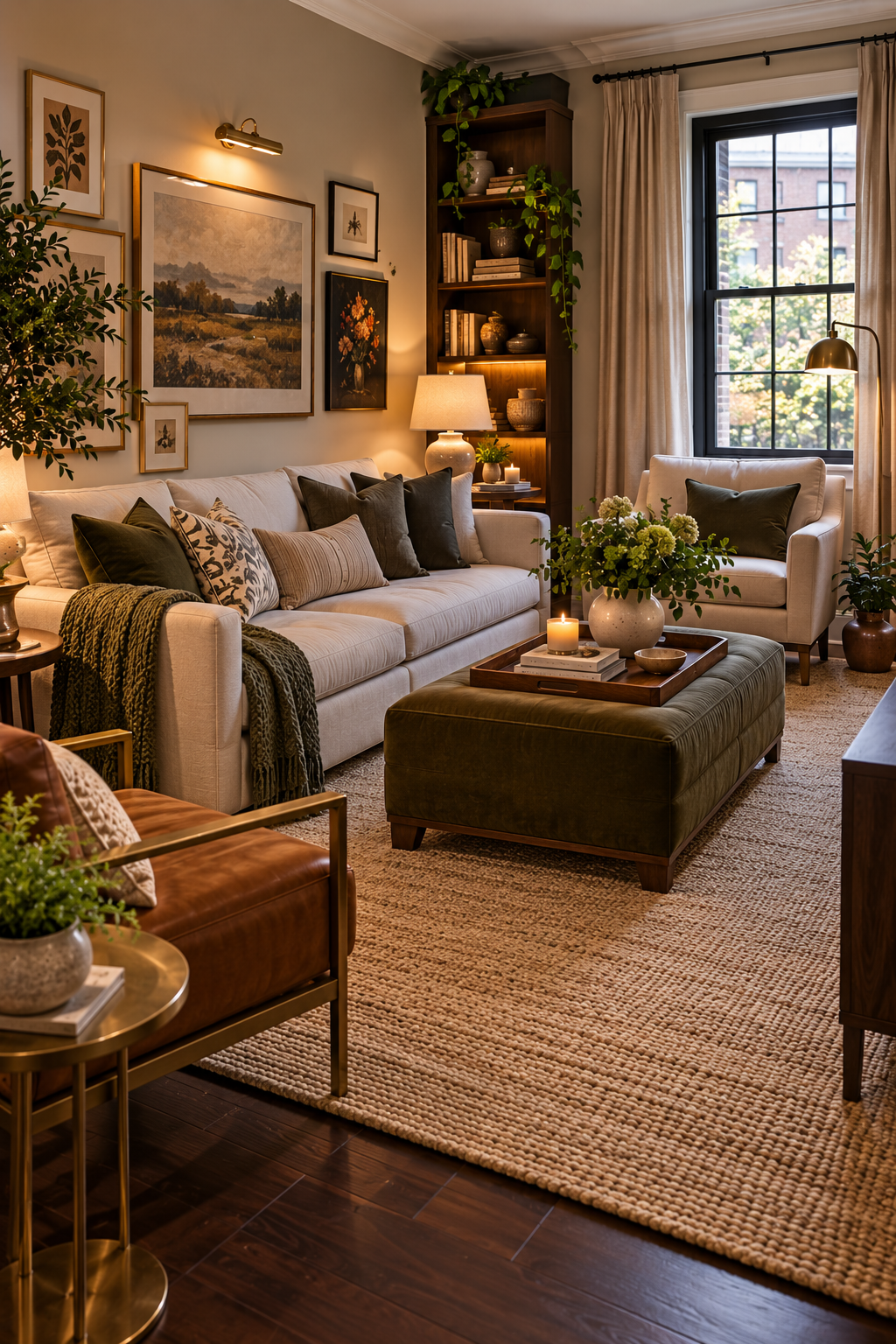
Let the windows feel larger.
Curtains hung directly above the window frame can make both the window and the surrounding wall feel smaller. Instead, mount the curtain rod higher and extend it several inches beyond each side of the window so the panels can frame the glass rather than cover it.
Floor-length curtains also create stronger vertical lines, drawing the eye upward and making the ceiling feel taller. Keeping as much of the window exposed as possible allows more natural light into the room and gives the entire space a brighter, more open feeling.
Designer Tip: Hang the rod close to the ceiling when the proportions allow, and choose panels long enough to reach the floor without bunching heavily.
5. Improve Natural Light and Use Mirrors Strategically
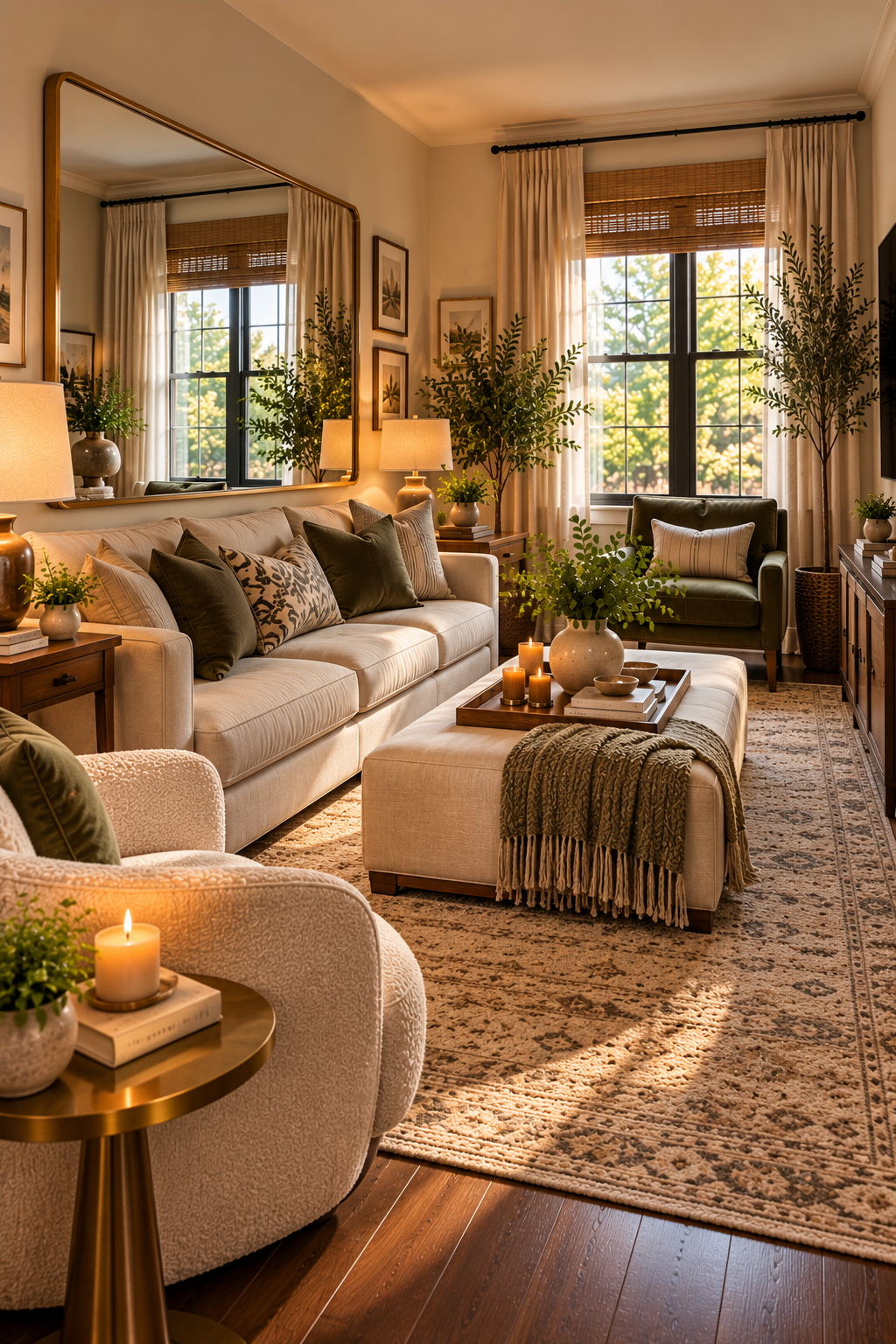
Make daylight work harder.
Natural light can instantly make a compact living room feel more open, so avoid placing tall furniture or heavy decor where it blocks the windows. Keep the glass as unobstructed as possible and use lighter window treatments that can be pulled fully aside during the day.
A well-placed mirror can extend that effect by reflecting daylight and giving the eye a greater sense of depth. Instead of hanging one randomly, position it where it can reflect a bright window, an open doorway, or another attractive part of the room.
Designer Tip: Check what the mirror reflects before hanging it. Reflecting natural light or an open view will usually make the room feel larger than reflecting a cluttered corner.
6. Reduce Visual Clutter on Surfaces
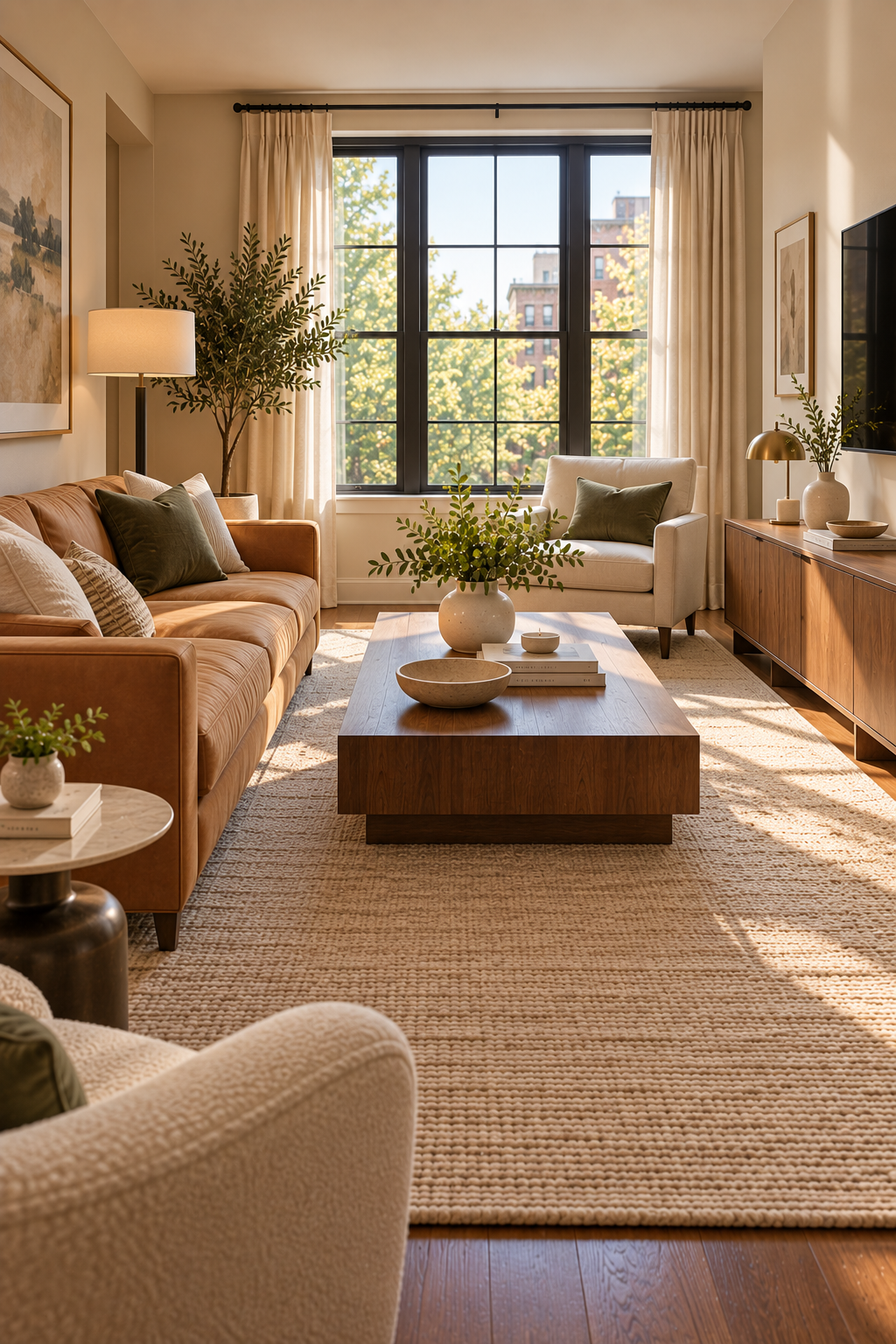
Give your surfaces room to breathe.
Coffee tables, media consoles, and side tables can quickly collect small objects that make a compact room feel visually busy. Instead of clearing everything away, keep a few pieces you genuinely use or enjoy and group them intentionally rather than spreading them across every available surface.
Leaving some visible empty space gives the eye places to rest and helps make a small living room feel bigger without making it feel bare or unfinished. A simple tray, a small stack of books, or one decorative object is often enough to make a surface feel styled.
Designer Tip: If every surface has something on it, remove about a third of the smaller items first. The room will usually feel calmer immediately without losing its personality.
7. Choose Furniture With Visible Floor Space
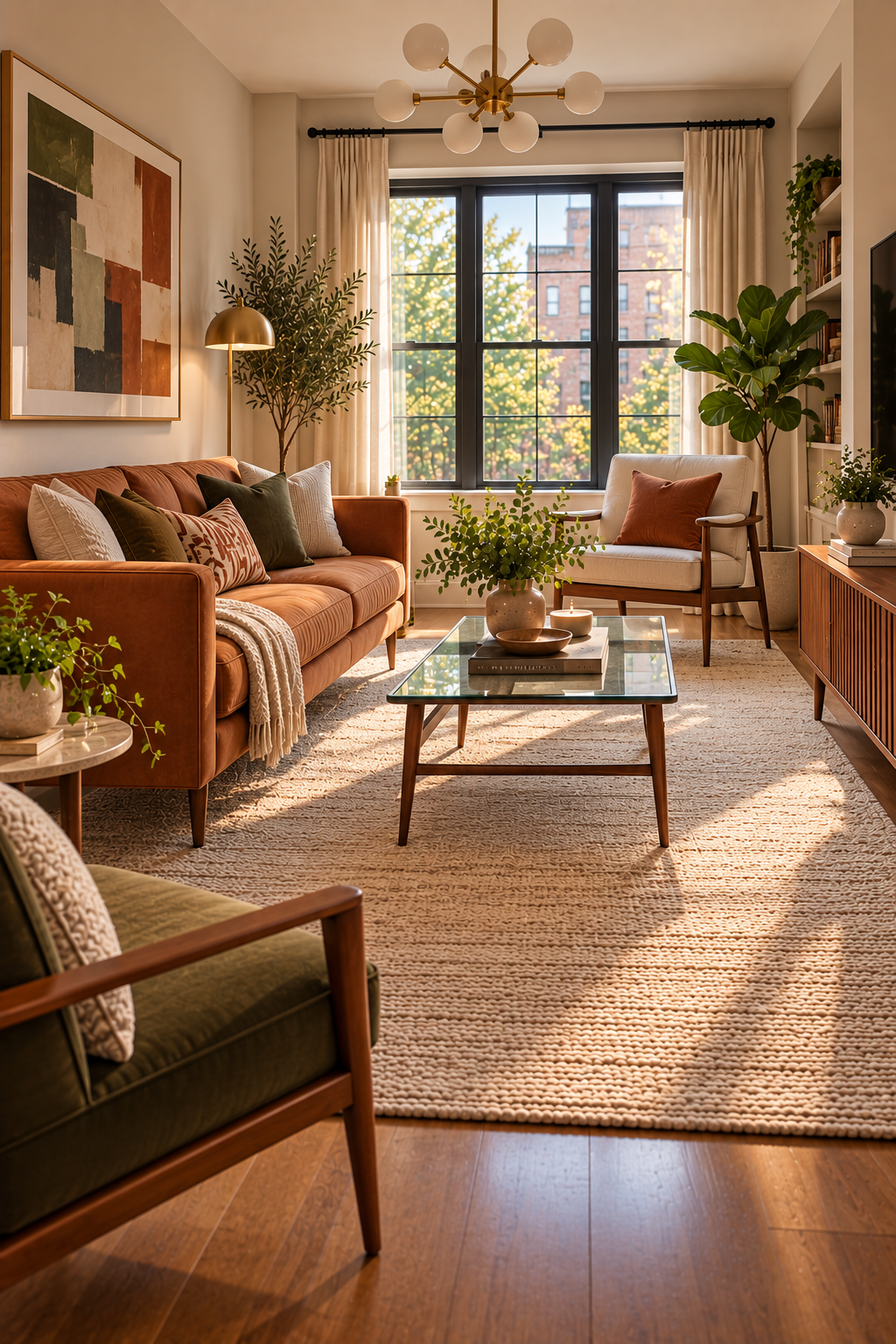
Keep the floor in sight.
Furniture with raised legs and open bases allows you to see more of the floor underneath, which can make a compact living room feel lighter and less crowded. Sofas, accent chairs, coffee tables, and media consoles do not all need to be visually heavy pieces that sit directly against the floor.
You do not need to replace every piece of furniture to get this effect. If you are adding or eventually replacing something, choosing a design with slimmer legs or an open base is a simple way to make a small living room feel bigger while still keeping the room comfortable and practical.
Designer Tip: Mix visually lighter furniture with a few solid pieces rather than making everything delicate. The goal is to create more visible floor space, not to make the room feel sparse.
8. Create One Strong Focal Point
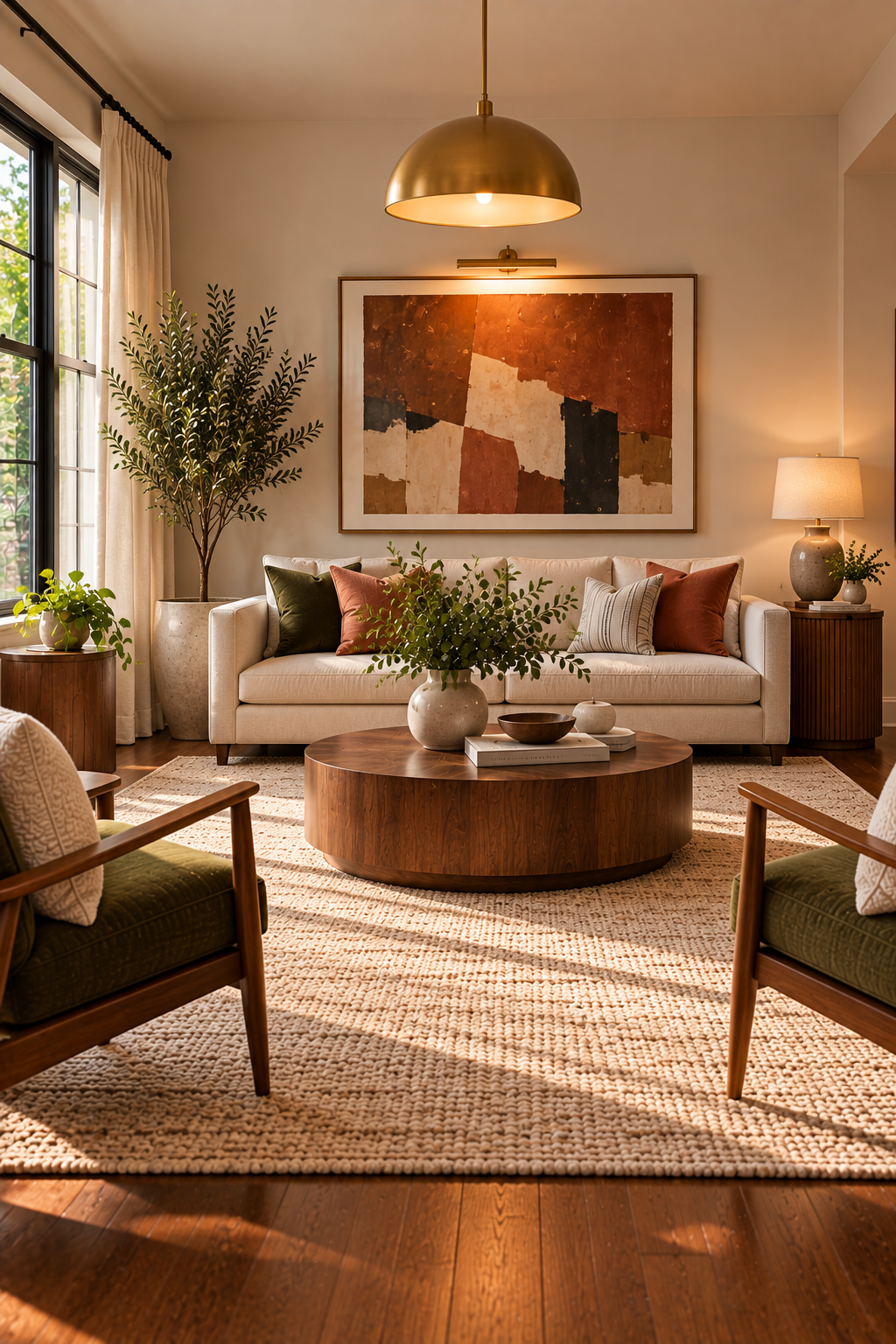
Give the eye one destination.
Too many competing focal points can make a small living room feel visually crowded. Instead of asking a fireplace, television, gallery wall, shelving, and bold decor to compete for attention, choose one feature to lead the room and let the surrounding elements play a quieter role.
Your focal point could be a large piece of artwork, a beautiful window, or another feature that naturally draws attention. Building the furniture arrangement around that single anchor gives the room a clearer visual hierarchy and makes the overall design feel calmer and more intentional.
Designer Tip: Stand at the entrance to the room and notice where your eye lands first. If several features compete for attention, simplify the surrounding area so one clear focal point can take the lead.
Frequently Asked Questions
How can I make a small living room feel bigger without renovating?
Start with the layout. Clear walking paths, thoughtful furniture placement, more visible floor space, natural light, and less visual clutter can make a small living room feel bigger without changing its actual footprint.
What colors make a small living room look larger?
Light and mid-tone colors can help reflect natural light, but an all-white palette is not necessary. Soft warm neutrals, muted greens, gentle blues, and other cohesive shades can keep the room feeling open without sacrificing personality.
Should furniture touch the walls in a small living room?
Not always. When space allows, pulling a sofa or chair a few inches away from the wall can create visual breathing room and make the furniture arrangement feel more intentional.
What size rug works best in a small living room?
Choose a rug large enough to connect the main seating pieces. Ideally, at least the front legs of the sofa and accent chairs should rest on the rug so the seating area feels like one cohesive zone.
Final Thoughts
A small living room does not need major renovations to feel more spacious. Often, the biggest improvements come from adjusting the layout, allowing more light into the room, simplifying visual clutter, and giving furniture enough breathing room.
If you want to make a small living room feel bigger, focus on creating clear sightlines and making every element feel intentional rather than simply adding or removing decor. Small changes can completely shift how open, balanced, and comfortable the room feels.