Disclaimer: This post contains affiliate links. If you purchase through these links, we may earn a commission at no extra cost to you.
Arranging an area rug in tight quarters often feels tricky when standard layouts overwhelm your space. Mastering simple small living room rug placement rules allows you to anchor seating properly and make your room feel instantly larger.
Check our guide on entryway shoe storage solutions for more ideas, or read about standard layouts on Wikipedia’s living room design overview.
1. Anchor Seating with the Front Legs Only Rule
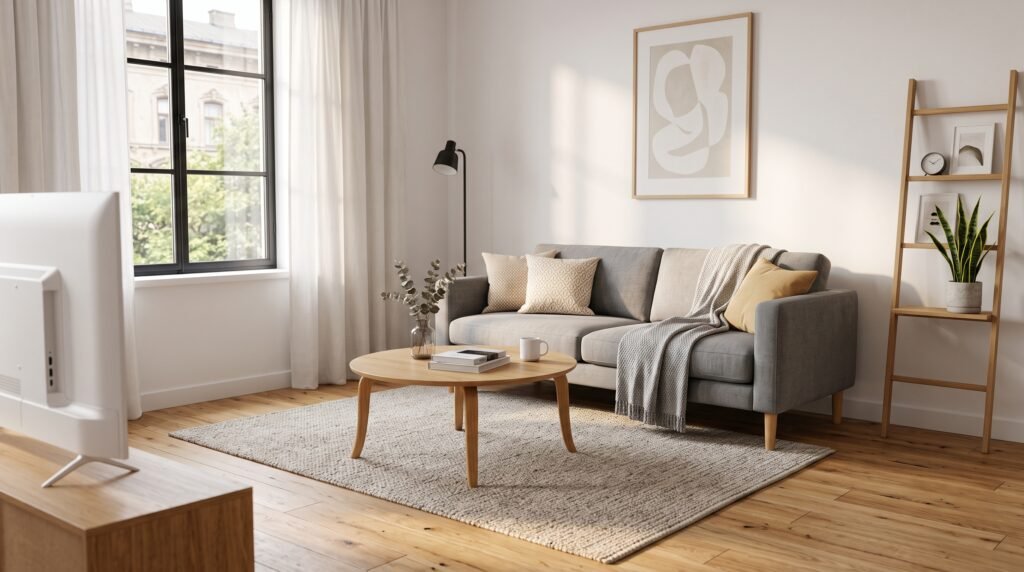
Placing every furniture leg on an area rug demands excessive floor clearance that compact spaces simply do not have. Resting only the front two legs of your sofa and accent chairs on the weave establishes an intentional perimeter while allowing the back of the room to breathe.
Understanding these essential small living room rug placement rules helps you bridge the gap between seating elements without overcrowding narrow walkways.
Why It Works:
It establishes an optical anchor that pulls independent seating pieces into one cohesive conversation zone while leaving floor borders open.
Best For:
Apartment-sized sofas, paired accent armchairs, and narrow rectangular living rooms.
2. Center Accents with the Floating Coffee Table Layout
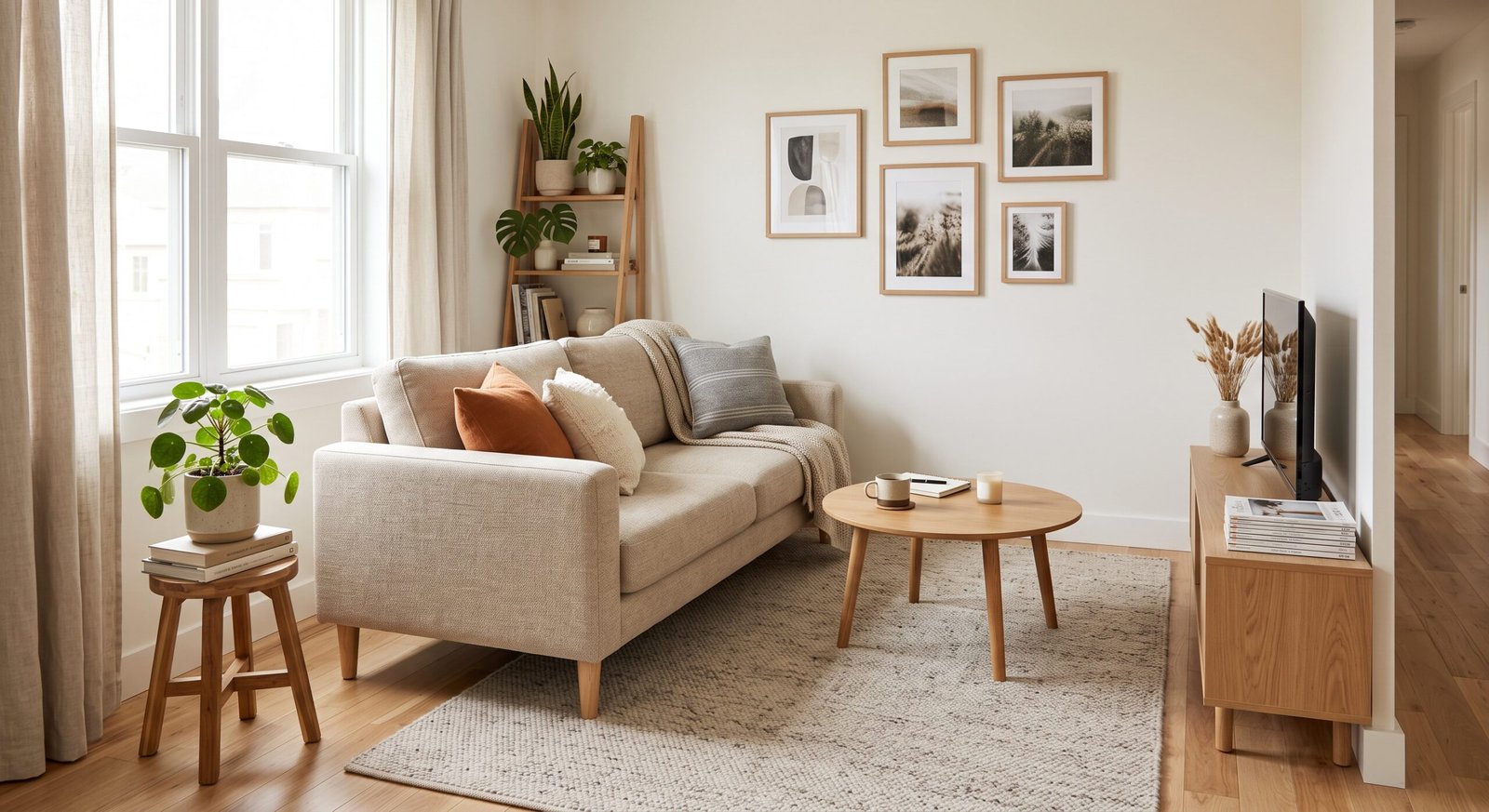
When architectural barriers or swinging doors limit your floor coverage, float an accent rug solely beneath your coffee table. Keeping main seating pieces completely off the rug highlights exposed base flooring, tricking the eye into seeing more floor space.
Relying on these strategic small living room rug placement rules prevents smaller floor textiles from looking lost or floating awkwardly in a small room.
Why It Works:
Exposing 10 to 18 inches of visible perimeter flooring keeps sightlines clear and prevents a cramped look.
Best For:
Studio apartments, dedicated conversational corners, and tight square layouts.
3. Create Depth by Layering a Patterned Rug Over Natural Jute
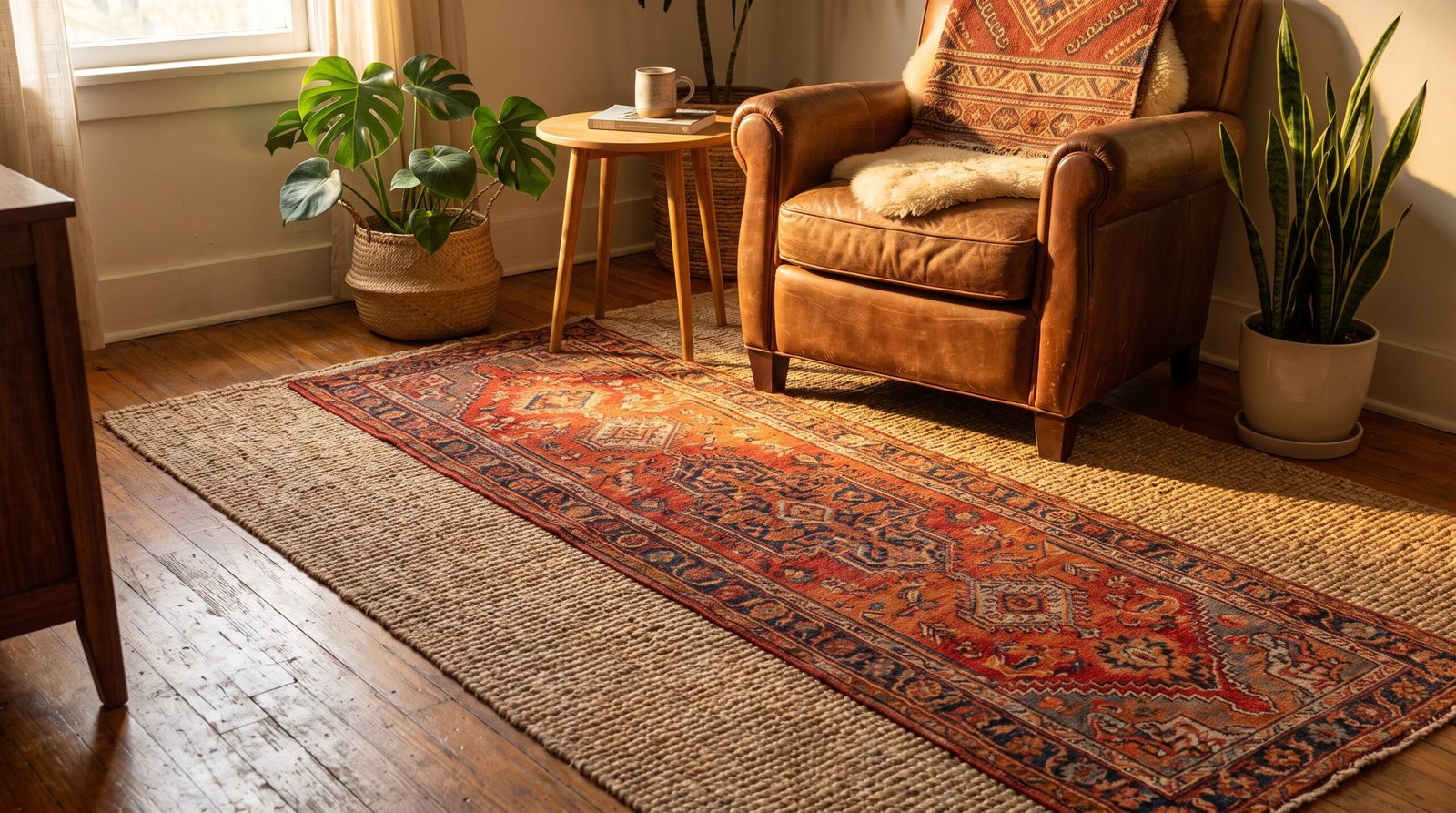
High-end patterned rugs can feel too pricey in larger room dimensions, while tiny versions look completely lost on their own. Layering a budget-friendly, oversized natural jute rug beneath a smaller vintage runner gives you full floor coverage without missing out on color or character.
Testing dynamic small living room rug placement rules through texture layering brings dimensional depth that makes tiny layouts feel curated by an interior designer.
Why It Works:
The solid jute base handles the scale requirements of the room, while the top accent piece catches the eye right where you want it.
Best For:
High-traffic apartments, renters wanting extra warmth, and budget-friendly living rooms.
4. Break Boxy Lines with Angled and Asymmetrical Positioning
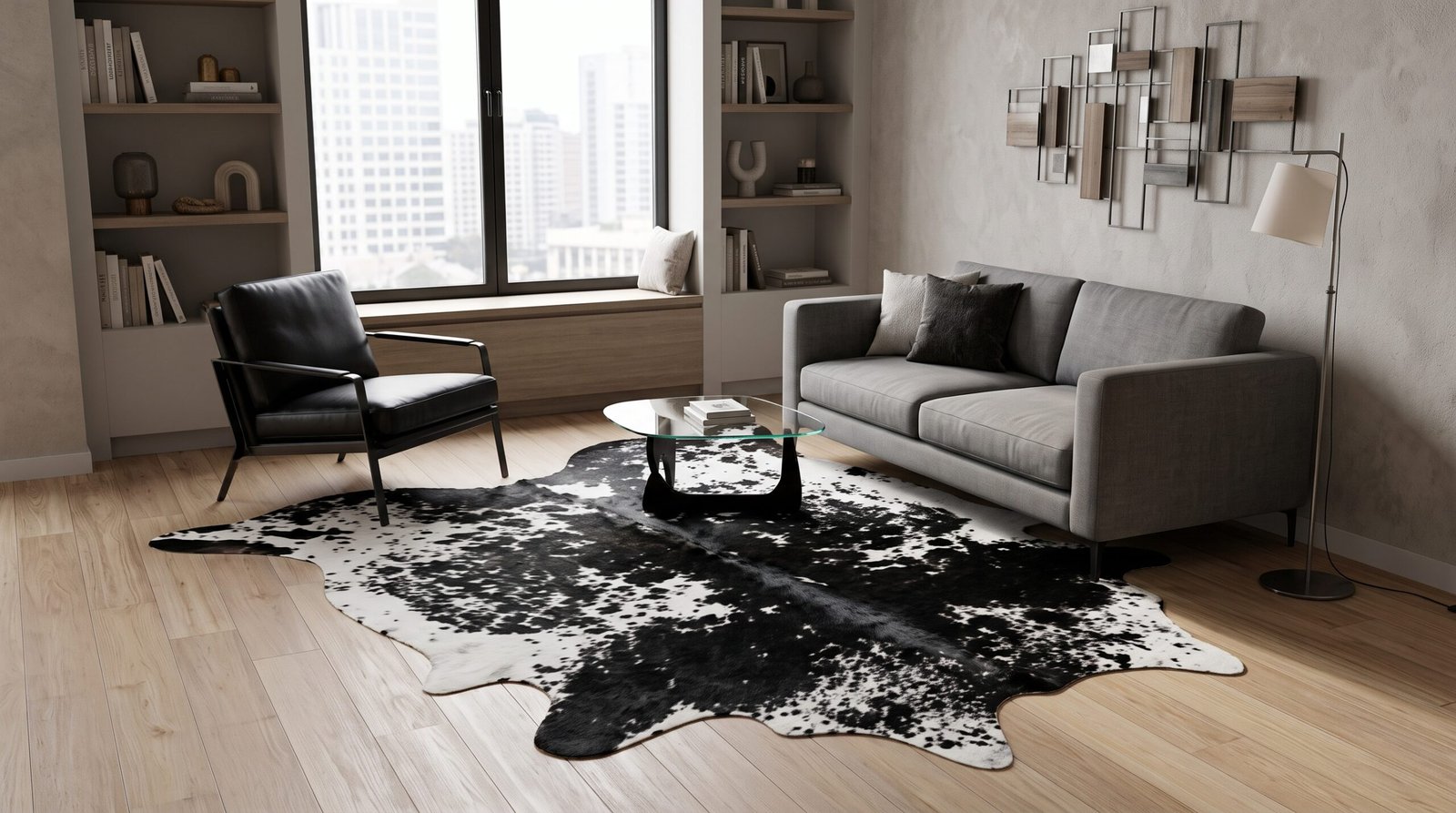
Square rooms combined with rigid rectangular rugs often make tight corners feel boxy and closed in. Angling an organic faux hide or positioning an accent rug on a soft diagonal pulls the gaze toward the furthest corners of the room.
These unconventional small living room rug placement rules steer visual energy away from tight wall borders and create fluid, open floor plans.
Why It Works:
Diagonal sightlines are naturally longer than standard horizontal angles, making narrow layouts feel instantly broader.
Best For:
Awkward room shapes, L-shaped sectionals, and open-concept studio spaces.
5. Maintain a Dedicated Eight-Inch Border from Walls
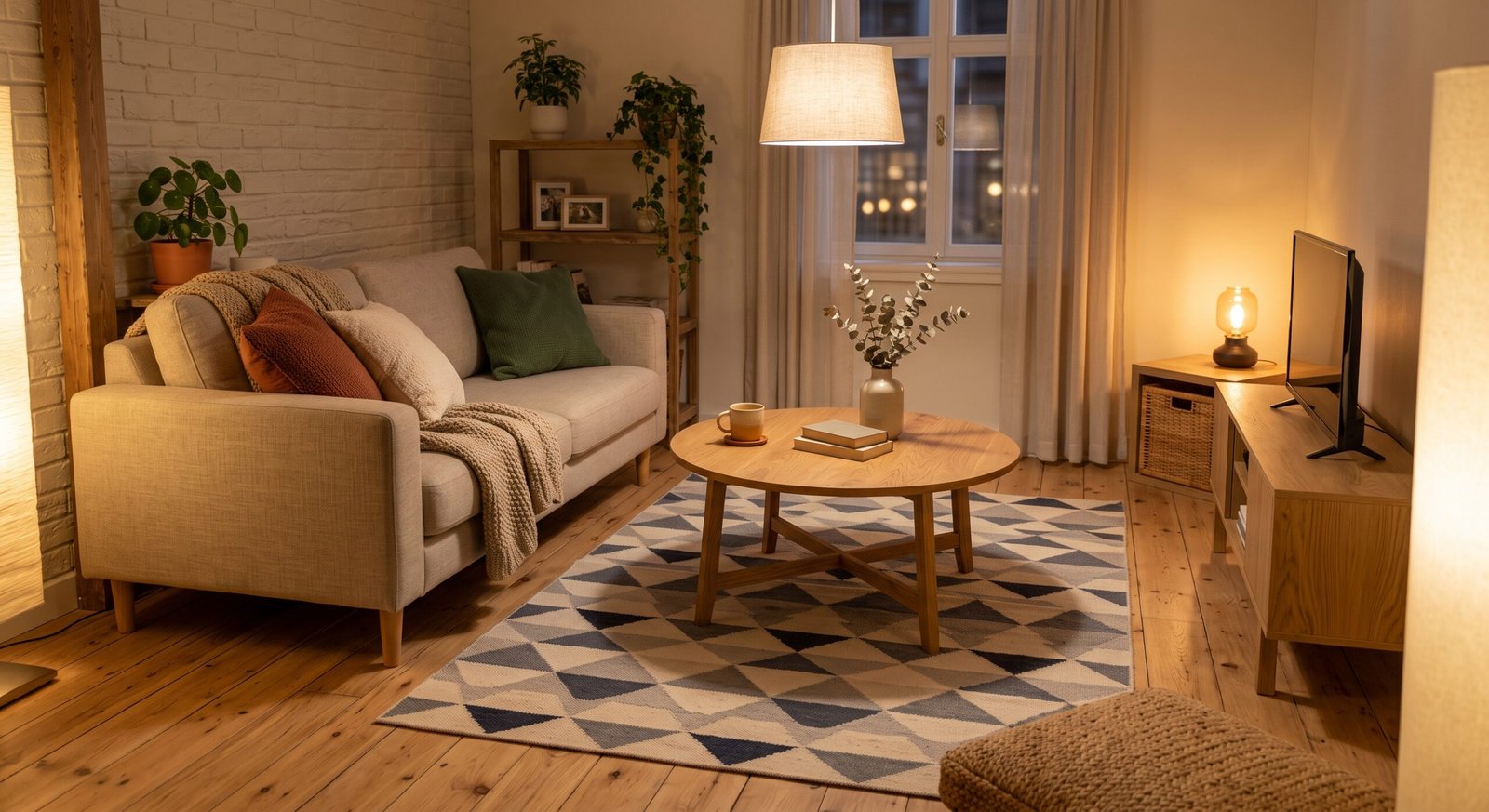
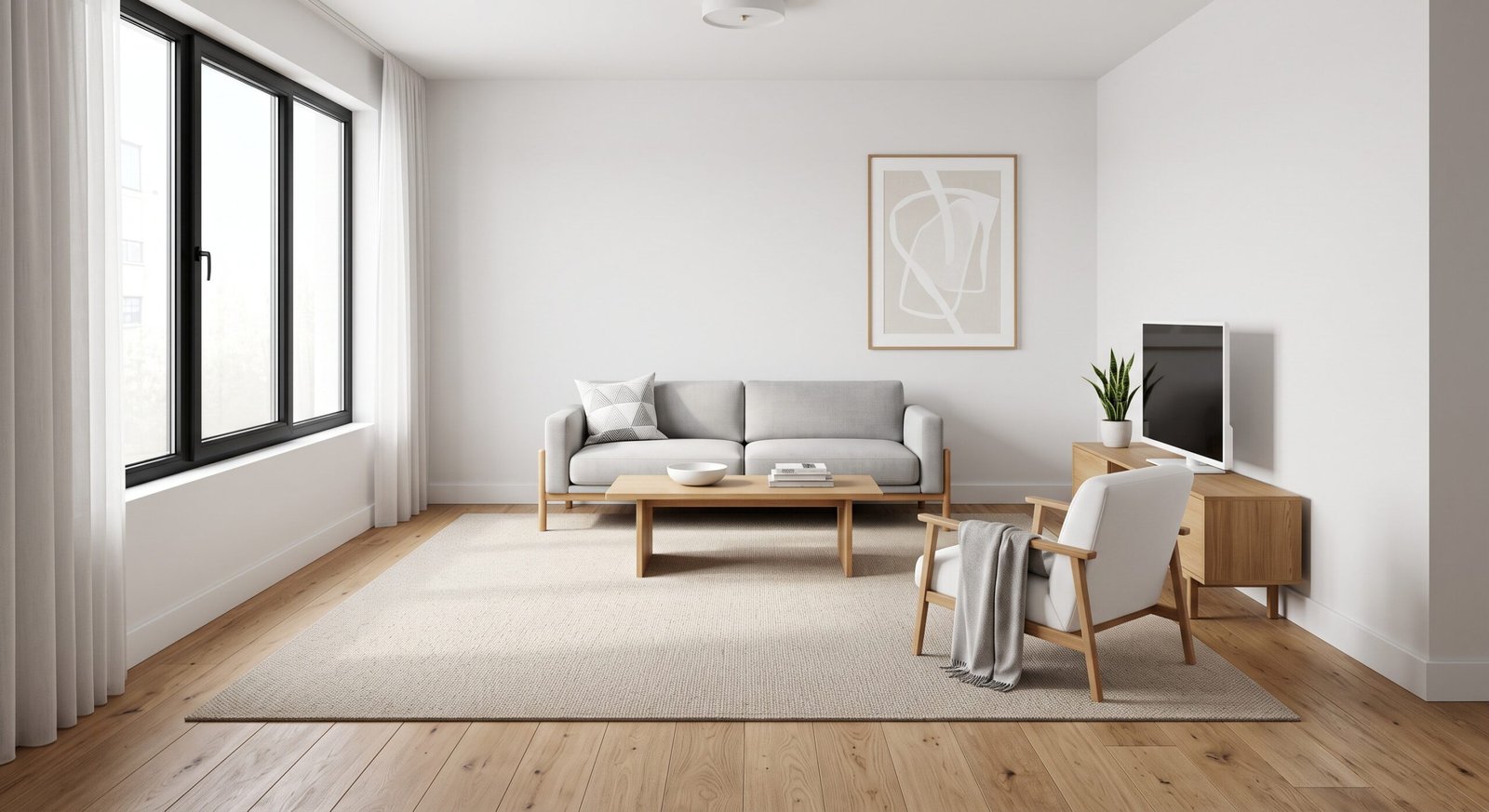
Running an area rug directly against your baseboards makes tight spaces look shrunken and crowded. Leaving a clean 8 to 12 inches of exposed floor around your rug creates a framing effect that presents your furniture arrangement like a finished art piece.
Consistently applying these baseline small living room rug placement rules ensures your floor remains balanced without textiles swallowing the perimeter.
Why It Works:
A visible perimeter creates visual margins that prevent heavy textiles from overwhelming narrow baseboards.
Best For:
Enclosed single-door living areas, square parlors, and rooms with classic hardwood flooring.
Which Small Living Room Rug Placement Rules Will You Try?
Finding the right layout comes down to balancing your available floor space with everyday practicality. Which of these small living room rug placement rules matches your current room setup best?
Drop your room layout details or questions in the comments below!
Can an area rug touch the living room walls?
It is best to avoid letting an area rug touch the walls. Leaving at least 8 to 12 inches of exposed floor space maintains clear visual boundaries and keeps small living spaces looking open.
Should coffee table legs stay entirely on the rug?
Yes, keeping all coffee table legs grounded within the rug edges anchors the piece securely and prevents awkward wobbling on uneven floor borders.