
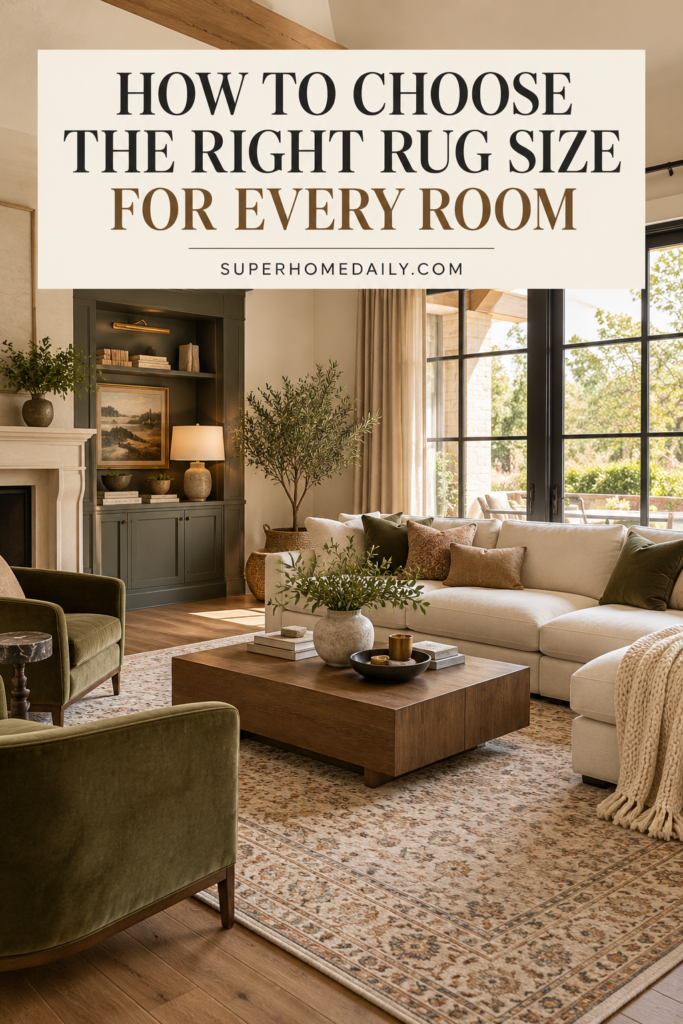
Choosing a rug that looks beautiful is only part of the equation. To choose the right rug size, you also need to consider the room dimensions, furniture placement, and how much of the floor you want to frame around the rug.
The right proportions can make furniture feel more connected and help the entire room look balanced, while a rug that is too small can make even a well-designed space feel disconnected. This guide covers practical rug sizing and placement for the most common rooms in an American home.
1. How to Choose the Right Rug Size: Start With the Furniture
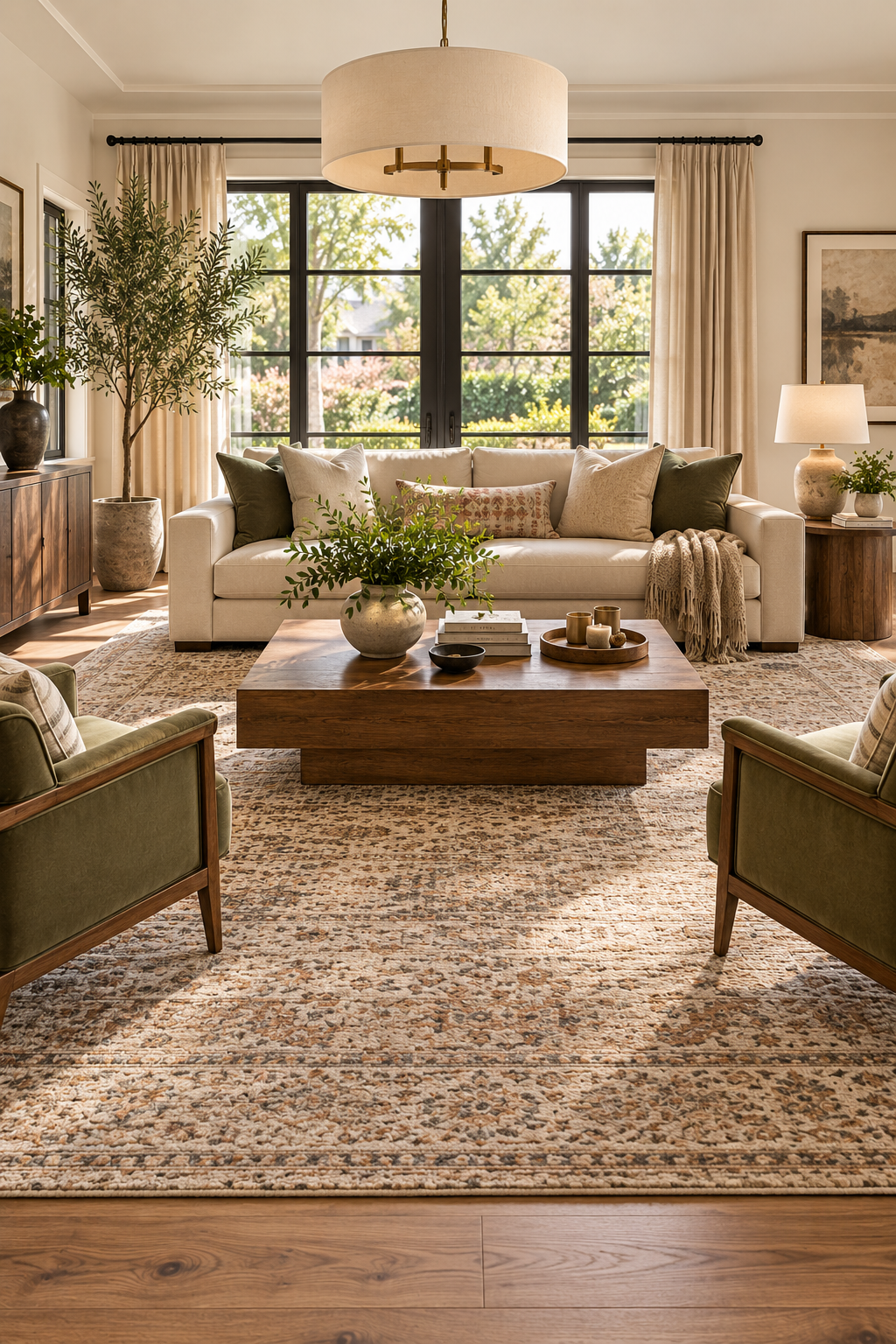
Start with the furniture, not the floor.
One of the easiest mistakes to make when choosing a rug is measuring the empty room and assuming the rug should simply fit somewhere inside it. I prefer to look at the furniture first. Your sofa, chairs, bed, dining table, or desk create the zone the rug needs to support, so those pieces should guide both the size and placement.
To choose the right rug size, measure the furniture arrangement as a group. In a living room, for example, look at the distance from the sofa to the accent chairs rather than measuring only the open space beneath the coffee table. The rug should visually connect those pieces instead of floating in the center like a separate island.
Also pay attention to what happens around the rug. You usually want some visible flooring around the edges so the room still feels balanced, but a rug that leaves too much empty floor between itself and the furniture will often look undersized.
Before ordering, use painter’s tape to outline the rug dimensions directly on the floor. Then step back and look at the room from the doorway and from your main seating position. This simple test is much more useful than trying to imagine what an 8′ x 10′ or 9′ x 12′ rug will look like from measurements alone.
Designer Tip: If you are deciding between two sizes and both comfortably fit the room, the larger option often creates a more cohesive furniture arrangement. Just make sure it still leaves enough visible flooring around the perimeter to feel intentional.
2. Living Room Rug Size
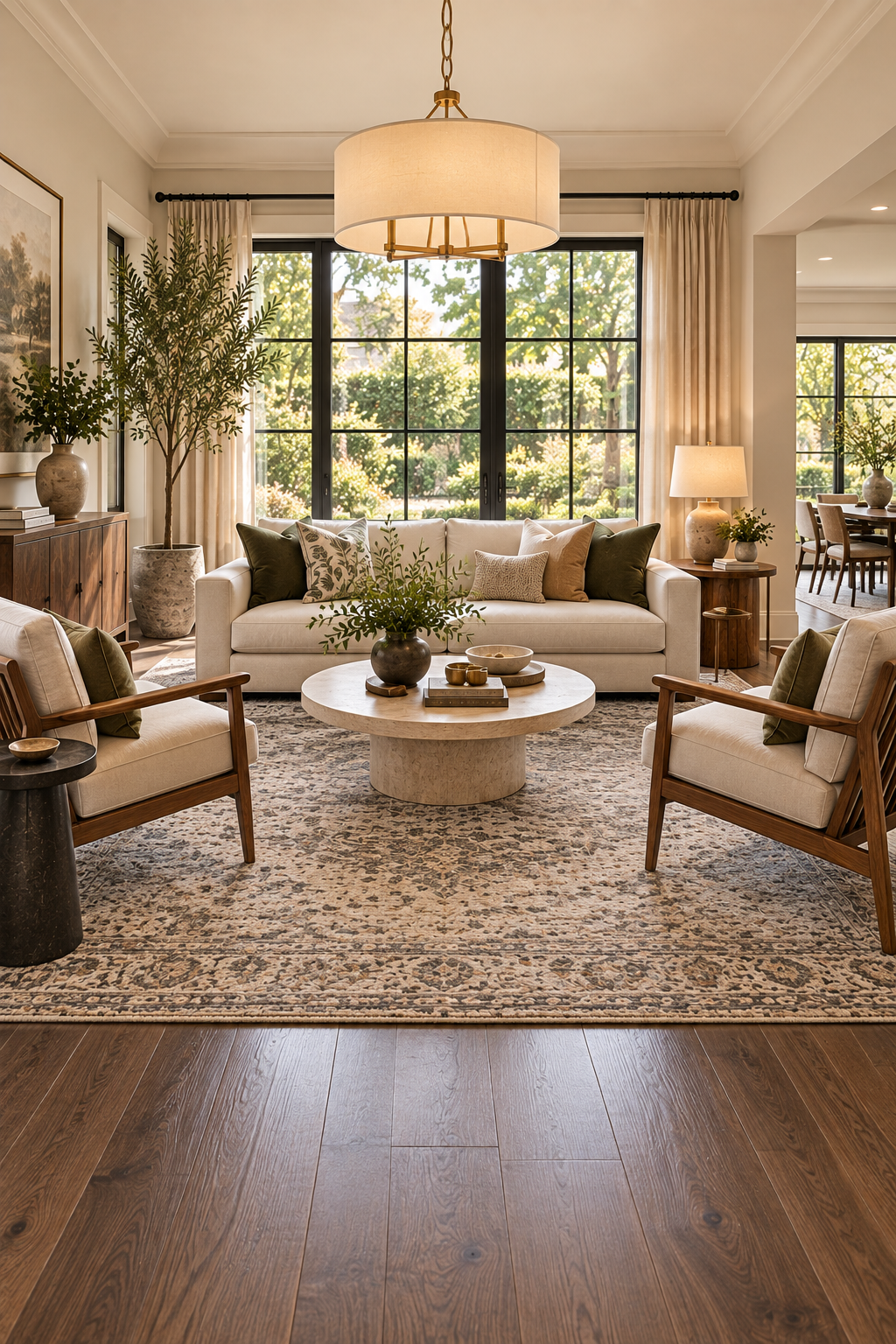
Think of the rug as the foundation of your seating area.
In a living room, I usually look at the sofa and accent chairs first. The rug should be large enough to visually connect those pieces rather than sitting alone underneath the coffee table. When a rug is too small, even beautiful furniture can look slightly disconnected because each piece appears to be floating on its own.
For many standard American living rooms, an 8′ x 10′ rug is a useful starting point. A larger seating arrangement may work better with a 9′ x 12′, while a very compact room might need a 6′ x 9′. These are guidelines, not rules—the actual furniture footprint matters more than the room label or the number printed on the rug.
A reliable arrangement is to place at least the front legs of the sofa and accent chairs on the rug while keeping the coffee table completely on it. This creates a clear connection between the furniture without requiring an oversized rug. In a larger room, you can go further and place all of the seating furniture completely on the rug for a more generous, grounded look.
Also check the amount of exposed flooring around the rug. You want the border to feel intentional and reasonably consistent rather than having the rug almost touch one wall while leaving a large gap on another side.
One detail people often miss is the actual width of the sofa. If you have a long sectional or an oversized sofa, an 8′ x 10′ rug that sounds large on paper can look surprisingly small once it is underneath the furniture. Measure the entire seating arrangement before choosing the size.
Designer Tip: Use painter’s tape to outline both rug sizes when you are deciding between two options. Leave the tape down for a few hours and walk through the room normally—you will quickly notice which size feels more natural with your furniture and walking paths.
3. Bedroom Rug Size
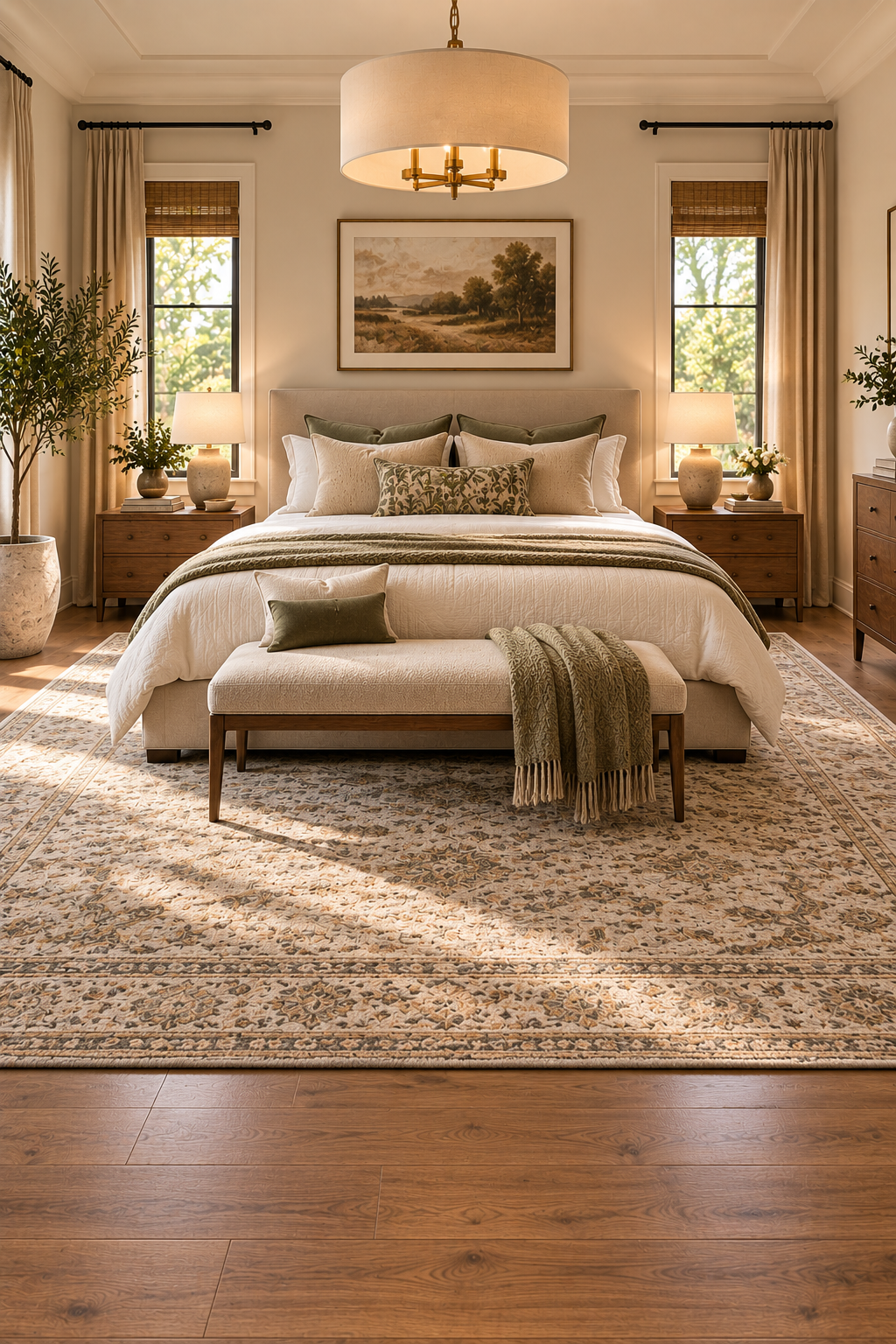
A bedroom rug should extend beyond the bed, not disappear underneath it.
When I size a rug for a bedroom, I think first about where your feet actually land when you get out of bed. You want enough soft rug exposed on both sides and at the foot of the bed so it feels intentional and useful, rather than having most of the rug hidden beneath furniture.
For a queen bed, an 8′ x 10′ rug is a very common starting point. A 9′ x 12′ often works beautifully with a king bed because it provides more generous coverage around the sides and foot. In a smaller bedroom, a 6′ x 9′ may work with a queen bed, but placement becomes especially important because there is less rug extending beyond the mattress.
You do not necessarily need to place the rug underneath the entire bed and nightstands. One practical approach is to start the rug somewhere around the lower two-thirds of the bed. This keeps the nightstands on the flooring while allowing plenty of rug to extend past the foot of the bed, where it is actually visible.
Pay attention to benches and other furniture at the foot of the bed as well. If you have a bench, I prefer the rug to extend beyond it rather than ending directly underneath its legs. Otherwise, the arrangement can look as though the rug was chosen before the bench was added.
The amount of rug visible beside the bed matters too. If only a narrow strip appears on each side, the rug will often look undersized even if technically it fits beneath the bed. Aim for enough exposed rug that stepping out of bed feels comfortable and the bed looks properly anchored within the room.
In a very small bedroom where a large area rug simply will not fit, two runners placed along the sides of the bed can be a practical alternative. I would rather use intentionally sized runners than squeeze a large rug into a room where doors, vents, or surrounding furniture cannot function properly.
Designer Tip: Before ordering, mark the rug corners with painter’s tape and make sure bedroom and closet doors can still open comfortably. A rug can look perfectly proportioned but still be the wrong choice if it interferes with how you use the room every day.
4. Dining Room Rug Size
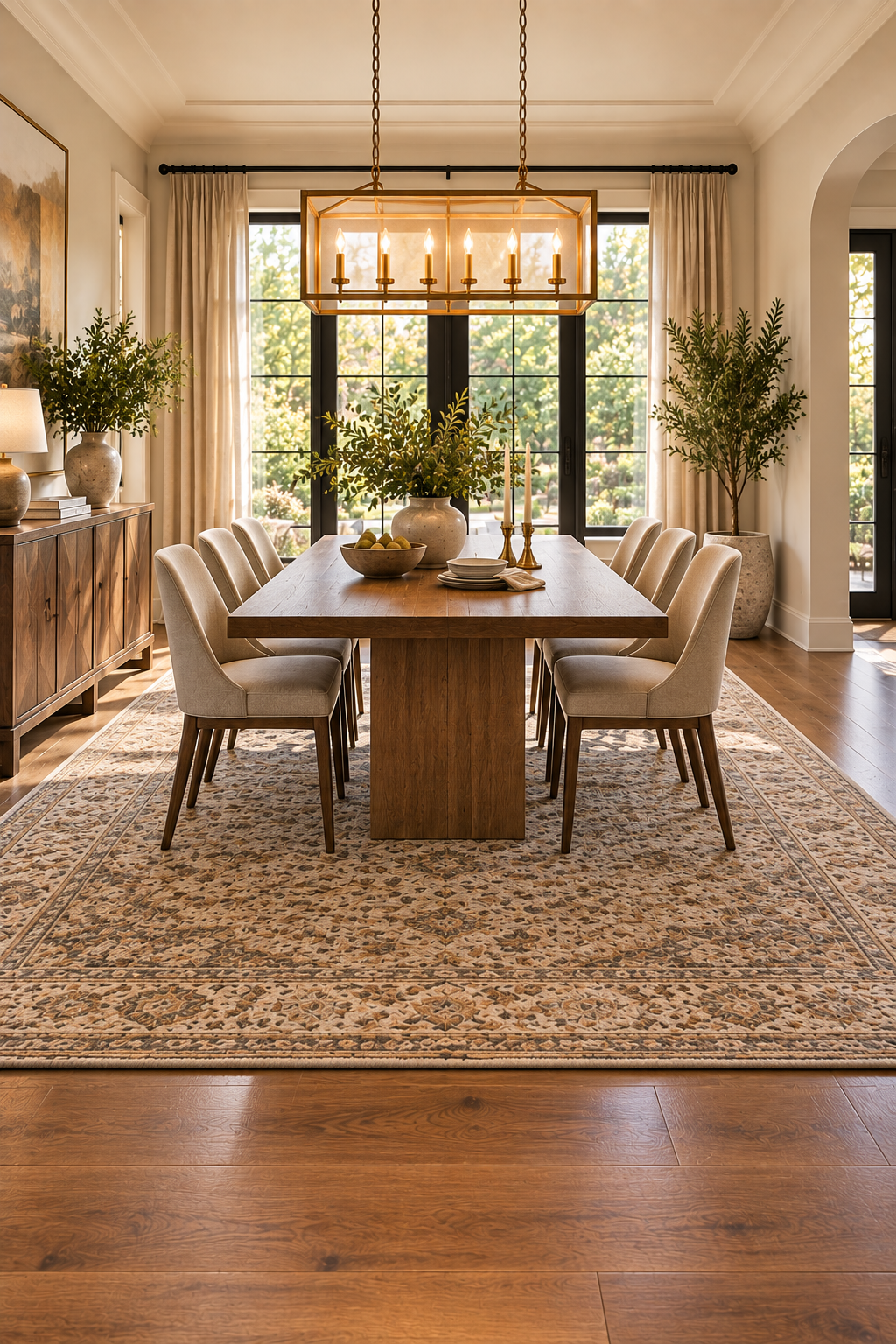
In a dining room, size the rug for the chairs—not just the table.
This is one of the places where I see undersized rugs most often. A rug may look perfectly proportioned when every chair is pushed neatly under the dining table, but the real test happens when someone pulls a chair out to sit down. Ideally, all four chair legs should remain on the rug instead of dropping over the edge.
A useful starting point is to choose a rug that extends about 24 to 30 inches beyond the dining table on every side. That extra space gives most dining chairs enough room to move backward while staying on the rug. If you have especially deep chairs or a larger dining table, measure the actual chair movement rather than relying only on this guideline.
For many four- to six-person dining arrangements, an 8′ x 10′ rug can work well. Larger six- to eight-person tables often need a 9′ x 12′ rug or larger. Again, the table size alone does not determine the answer. Pull one of your chairs out to a comfortable sitting position and measure the entire footprint from there.
The shape of the rug matters too. A rectangular dining table usually feels most natural with a rectangular rug, while a round table can work beautifully with either a round rug or a generously sized square one. I would focus more on comfortable chair clearance and balanced proportions than trying to match shapes simply because they look similar.
If your dining table has extension leaves, measure it in the configuration you use most often. If you regularly extend the table for family dinners or holidays, consider sizing the rug for that larger setup. A rug that works beautifully for six chairs can suddenly feel too small when two additional chairs are added at the ends.
Also check the surrounding furniture before ordering. A rug should not run awkwardly underneath a nearby sideboard or leave so little exposed flooring that the dining area feels crowded. You want enough space for the table and chairs to function comfortably while still allowing the rug to read as a defined zone within the room.
Designer Tip: Pull every dining chair out as though people were sitting at the table, then measure around that full arrangement. It gives you a much more realistic rug size than measuring the table by itself.
5. Entryway and Hallway Rug Size
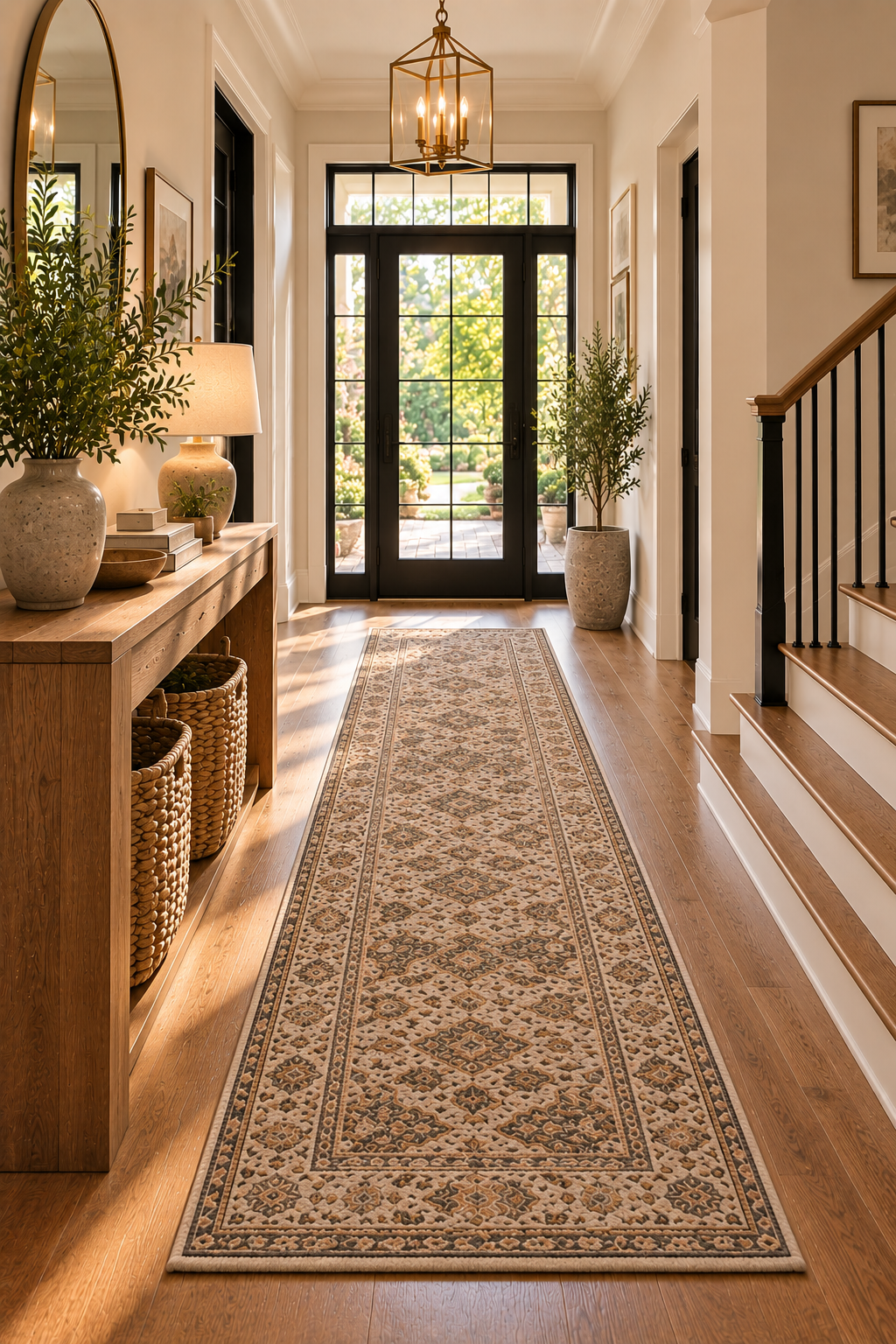
In an entryway or hallway, the rug should guide you through the space without taking over the entire floor.
When I choose the right rug size for a hallway, I pay attention to width before anything else. A runner should leave some visible flooring along both sides so it feels intentionally placed rather than looking like wall-to-wall carpet. The exact amount depends on the width of your hallway, but roughly 3 to 6 inches of exposed floor on each side is often a useful starting point.
Length matters just as much. A runner that stops awkwardly in the middle of a long hallway can make the space feel visually chopped up. I prefer a runner that follows most of the usable length while still leaving a little breathing room at both ends. You do not need to cover every inch of the hallway—the goal is to create a clear visual path.
Entryways need a slightly different approach because function becomes especially important. Make sure the rug does not interfere with the front door, closet doors, or nearby interior doors. Measure the clearance beneath the door before choosing a thick or high-pile rug, especially if the door swings directly over it.
For a narrow hallway, a standard runner around 2’6″ wide can be a practical starting point, while wider halls may comfortably accommodate a 3′ runner. Lengths such as 6′, 8′, 10′, or 12′ are common, but I would always measure the actual hallway instead of choosing a standard size simply because it is easy to find.
If your hallway has several doorways, try to avoid ending the runner directly in the middle of an important opening when possible. A slightly longer or shorter rug can often create a much cleaner visual transition between rooms.
I also pay attention to safety here more than I would in many other rooms. Hallway and entryway rugs see a lot of foot traffic, so a rug that slides, curls at the corners, or bunches underfoot quickly becomes frustrating. A properly sized non-slip rug pad can help keep the runner stable without noticeably changing its appearance.
Designer Tip: Before ordering a runner, use painter’s tape to mark both its width and length on the floor. Then open every nearby door and walk through the hallway several times. If the taped outline feels natural during everyday movement, you are much more likely to be happy with the actual rug.
6. Home Office Rug Size
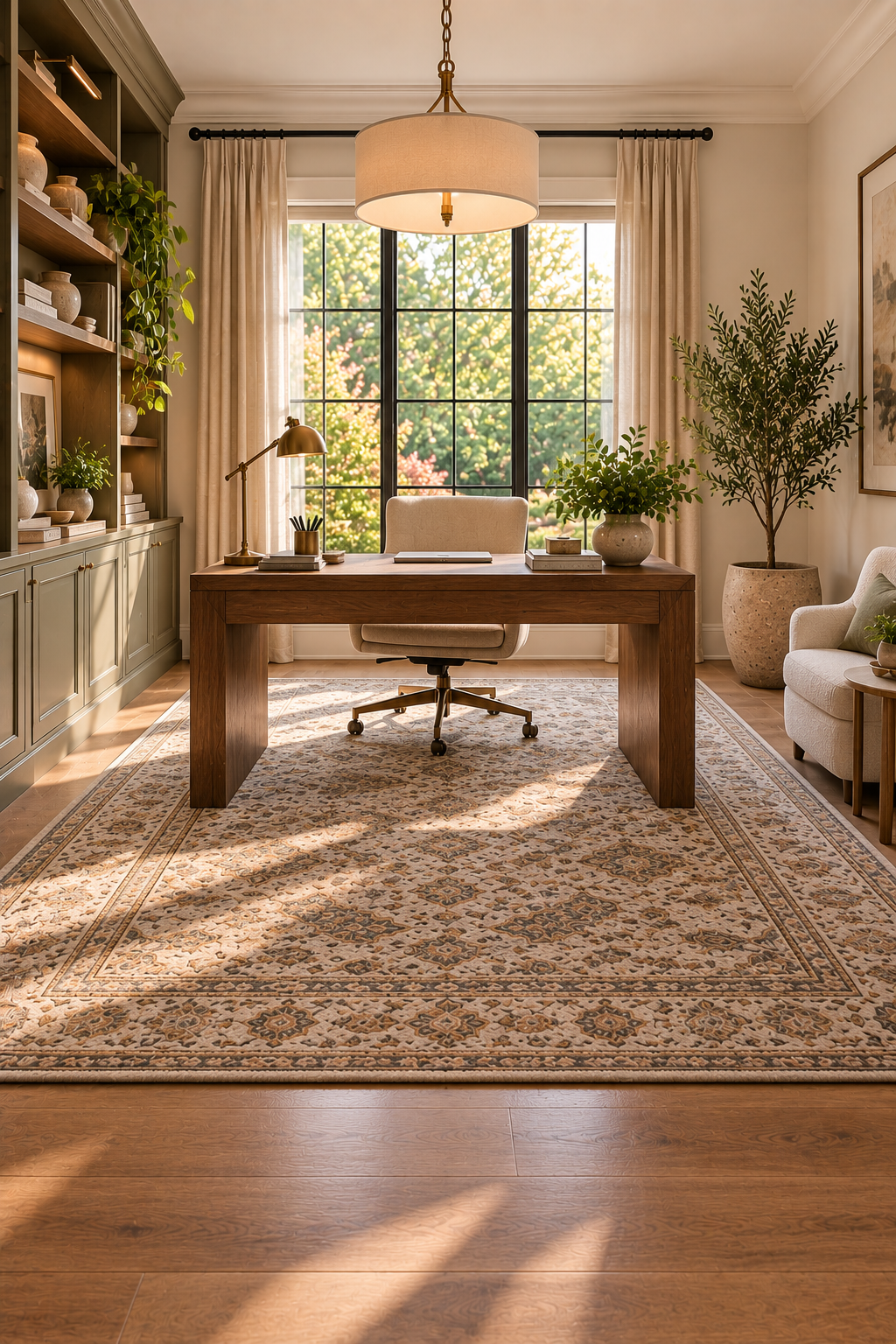
A home office rug needs to work with movement, not just look good under the desk.
The first thing I check is the office chair. A rug can look perfectly sized while the chair is tucked in, then become frustrating the moment you roll backward and the wheels catch on the edge. Ideally, the rug should extend far enough behind the desk for the chair to remain completely on it during normal use.
For a standard home office, a 5′ x 8′ rug may work when the desk and chair setup is compact. If you have a larger desk, guest chairs, or additional furniture around the workspace, a 6′ x 9′ or 8′ x 10′ rug can create a more balanced arrangement. The important measurement is the full working footprint rather than the desk alone.
Pull your office chair back to roughly the position you use when getting up from the desk. If the rear wheels are already close to the rug edge, I would go larger. Constantly rolling on and off a rug is not only annoying—it can also cause the edge to curl or shift over time.
Placement depends on the desk position as well. With a freestanding desk, I usually prefer enough rug underneath it to make the desk and chair feel like one intentional workspace. If the desk sits against a wall, you do not necessarily need to push the rug all the way to the baseboard. Leaving some flooring visible can make the arrangement feel lighter and more considered.
Think about any secondary furniture too. If you have a reading chair, small bookcase, filing cabinet, or guest chair, decide whether it belongs visually inside the work zone. You do not have to force every piece onto the rug, but the placement should look deliberate rather than having furniture legs accidentally sitting half on and half off an edge.
Rug construction matters more in an office than many people realize. A very thick or shaggy pile can make a rolling desk chair difficult to use. A lower-pile rug with a stable rug pad is generally easier to live with and still gives the room the warmth and softness you want.
Designer Tip: Sit at your desk and roll the chair backward as you normally would before measuring. That everyday movement tells you far more about the rug size you need than measuring the desk itself.
7. Common Rug Sizing Mistakes to Avoid
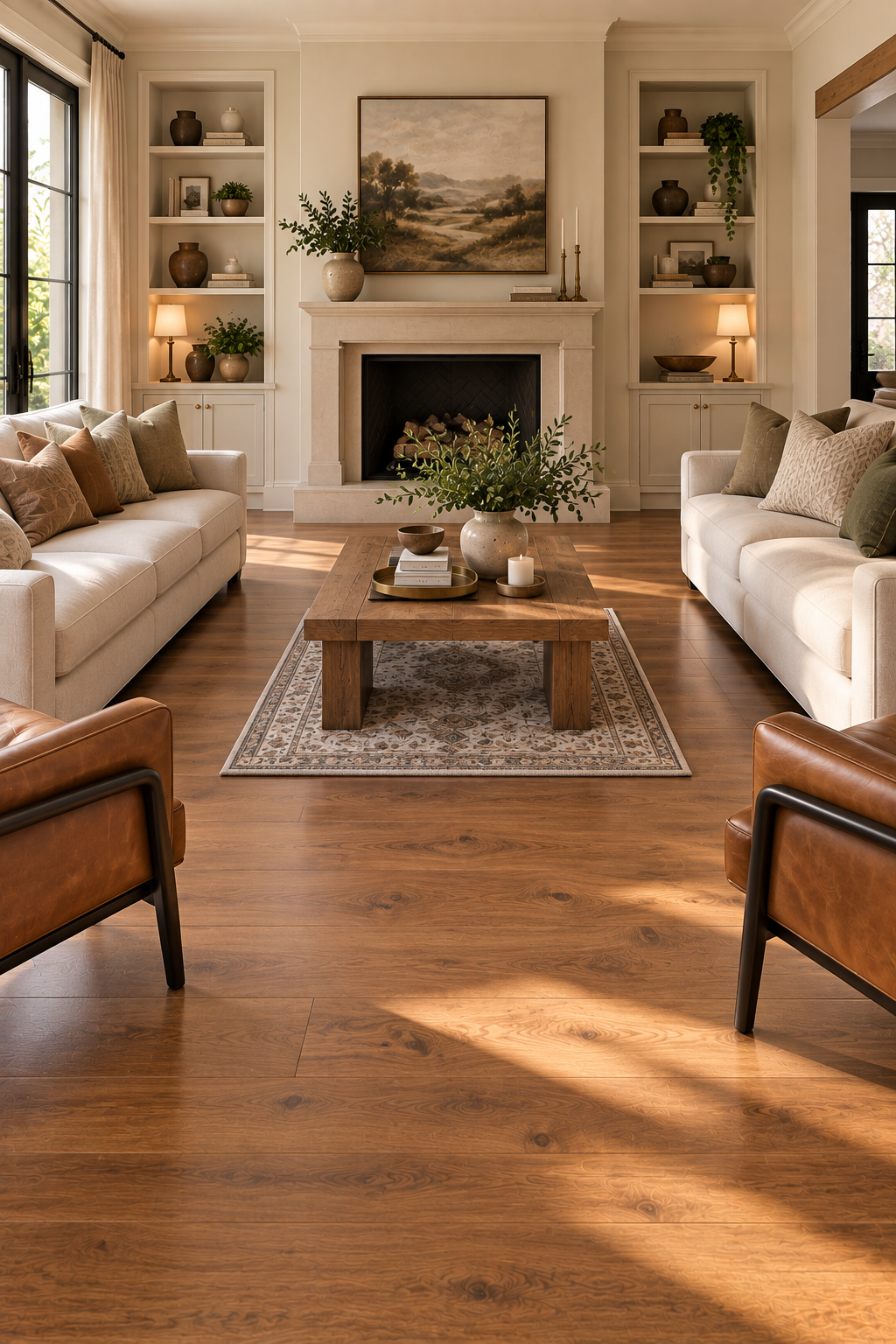
The most common rug mistake I see is choosing one that is simply too small for the furniture around it.
In a living room, this often looks like a small rug floating underneath the coffee table while the sofa and chairs sit completely on the bare floor. The rug may technically fit the open space, but visually it separates the furniture instead of bringing the seating area together.
Another common mistake is choosing a rug based only on the dimensions of the room. Two living rooms with exactly the same measurements can need very different rug sizes depending on the sofa length, number of chairs, furniture placement, and walking paths. This is why I always recommend measuring the furniture arrangement rather than shopping by room size alone.
Going too large can create problems as well. An area rug does not usually need to cover nearly every inch of flooring. If it reaches too close to the walls, it can start to look more like fitted carpet and may interfere with doors, floor vents, or furniture around the perimeter. Some visible flooring helps frame the rug and gives the room breathing room.
I also avoid awkward half-on, half-off furniture placement. Having the front legs of a sofa on the rug can look completely intentional, but having one chair leg on the rug while the others sit on the floor usually looks accidental. Whatever placement you choose, repeat it consistently across similar pieces whenever the layout allows.
Do not forget to account for furniture movement. Dining chairs need room to slide backward, office chairs need space to roll, and bedroom rugs should extend far enough beyond the bed to be useful when you step onto the floor. A rug can look correctly sized in a perfectly staged room and still be frustrating during everyday life.
Finally, do not assume that the most common standard size is automatically right for your space. An 8′ x 10′ rug is popular because it works in many rooms, but that does not mean every living room needs one. The best way to choose the right rug size is to measure the actual furniture footprint and consider how people move through the room.
Designer Tip: If a rug looks slightly too small before you have even placed the furniture on it, trust that instinct. Once the sofa, chairs, and tables are added, an undersized rug usually becomes even more noticeable.
Frequently Asked Questions
What is the most common rug size for a living room?
An 8′ x 10′ rug is a common starting point for many living rooms, but I would never choose it based on popularity alone. Your sofa length, accent chairs, coffee table, and overall seating footprint matter more. Larger arrangements often feel better with a 9′ x 12′, while compact rooms may work with a 6′ x 9′.
How much of the furniture should sit on an area rug?
In a living room, having at least the front legs of the sofa and accent chairs on the rug is a reliable arrangement. In larger rooms, placing all of the seating furniture on the rug can create an even more grounded look. What matters most is that the placement feels consistent rather than accidental.
How far should a rug extend beyond a dining table?
A useful starting point is about 24 to 30 inches beyond the table on each side. This gives dining chairs room to slide backward while keeping their legs on the rug. Always test the actual chair movement before choosing your final size.
How far should a rug extend beyond a bed?
You want enough rug visible beside and beyond the foot of the bed to make it useful when you step out of bed. The exact amount depends on the bed and room size, but the rug should not disappear almost entirely underneath the mattress.
Is it better for a rug to be too big or too small?
If both sizes fit comfortably without interfering with doors, vents, or surrounding furniture, I usually prefer the slightly larger option. An undersized rug tends to separate furniture visually, while a properly scaled larger rug can make the arrangement feel more connected.
How can I check a rug size before buying it?
Use painter’s tape to mark the exact rug dimensions on your floor. Place or imagine your furniture within that outline, open nearby doors, pull chairs backward, and walk through the room normally. It is one of the simplest ways to choose the right rug size before spending money.
Final Thoughts
Choosing a rug becomes much easier once you stop thinking about the rug as a separate decorative piece and start looking at how it relates to the furniture around it.
The best way to choose the right rug size is to measure the way you actually use the room. Consider where chair legs land, how far dining chairs move, where your feet touch the floor beside the bed, and how much space an office chair needs to roll comfortably.
Standard sizes such as 5′ x 8′, 6′ x 9′, 8′ x 10′, and 9′ x 12′ are useful starting points, but they should never replace measuring your own space. A few minutes with a tape measure and painter’s tape can prevent an expensive sizing mistake and help the entire room feel more balanced and intentional.
A good rug should not be the first thing you notice because something feels wrong. It should quietly connect the furniture, define the space, and make the room feel as though everything belongs together.