
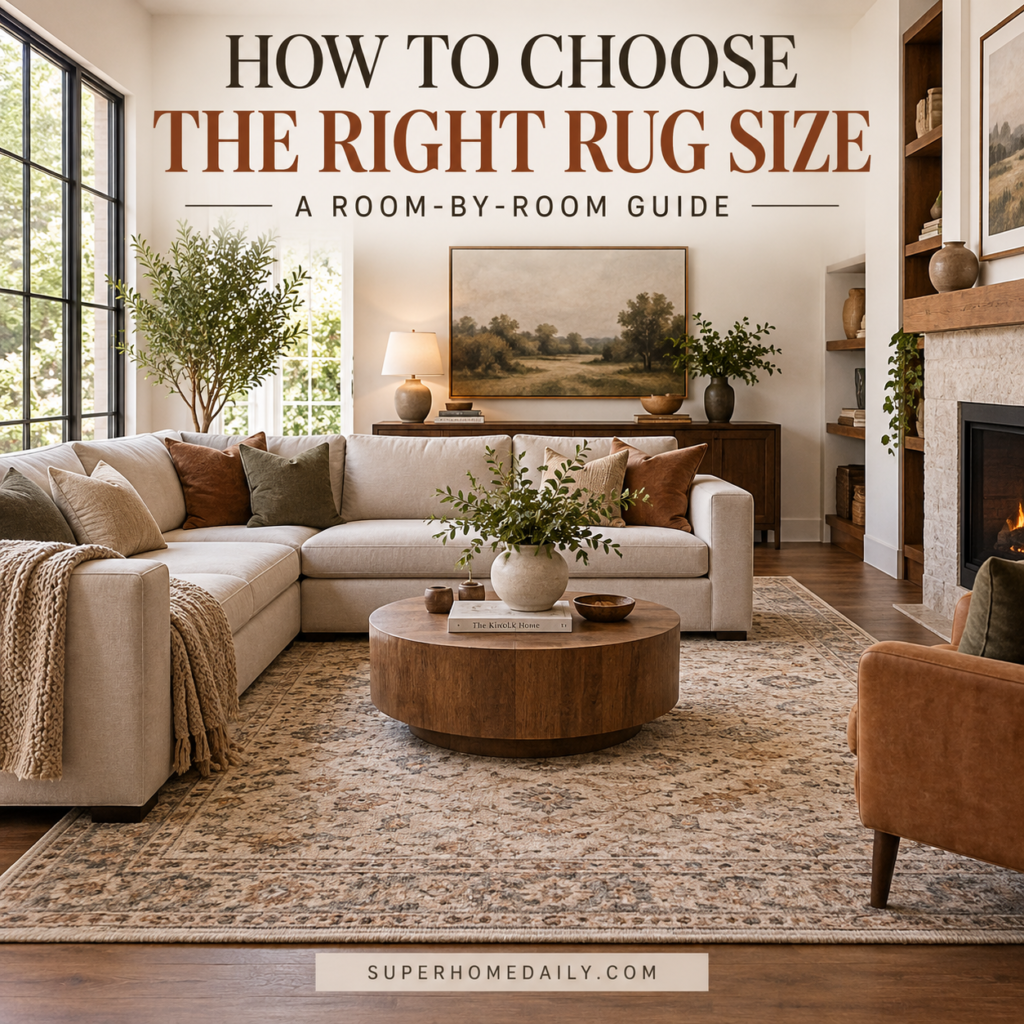
The right rug can make an entire room feel more balanced.
But choosing the correct size is often harder than choosing the color or pattern. A rug that is too small can make furniture feel disconnected, while one that is too large may overwhelm the layout.
Learning how to choose the right rug size starts with the furniture and the proportions of the room—not simply the amount of empty floor space. In this guide, we’ll cover practical rug sizing and placement rules for living rooms, bedrooms, dining rooms, entryways, and more.
1. Start With the Furniture, Not the Rug
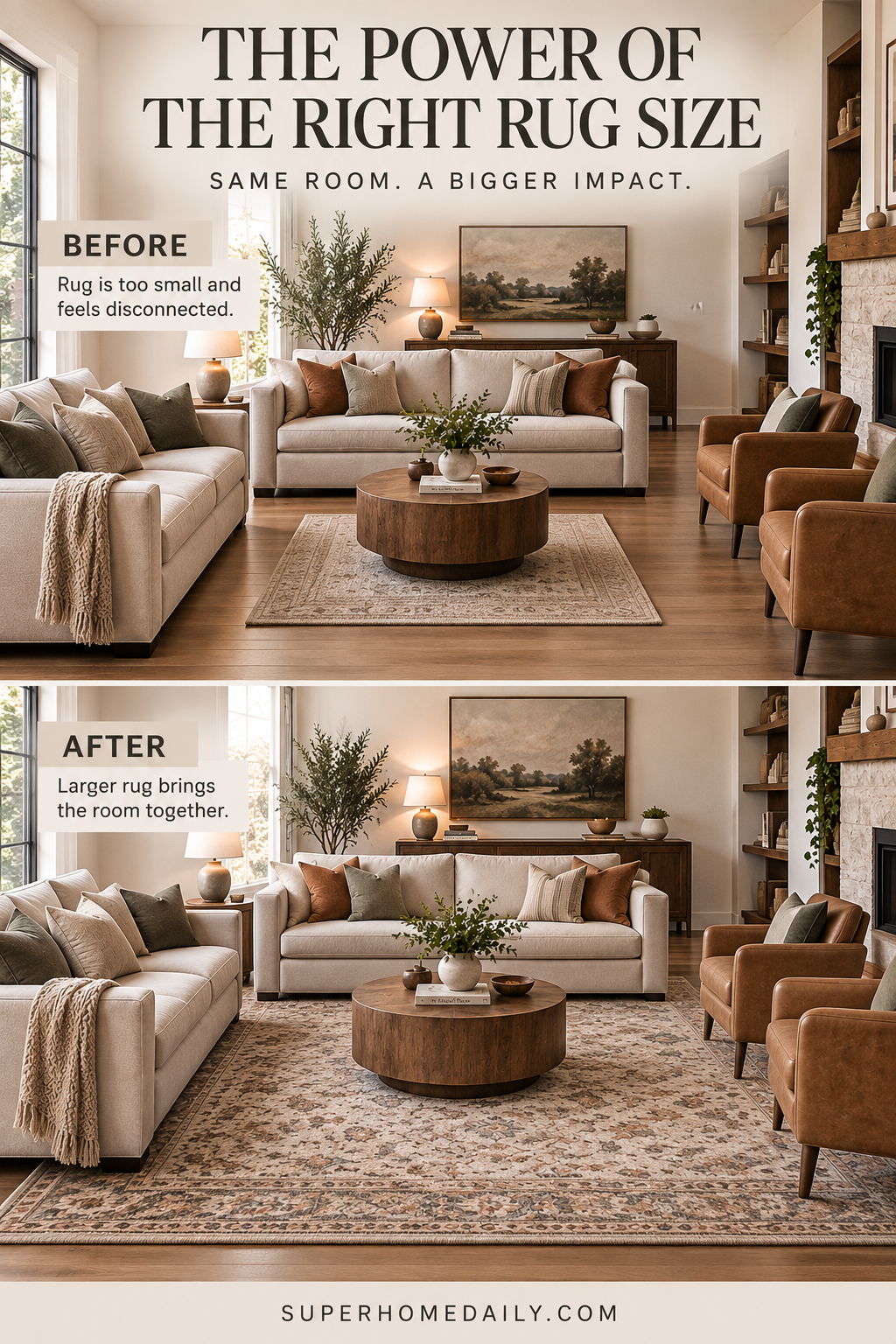
Start with the furniture.
One of the easiest mistakes to make is choosing a rug based only on the empty floor space. Instead, look at the furniture arrangement first and decide which pieces the rug needs to visually connect.
In a living room, for example, the rug should usually reach at least the front legs of the main seating rather than floating underneath the coffee table by itself.
Why It Works:
When the rug relates directly to the furniture, it defines the seating area and makes the entire layout feel more balanced and intentional.
2. Living Room Rug Size & Placement
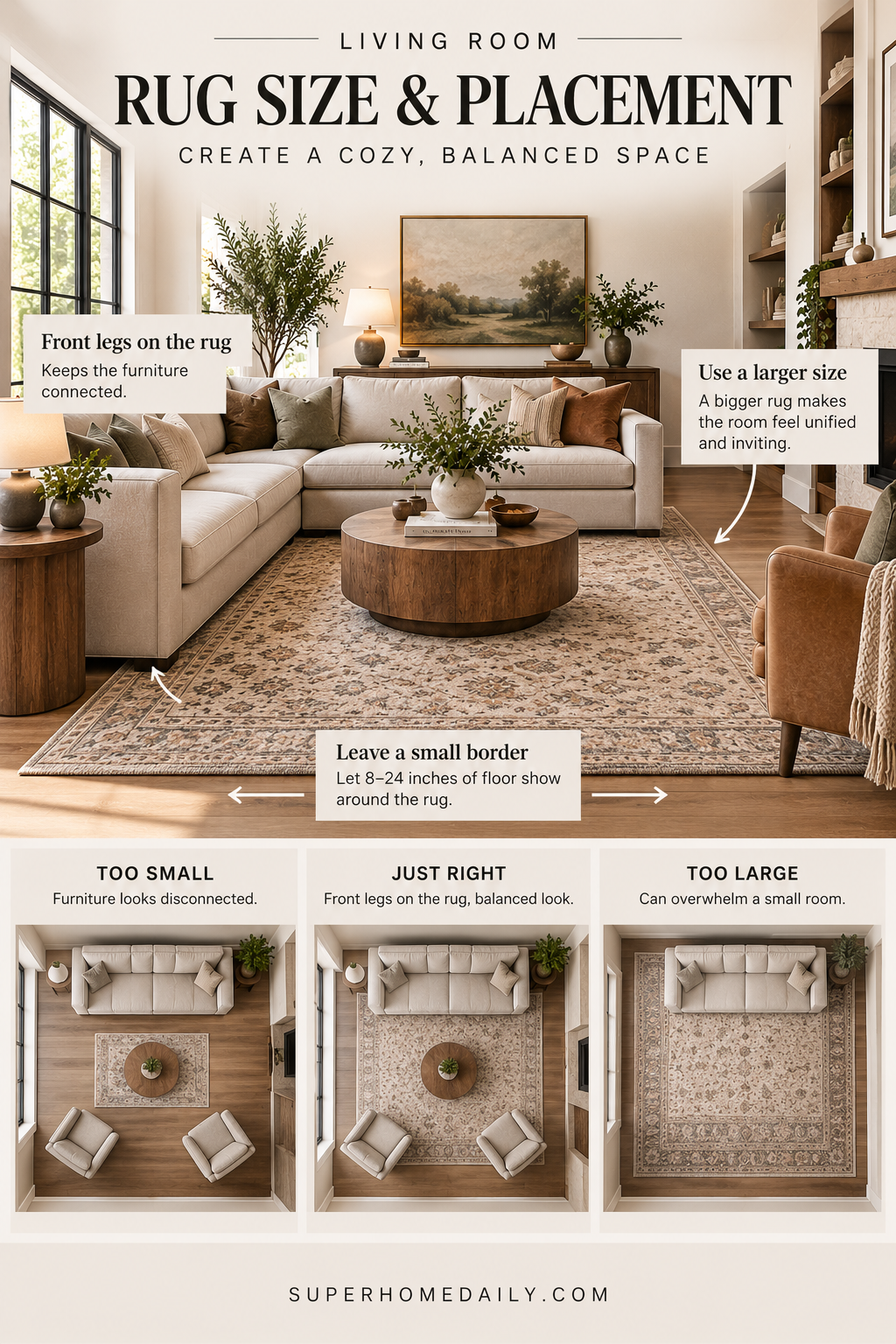
Go bigger when possible.
In most living rooms, the rug should connect the main seating rather than sit alone beneath the coffee table. A practical starting point is to place at least the front legs of the sofa and chairs on the rug.
Common sizes such as 8′ × 10′ and 9′ × 12′ work in many layouts, but the right choice depends on your room and furniture dimensions. Measure the full seating area before deciding.
Why It Works:
A properly scaled rug visually anchors the furniture and helps the living room feel like one connected space instead of several separate pieces.
3. Bedroom Rug Size & Placement
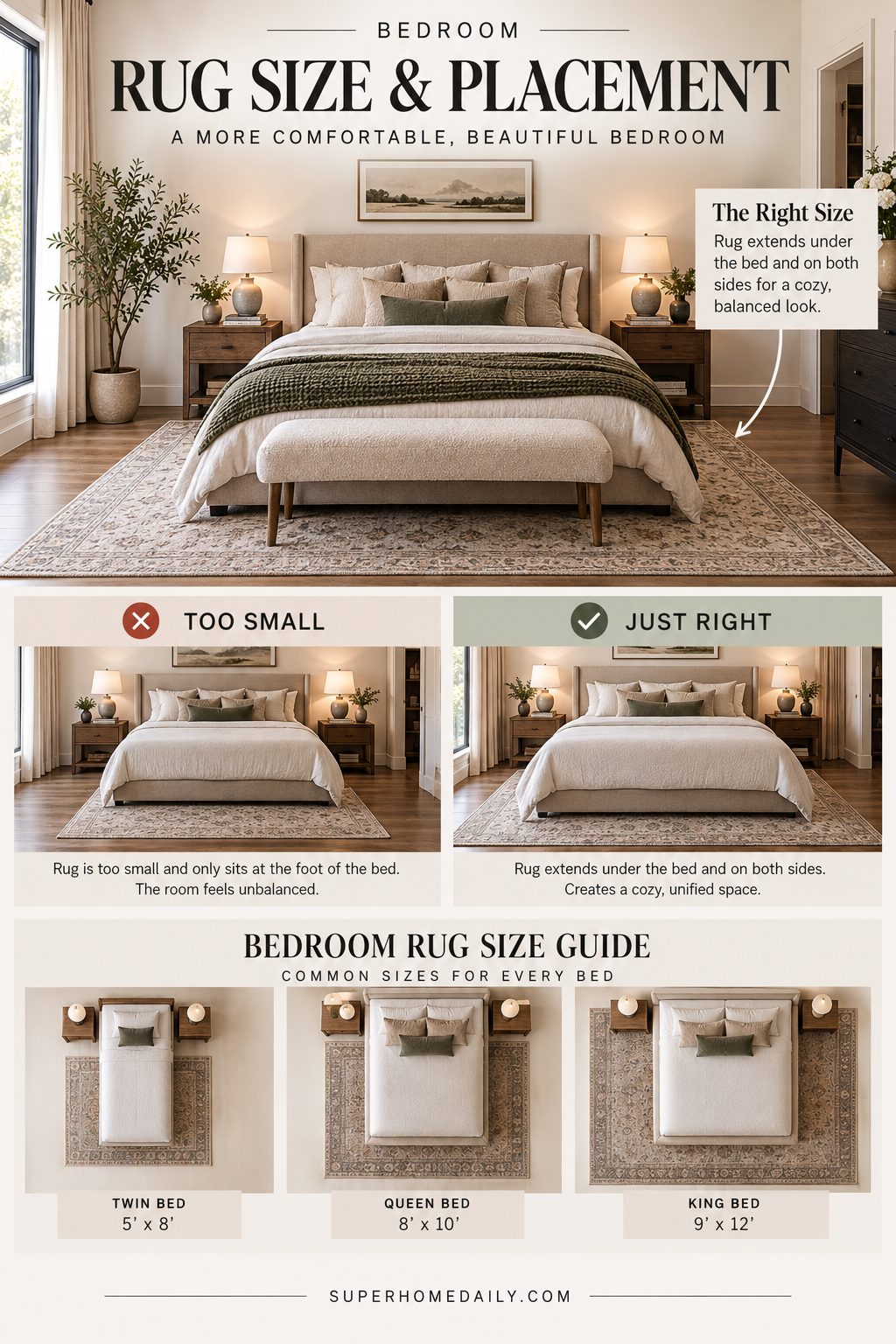
Think beyond the bed.
A bedroom rug should extend far enough beyond the sides and foot of the bed to create a comfortable landing area. Rather than choosing a size from the bed alone, consider the nightstands, room dimensions, and how much rug you want visible around the sleeping area.
An 8′ × 10′ rug is a common starting point for many queen-bed layouts, while larger beds or rooms may need a 9′ × 12′. Always measure your actual arrangement before buying.
Why It Works:
Extending the rug beyond the bed creates better proportions, adds softness where you step, and helps the bed feel properly anchored within the room.
4. Dining Room Rug Size & Placement
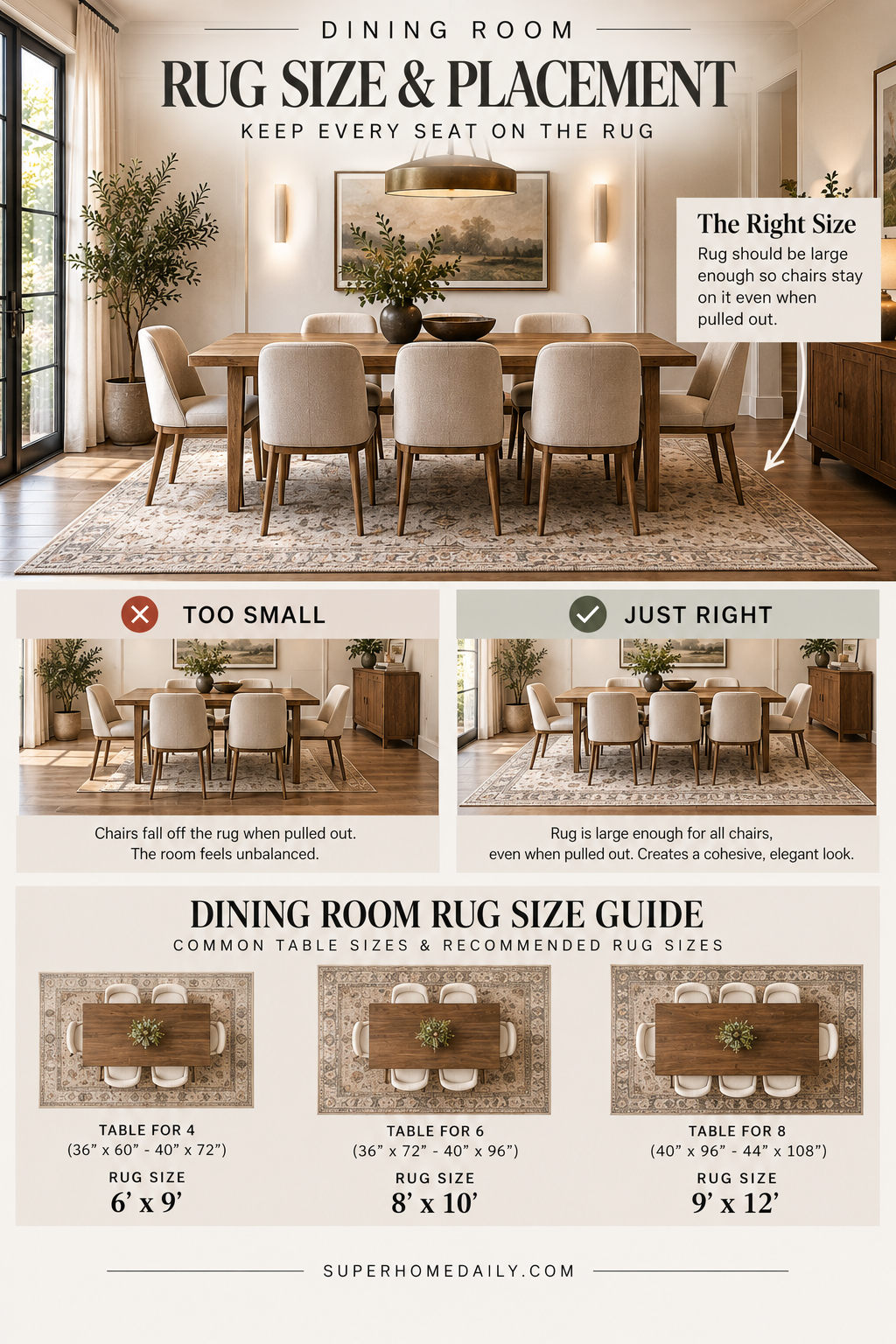
A dining room rug needs to extend beyond the table far enough for the chairs to remain on the rug when they are pulled out. As a practical starting point, aim for roughly 24 inches of extra rug beyond each side of the table, then adjust for your actual chair depth and room dimensions.
For many six-person dining tables, an 8′ × 10′ rug is a common starting point, while larger tables may require a 9′ × 12′ rug or more. Measure the table with the chairs pulled out before choosing a size.
Why It Works:
Keeping all four chair legs supported prevents them from catching on the rug edge and creates a more comfortable, visually balanced dining area.
5. Entryway & Hallway Rug Sizing
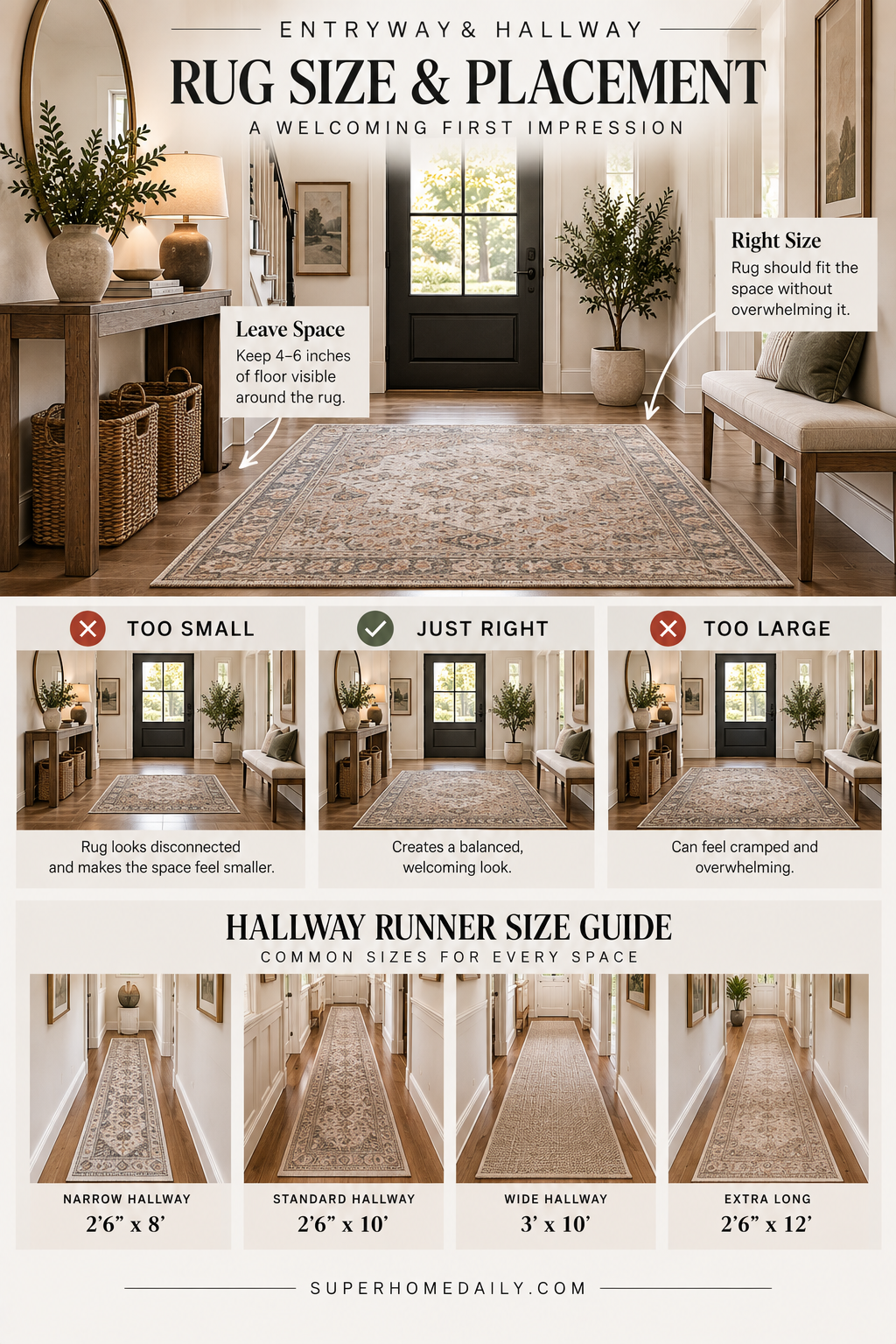
Keep the proportions simple.
In an entryway, choose a rug that defines the walking area while still leaving some visible flooring around the edges. In a hallway, a runner should follow the direction of the space and leave enough exposed floor along the sides so it does not look wall-to-wall.
Common runner sizes such as 2′ × 6′, 2’6″ × 8′, and 3′ × 10′ can be useful starting points, but hallway length and width should determine the final choice. Always measure the usable floor area before buying.
Why It Works:
A properly proportioned rug or runner follows the architecture of the space, creating a more intentional entrance without making a narrow area feel crowded.
6. How Much Floor Should Show Around a Rug?
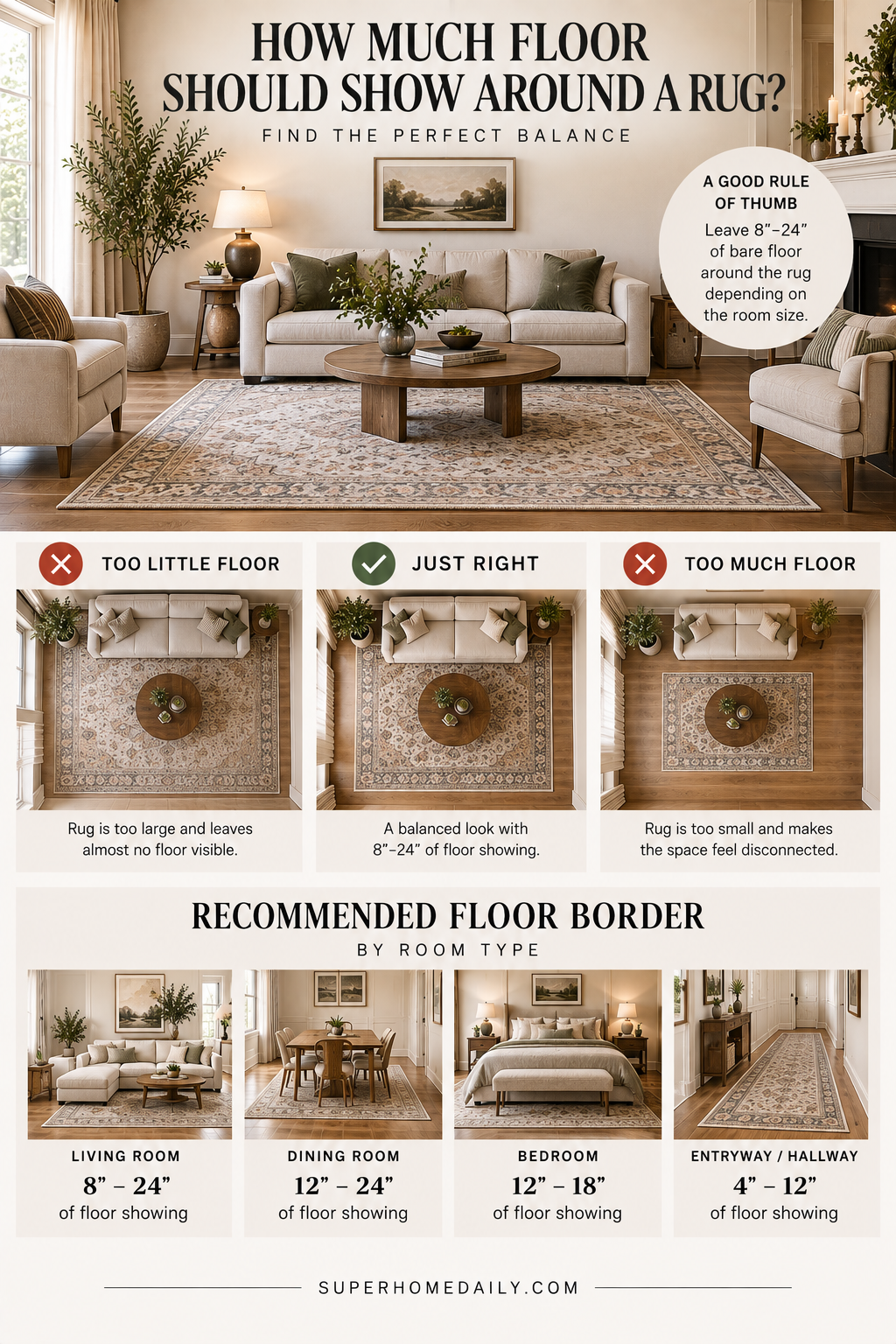
Give the rug some breathing room.
Leaving visible flooring around an area rug helps define its shape and keeps the room from feeling visually crowded. In many rooms, roughly 8 to 24 inches of exposed floor can work well, but this is a flexible guideline rather than a universal rule.
Smaller rooms often need narrower borders, while larger spaces can usually handle more exposed flooring. Furniture placement and the proportions of the room should always come before following a specific measurement.
Why It Works:
A balanced border creates separation between the rug and the walls, helping both the flooring and rug feel intentional within the overall layout.
7. Common Rug Size Mistakes to Avoid
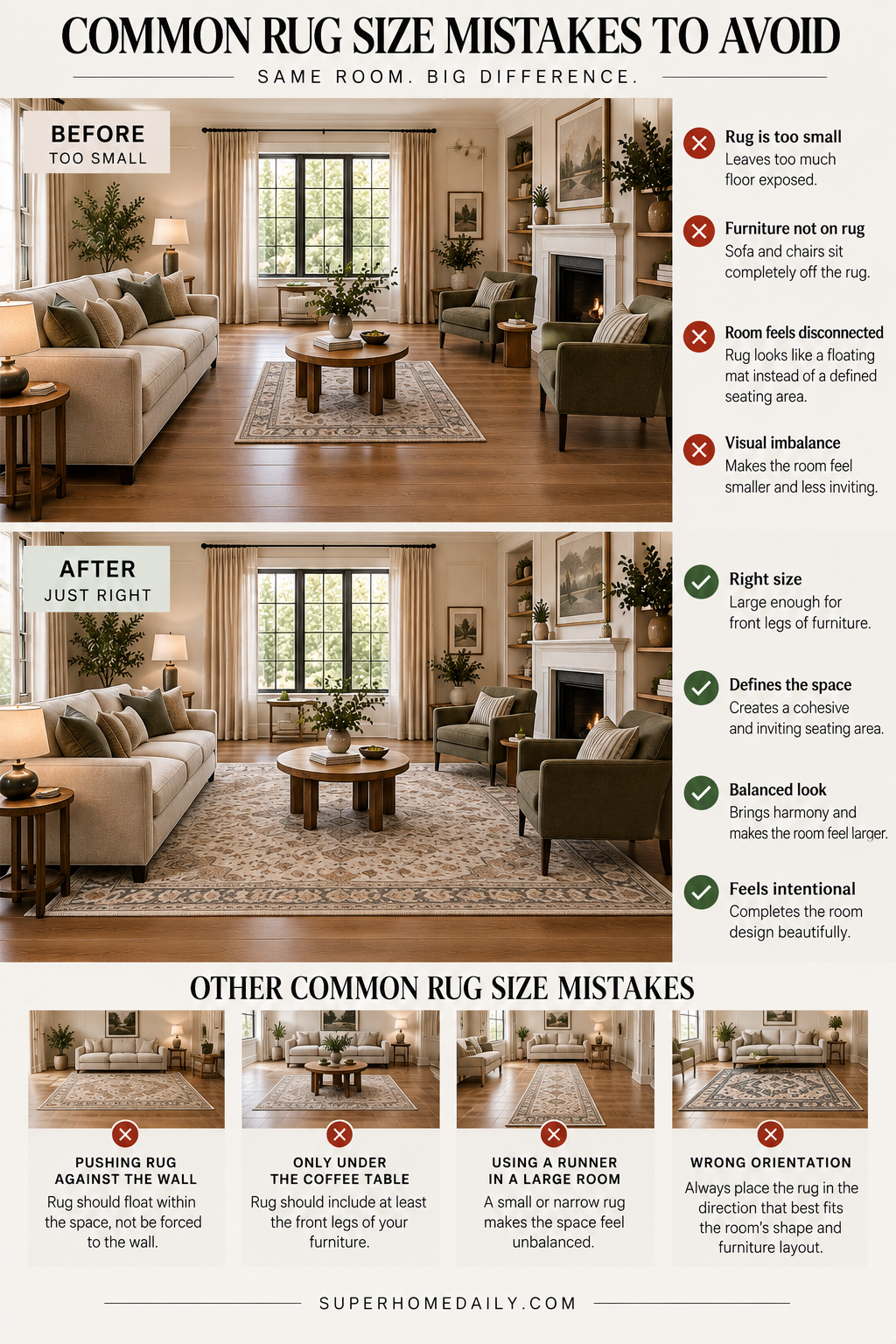
Avoid the floating-rug effect.
One of the most common mistakes is choosing a rug that is too small for the furniture arrangement. A rug sitting only beneath the coffee table can make the seating feel disconnected rather than creating one defined area.
Other common mistakes include pushing a rug too close to the walls, choosing the wrong orientation for the room, or using a narrow runner where a larger area rug would better suit the space.
Why It Works:
Avoiding these sizing and placement mistakes helps the rug connect with the furniture and creates a room that feels more balanced, comfortable, and intentional.
8. Quick Guide: How to Choose the Right Rug Size by Room
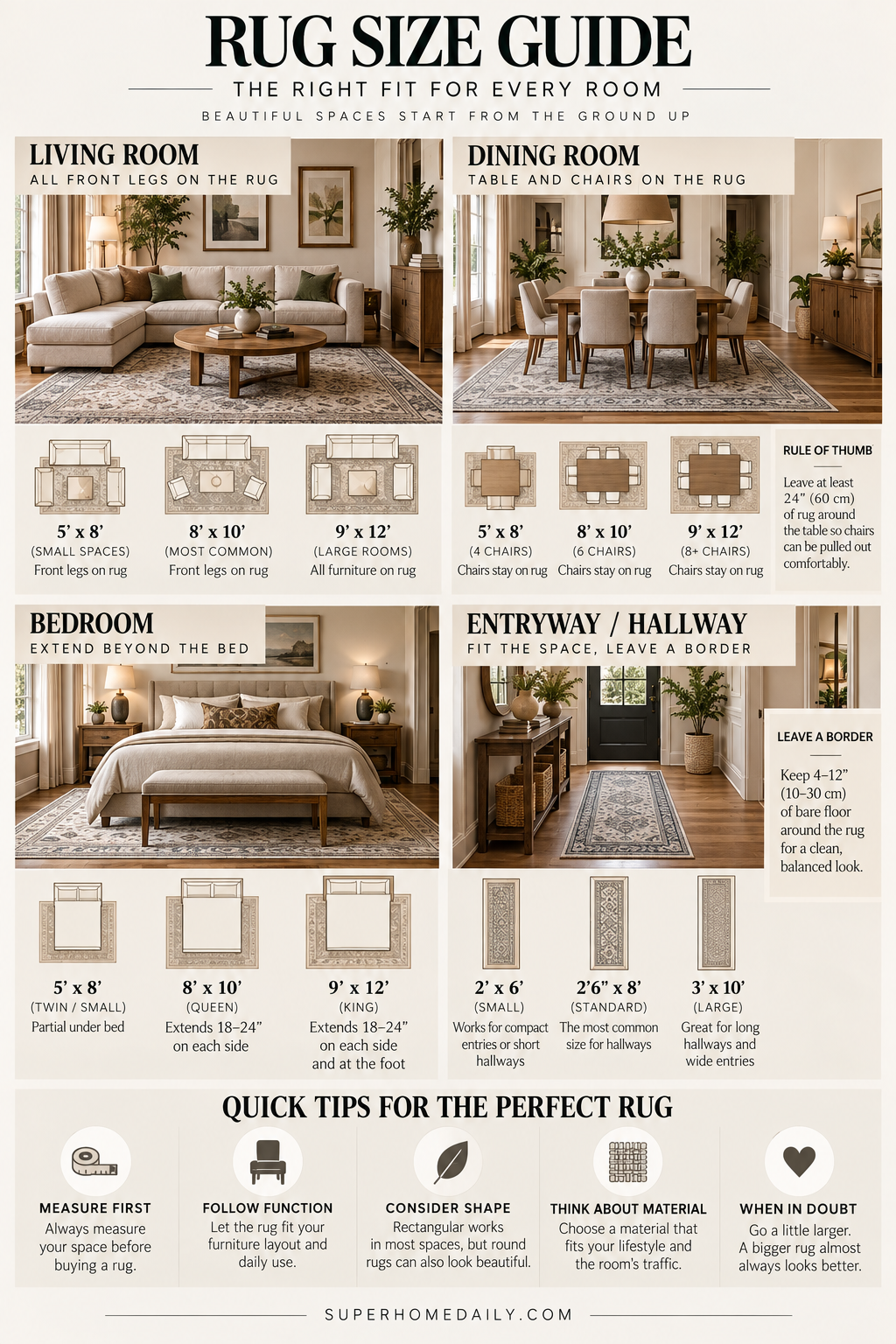
Use measurements as a starting point.
When learning how to choose the right rug size, remember that standard rug dimensions are helpful guides—not fixed rules. Your furniture arrangement and actual room measurements should always determine the final size.
Living Room:
8′ × 10′ works well as a starting point for many seating arrangements, while larger rooms may need a 9′ × 12′ rug or more.
Bedroom:
An 8′ × 10′ rug is common with many queen beds, while a 9′ × 12′ can provide more coverage around a king bed.
Dining Room:
Choose a rug large enough for the chairs to remain comfortably on it when pulled away from the table.
Entryway & Hallway:
Select a rug or runner that follows the proportions of the space while leaving some visible flooring around it.
Quick Tip:
Measure your furniture arrangement before shopping. When two sizes both seem suitable, the slightly larger option often creates a more connected look.
9. Frequently Asked Questions About Rug Size
How do I know if my rug is too small?
A rug may be too small if it sits completely separate from the main furniture or makes the pieces around it feel disconnected. In a living room, a rug that reaches only beneath the coffee table is a common example.
Should a rug go under all the furniture?
Not always. The ideal placement depends on the room and furniture layout. In many living rooms, placing the front legs of the main seating on the rug is enough to create a connected look. Larger rooms may work better with all furniture legs on the rug.
Is it better to choose a rug that is too big or too small?
When two sizes both fit comfortably within the room, the slightly larger option often creates a more cohesive furniture arrangement. However, the rug should still leave appropriate space around walls, doors, and walkways.
How far should a rug extend beyond a dining table?
Aim for about 24 inches or more beyond the table as a practical starting point. The important thing is that dining chairs can be pulled out while remaining comfortably on the rug.
Should bedroom nightstands sit on the rug?
They do not have to. Many bedroom layouts begin the rug in front of the nightstands and extend it beneath the lower portion of the bed. Larger rugs can also sit beneath both the bed and nightstands if the room proportions allow it.
Do I need to measure the room before buying a rug?
Yes. Measure both the room and the furniture arrangement. This is one of the most reliable ways to understand how to choose the right rug size without relying only on standard rug dimensions.
Final Thoughts
The right size brings everything together.
Learning how to choose the right rug size is less about following one perfect measurement and more about understanding the relationship between the rug, furniture, and room.
Start by measuring your furniture arrangement, then use common rug sizes as a practical reference rather than a strict rule. Whether you’re styling a living room, bedroom, dining room, or hallway, the goal is to choose a rug that connects the space without overwhelming it.
A few minutes of measuring before you shop can make the entire room feel more balanced, comfortable, and thoughtfully designed.