A small bedroom can feel comfortable and open without adding more square footage. To make a small bedroom feel bigger, focus on how the room is arranged, how light moves through the space, and how much visual clutter you can see at once. Simple changes to furniture placement, curtains, color, lighting, and storage can create a noticeable difference—without renovating anything.
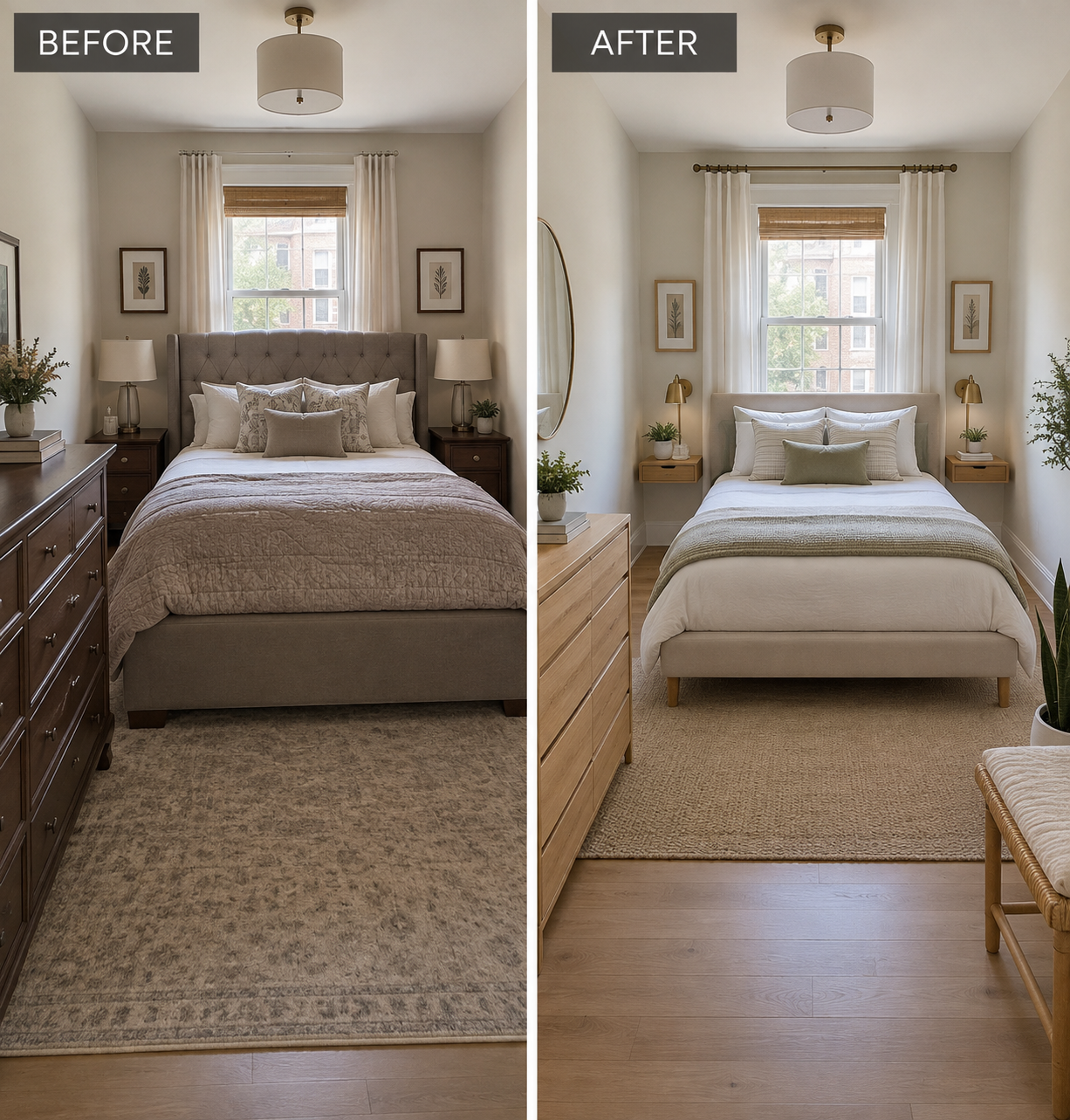
1. Choose Furniture That Fits the Room
Scale makes a big difference.
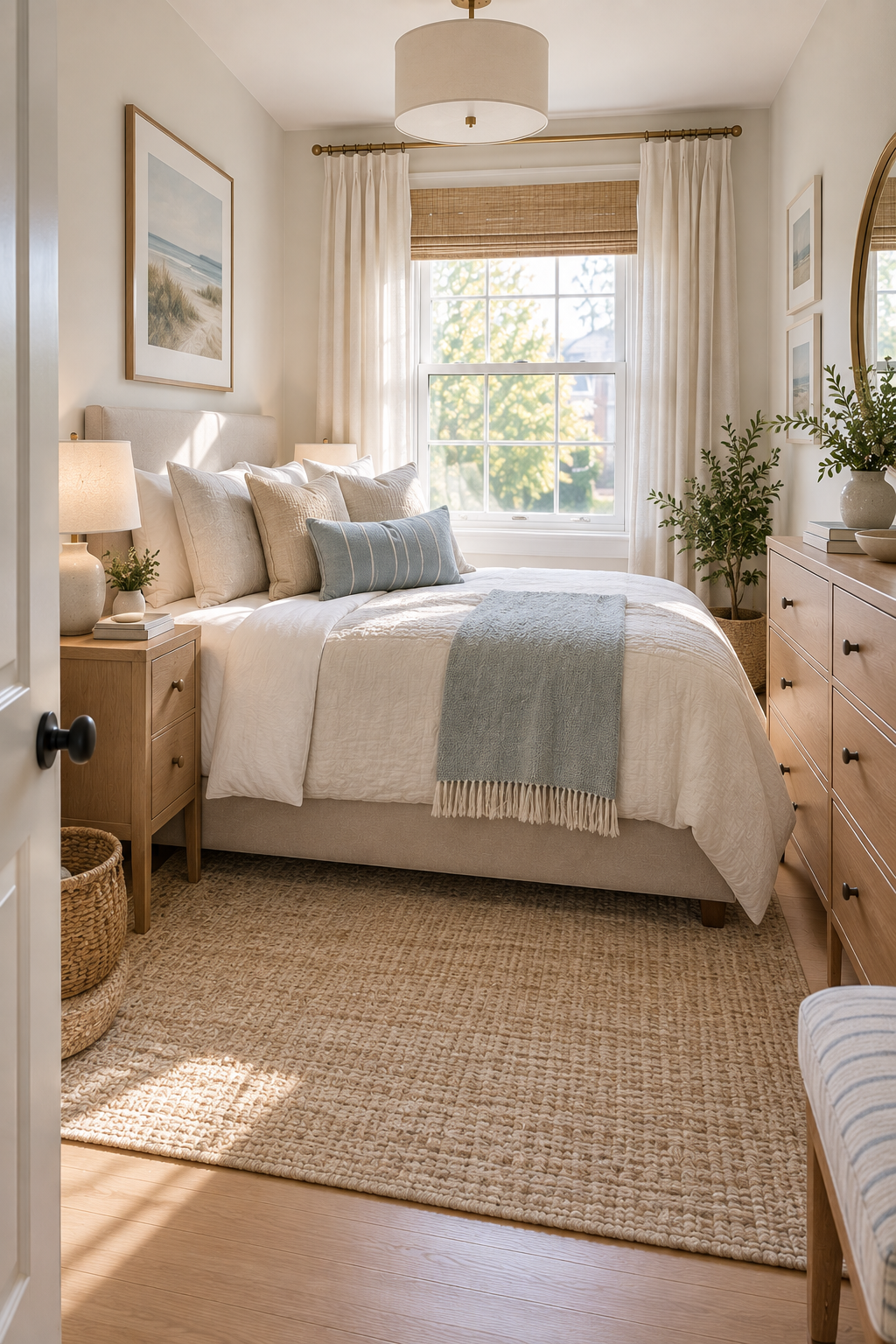
Oversized furniture can make a small bedroom feel crowded even when the room is perfectly organized. Choose a slimmer bed frame, narrower nightstands, and shallower storage pieces that leave more of the floor visible and keep walkways comfortable.
Why It Works:
More visible floor space and clearer pathways help the eye move through the room, making the bedroom feel more open and balanced.
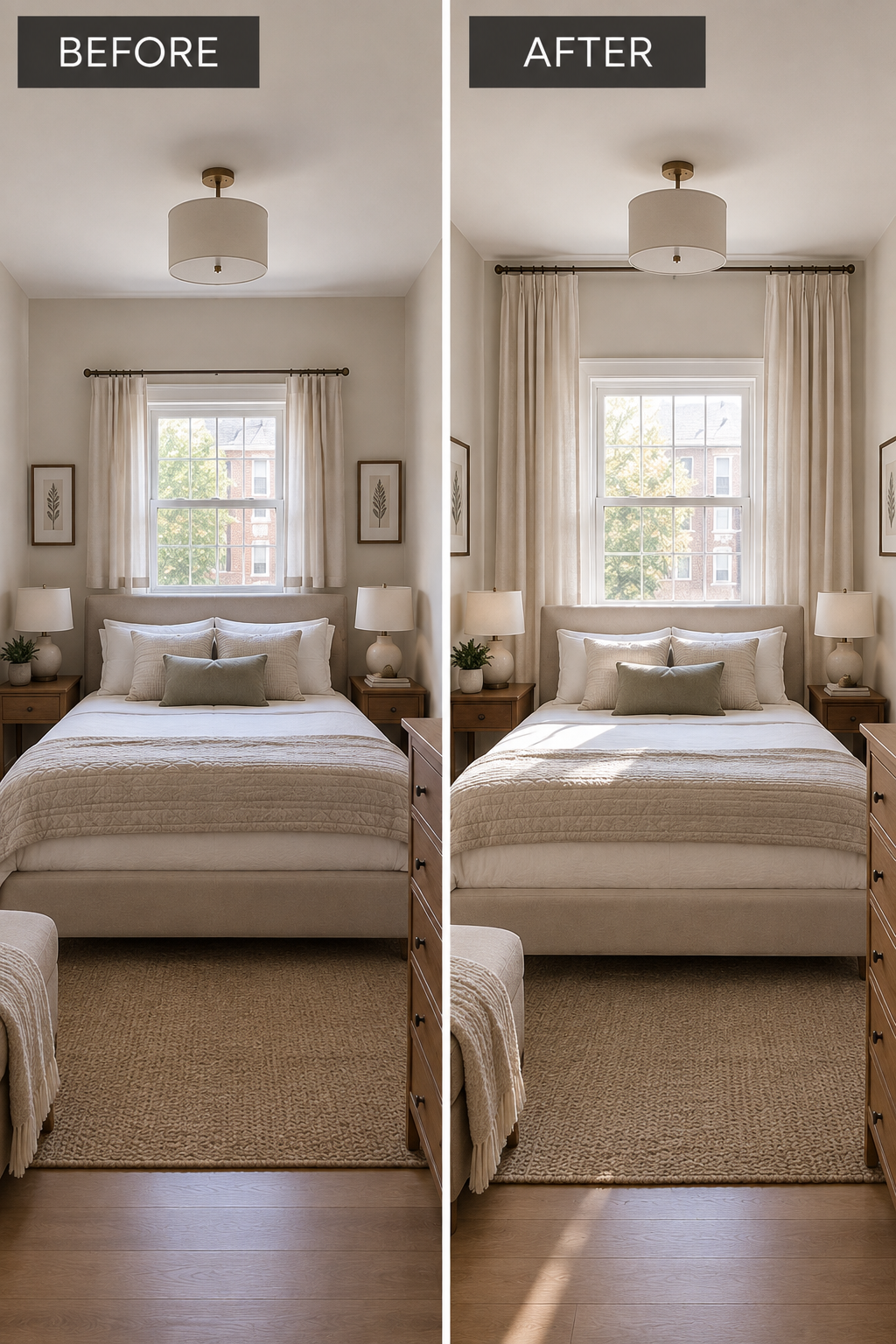
2. Raise Your Curtains Higher
Draw the eye upward.
Curtains hung just above the window can visually shorten the wall. Instead, position the curtain rod closer to the ceiling and let the panels fall toward the floor. Extending the rod slightly beyond the window frame also allows more of the glass to remain visible when the curtains are open.
Why It Works:
Longer vertical lines emphasize the height of the room, while exposing more of the window helps natural light reach the space.
3. Keep a Clear Path Around the Bed
Give the room space to breathe.
When furniture interrupts the natural path from the doorway to the bed, even a tidy bedroom can feel cramped. Arrange the bed and surrounding furniture so the main walkway stays as open and uninterrupted as possible.
Why It Works:
Clear sightlines and easier movement reduce the feeling of crowding, helping make a small bedroom feel bigger and more comfortable.
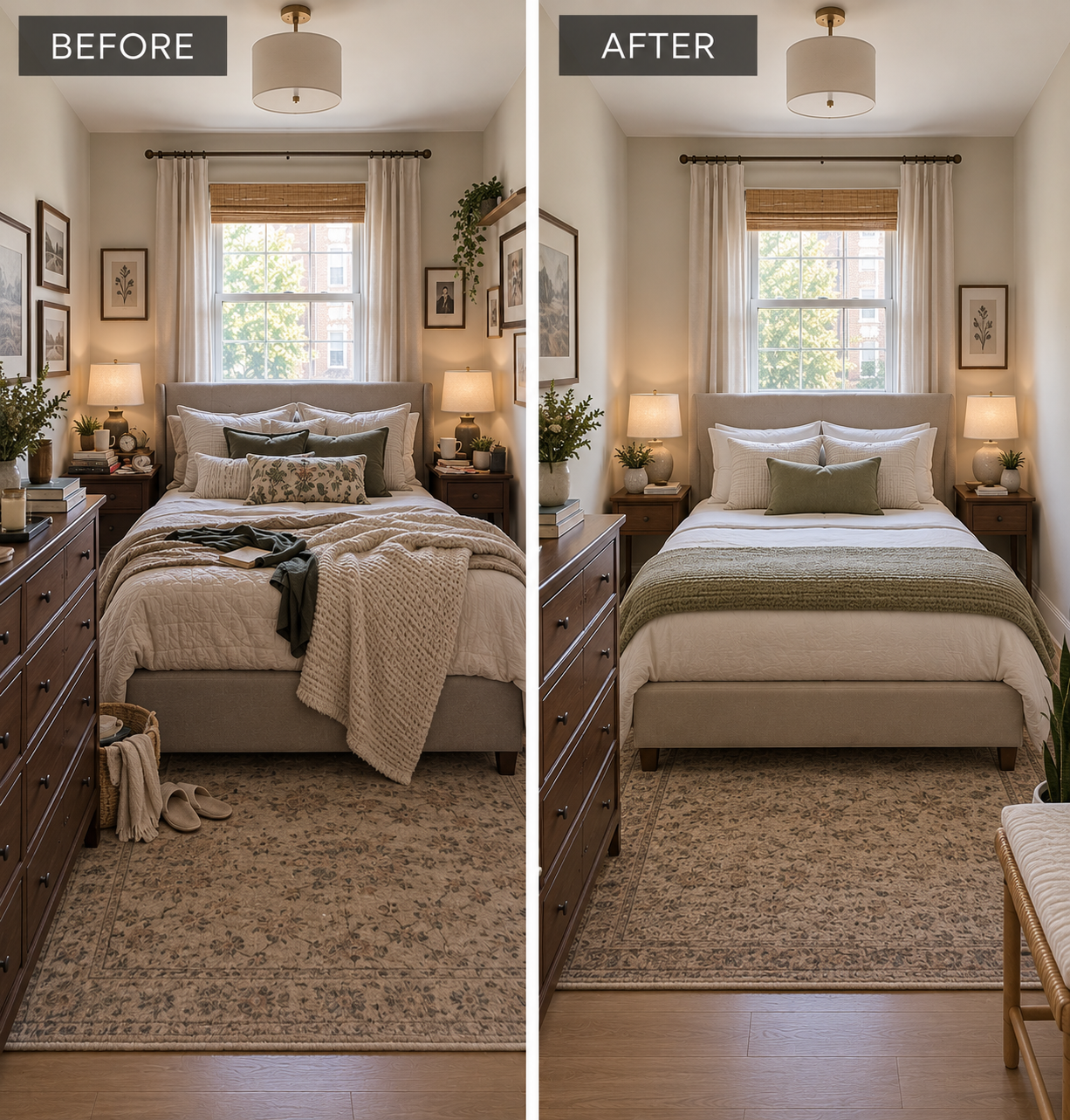
4. Reduce Visual Clutter
Less visual noise creates more breathing room.
You don’t need to remove everything that gives your bedroom personality. Start by clearing crowded nightstands, limiting decorative pillows, and grouping small objects instead of spreading them across multiple surfaces. Keep a few pieces you genuinely enjoy and give everyday items a designated place.
Why It Works:
When the eye has fewer objects to process, the room feels calmer and less crowded. Clearer surfaces also help the boundaries of a small bedroom feel more open.
5. Keep the Color Palette Light and Connected
Let the colors flow together.
Light colors can help a small bedroom feel more open, but the room doesn’t need to be completely white. Try using closely related shades across the walls, bedding, curtains, and larger furniture, then introduce a small amount of soft color through pillows, throws, or artwork.
Why It Works:
Fewer strong color breaks allow the eye to move around the room more smoothly. Combined with natural light, a connected palette can make the boundaries of the space feel softer and less confined.
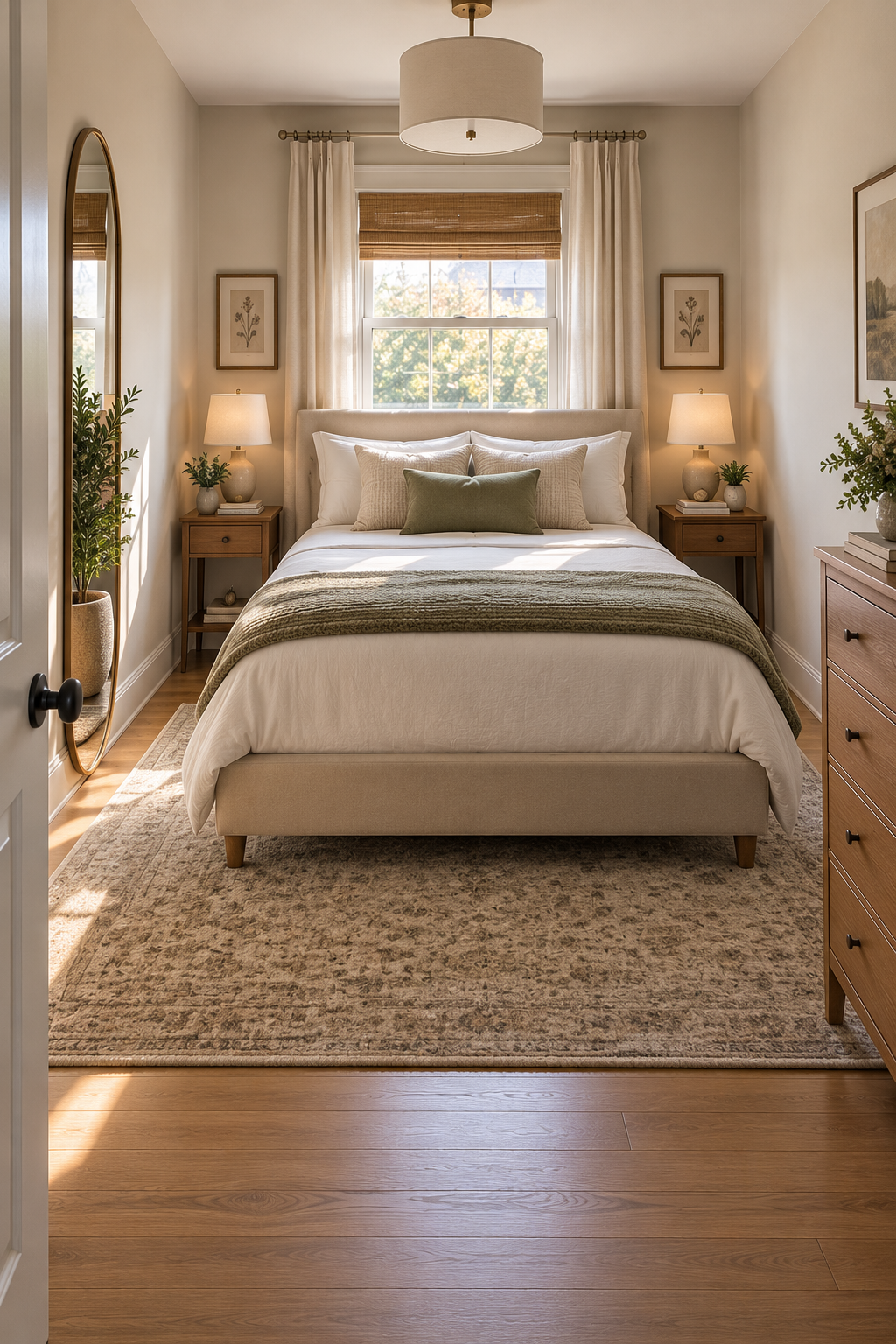
6. Place a Mirror Where It Can Reflect Light
Make your natural light work twice.
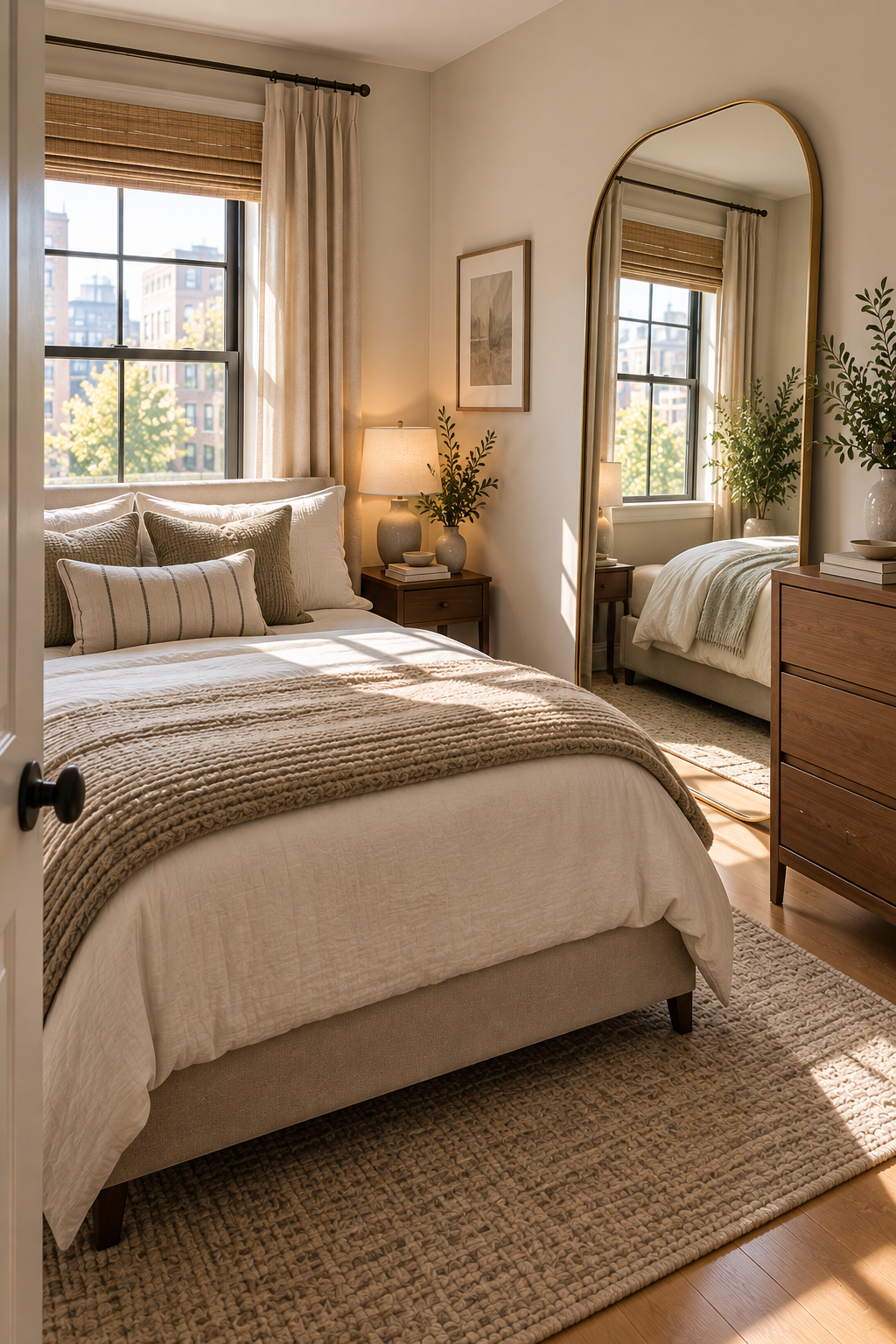
Instead of placing a mirror wherever there happens to be an empty wall, consider what it will reflect. Positioning a large mirror across from or at an angle to a window can bounce daylight deeper into the bedroom while reflecting an open part of the room.
Why It Works:
A mirror adds visual depth and redistributes available light, helping a compact bedroom feel brighter and less enclosed.
7. Use Vertical Space for Smarter Storage
Look up before adding more furniture.
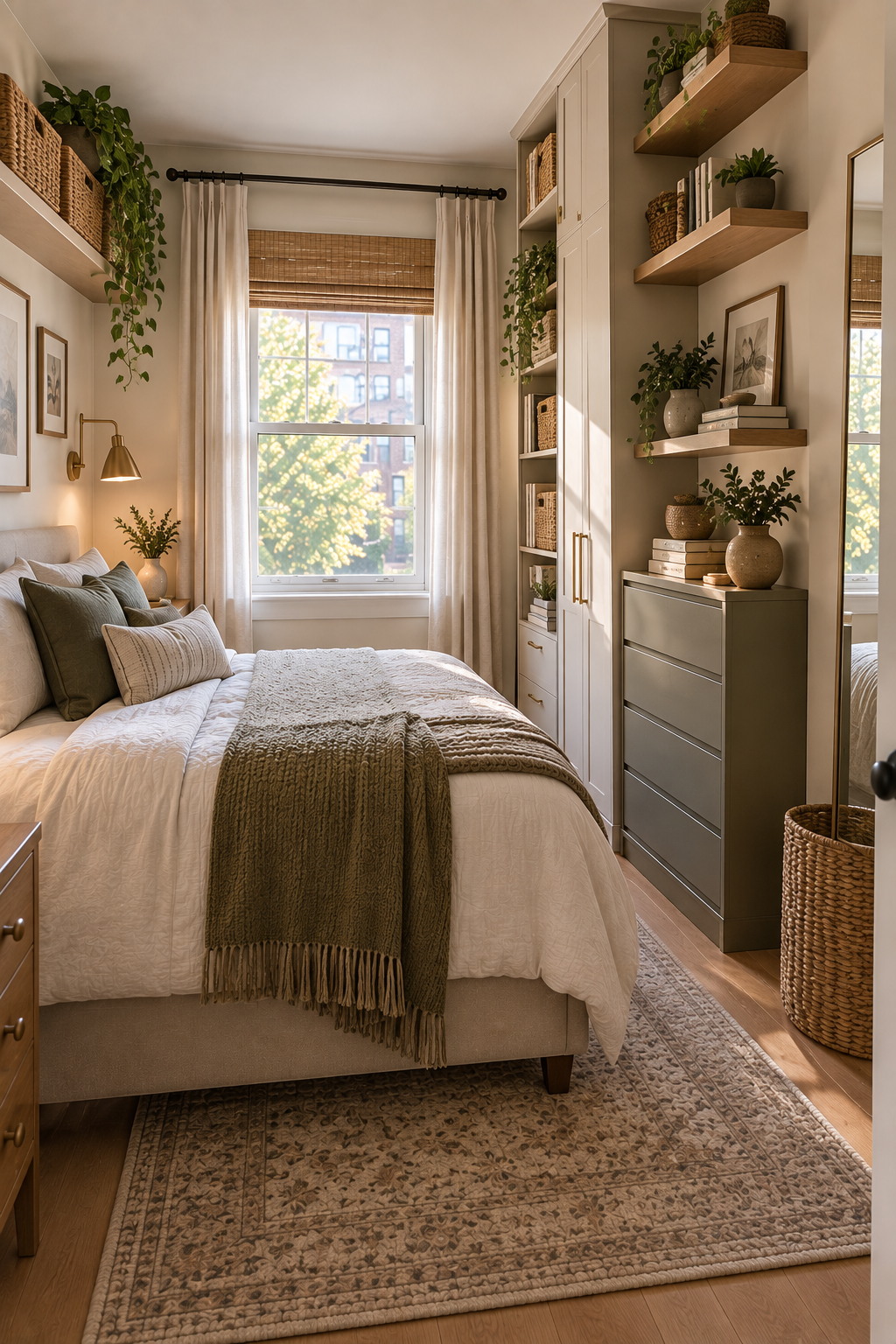
When floor space is limited, use the height of the room instead. Floating shelves, tall narrow cabinets, and wall-mounted storage can hold everyday items without filling valuable walking space. Keep frequently used pieces within easy reach and reserve higher shelves for less-used items.
Why It Works:
Moving storage upward frees more of the floor and reduces the need for wide, bulky furniture, helping the bedroom stay functional without feeling overcrowded.
8. Layer Your Lighting Instead of Relying on One Fixture
Don’t let the corners disappear.
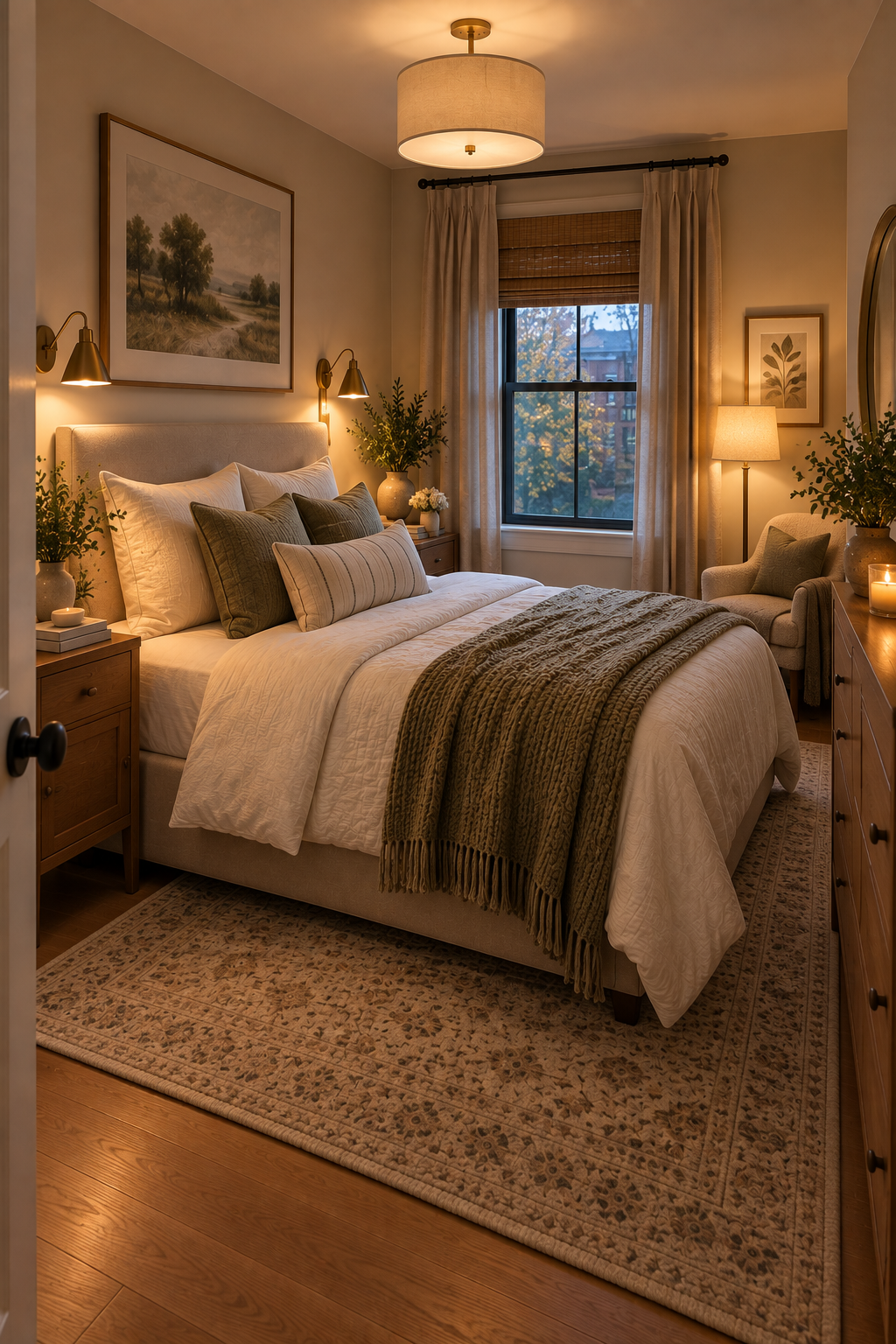
A single ceiling fixture can leave parts of a small bedroom in shadow, especially at night. Combine your main light with bedside lamps or sconces and, when space allows, a small floor lamp in a darker corner. Keep the light warm and comfortable rather than overly bright.
Why It Works:
Lighting different areas of the room makes more of the space visible at once. This reduces dark visual boundaries and can help the bedroom feel deeper, warmer, and more open.
Final Thoughts
You don’t need more square footage to make a small bedroom feel bigger. Often, the biggest difference comes from improving what you already have—better furniture proportions, clearer walkways, higher curtains, thoughtful storage, reflected light, and fewer visual distractions.
Start with the change that solves the biggest problem in your room, then adjust the space gradually. A small bedroom can still feel open, comfortable, and full of personality without a renovation.